Lions Trade Capital Erased: Law's ACL Tear Reshuffles Detroit's Receiver Room Before Season
By Erik Schwartz ·
A noncontact ACL injury in OTAs costs Detroit its fifth-round investment and the pass-catchers it expected to build around this offense.
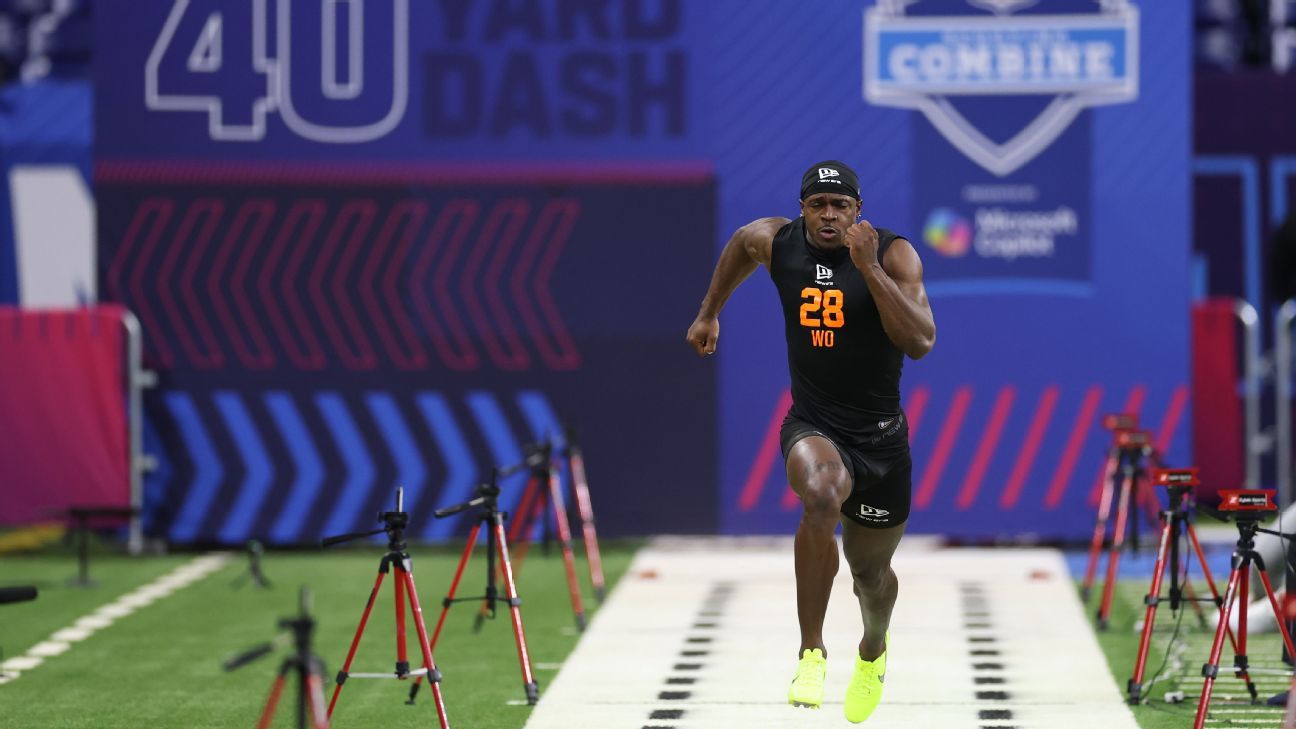
Detroit Lions rookie wide receiver Kendrick Law suffered a torn ACL during Tuesday's OTA practice in a noncontact drill, head coach Dan Campbell announced Thursday. Law was the Lions' centerpiece at receiver depth after Detroit traded up 13 spots to select him 168th overall in the 2026 draft out of Kentucky. The injury erases what was shaping into a developmental foundation piece and forces a recalibration of the passing game architecture before training camp.
The cost of the move to acquire Law was material enough that the front office signaled confidence in his trajectory. A player who produced 540 receiving yards at Kentucky last season—including 511 yards after the catch—with a 42-inch vertical jump represented the kind of vertical-space threat that fits modern NFL spacing principles. That he transferred to Kentucky after starting at Alabama indicated a path of upward mobility and scheme flexibility. Campbell's tone Thursday—"Harsh reality, but he'll get it out of the way early, have his whole career in front of him"—frames the injury as recoverable, but the timeline and availability loss is immediate and severe.
The Lions offense enters 2026 under new offensive coordinator oversight with stated ambition. Law's absence reshapes how Detroit allocates targets and introduces uncertainty into the air-attack distribution. The passing game now lacks a receiver capable of the explosive vertical release the coaching staff appeared to have earmarked for him, forcing earlier reliance on proven commodities and depth pieces. This is not a minor depth casualty—it's the loss of a specifically-added pass-catcher the team invested draft capital to secure, compressing their receiver flexibility precisely when they need it most.
From a prop standpoint, the injury directly constrains passing-volume distribution. Detroit's total passing attempts may face slight pressure if the offense tilts toward run-heavy scripts due to reduced receiving optionality, though this depends heavily on whether Campbell's staff has confidence in remaining receivers to execute vertical concepts. More practically, any receiver proj lines tied to Law's absence see modest relief—backup and slot receivers inherit marginal target share gains, but the inefficiency introduced by losing a vertical-spacer typically depresses overall passing efficiency rather than inflating individual receiver volumes. The Lions' passing yards and team total props should be monitored for line softness in early-week betting; books may initially underweight the receiver-depth hit before sharper action clarifies the impact.