Gibbs Extension Talks Stall: Detroit's RB Market Value Remains Unsettled
By PropBetEdge Editorial Team ·
The Lions and their star running back are far apart on contract terms, leaving Gibbs' workload and role vulnerable to negotiation uncertainty through the 2026 season.
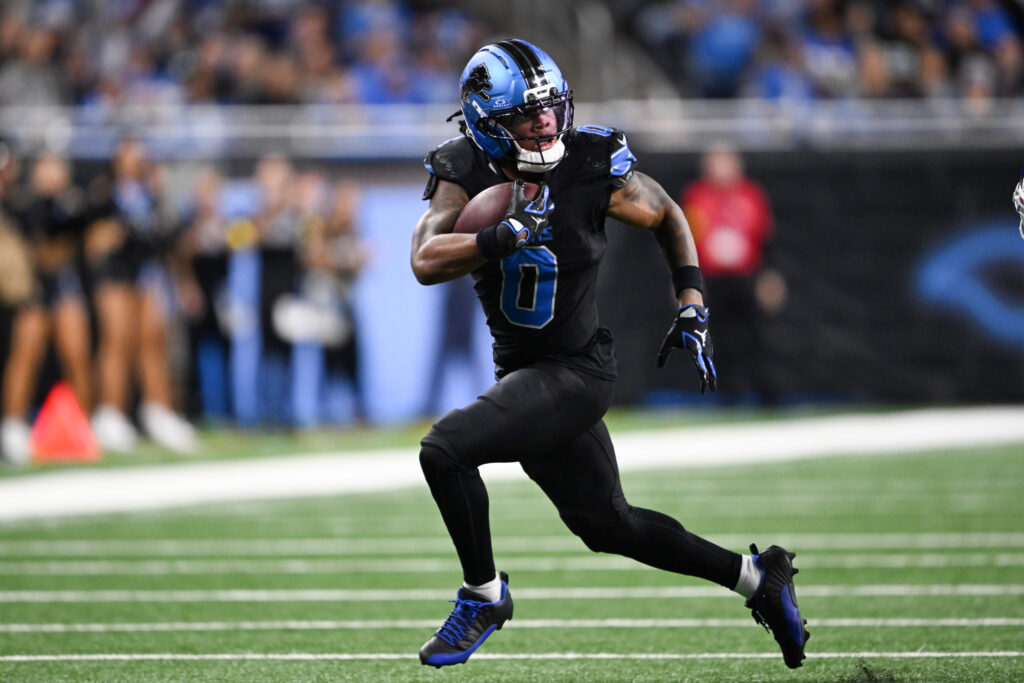
The Detroit Lions remain distant from a contract extension with running back Jahmyr Gibbs, according to reporting on extension negotiations within the team's 2023 draft class. While the organization has already locked in linebacker Jack Campbell on a long-term deal, talks with Gibbs have stalled—a notable gap given his status as the team's lead ball-carrier and a foundational piece of the offense.
Gibbs' leverage sits in an awkward place. He's proven productive on the field: over his first three seasons, he's logged over 1,200 rushing yards and added receiving value that elevates his overall offensive contribution above a traditional downhill runner. Yet the Lions front office clearly isn't treating this as an urgent priority. Distance in negotiation typically signals disagreement on valuation—either the team's offer remains well below Gibbs' asking price, or Detroit is willing to play the franchise-tag angle to preserve flexibility. In a league where elite RBs aged 25-27 have commanded $13M-$16M annually in recent cycles, the gap between offer and demand is material enough that both sides are entrenched.
From a roster construction view, unresolved extension talks create management optionality: the Lions can run Gibbs through his current deal without committing capital, then reassess. That flexibility cuts both ways. Gibbs could see his workload managed to reduce injury risk—a subtle but real threat to volume-dependent prop angles like rushing yards and receptions. Conversely, if negotiations drag into fall, the team may lean harder on him to showcase value, spiking his snap count and touch share.
The prop implications hinge on timeline and leverage shift. If Gibbs and Detroit remain in limbo past training camp, expect the Lions to test the market openly by mid-season—either demonstrating his worth to justify the extension price tag or positioning him for trade interest. Either scenario pressures his workload stability. Early-season Gibbs rushing and receiving props (anything north of his seasonal average baseline) carry elevated uncertainty because the Lions may temporize on volume. Once an extension is signed or the franchise tag is formally applied, that volatility resolves and workload becomes more predictable. Right now, bettors are paying full-season pricing on a player whose touches could fluctuate based on contract status, not just game flow.
Watch the May-June negotiation timeline closely. If there's no progress by early July, the gap has likely widened beyond mid-season repair, and Gibbs becomes a fade on volume-dependent props until the organization clarifies its intention—extension, tag, or trade.