Lions Bet Big On Youth Along The Line—And It Changes How Jared Goff Operates
By Erik Schwartz ·
Detroit's offensive line overhaul removes every veteran anchor except Penei Sewell, forcing a recalibration of protection schemes and decision windows that will bleed into passing volume.
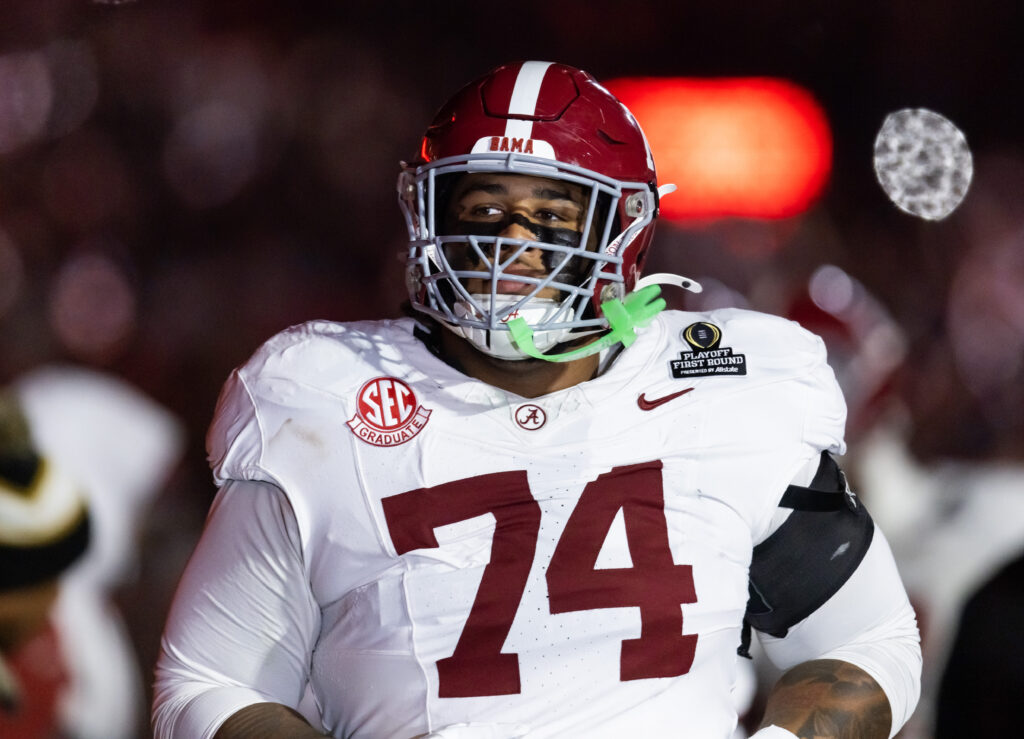
The Lions' offensive line looks nothing like it did two years ago. Frank Ragnow retired, Kevin Zeitler left in free agency, Taylor Decker was released, and Graham Glasgow was cut after playing center for a season. In their place: Cade Mays at center, Juice Scruggs on the interior, Christian Mahogany and Tate Ratledge at the guard spots, Penei Sewell sliding back to left tackle where he played in college, and now Blake Miller—a Clemson right tackle who scouts ranked as the class's top offensive lineman late in the pre-draft process—filling the right side.
That's not an upgrade cycle. That's a near-complete teardown executed in 24 months, with the oldest starter now just 27 years old. The front office made a deliberate choice to flush the veteran presence and install a youth cohort, betting that high-ceiling draft capital and internal development will compound faster than paying for proven age. The tradeoff is real: five new or nearly-new starters mean blown assignments, missed pickups, and a protection scheme that can't rely on instinctive communication. Jared Goff has thrived in Sean Campbell's system because protection has been reliable; now he'll be operating behind a line that needs reps.
Blake Miller's arrival specifically signals how Detroit is solving the Sewell position puzzle. Sewell excelled at left tackle early in his Lions tenure but migrated to right tackle out of necessity when cap space and personnel needs demanded it. Miller's college film is right-tackle specific—he made all but two starts there at Clemson—which means Sewell can return to his preferred side and Miller absorbs the traditionally harder assignment. Two high-pedigree left tackles (Sewell) and high-upside right tackles (Miller) should theoretically form an elite bookend pairing. Theoretically matters less than execution when the interior hasn't had a snap together yet.
For Goff's passing profile, the calculus is straightforward: young, unproven lines correlate with faster decision-making and shorter average air distance because quarterbacks feel pressure sooner than pre-snap reads develop. The Lions' 2024 season saw Goff average 7.9 yards per attempt and sustain drives through patience; that's a personnel luxury young guys can't yet guarantee. Expect a subtle but material tick toward quicker releases and fewer downfield shots early in the season. His completion percentage likely ticks up (more short-to-intermediate work), but his yards-per-attempt and deep ball volume should dip until the unit builds consistency. Those line-dependent passing metrics won't stabilize until September's second or third week, at the earliest.
The prop angle here is durable because it's rooted in offensive line composition, not a single player spike. Goff's passing yards season total will suffer a camp-to-Week-1 reset downward as the market prices in a familiar name with fresh supporting cast. Books will overweight his 2024 production rather than discount for unit chemistry. Taking unders on his season passing yards total—if it's set north of 4,200—captures the friction cost of youth. His completion percentage over is a sharper play still, since shorter throws always find their target; that bets the line will misprice his accuracy by anchoring to volume rather than distribution shift.