Lions' Safety Depth Crisis Extends Into Training Camp; Branch Out Until July
By Erik Schwartz ·
Brian Branch's Achilles recovery will keep Detroit's defensive backfield undersized and reactive through the summer, forcing early-season reliance on reserve coverage schemes.
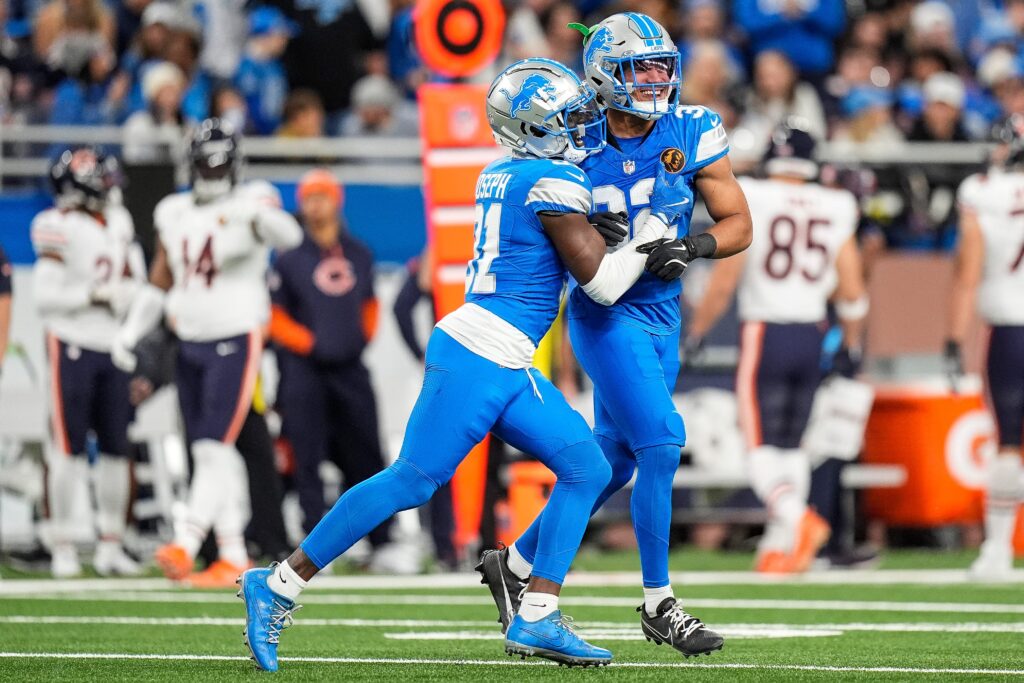
Detroit's secondary will start the season operating without its anchor. During offseason activities this week, Lions head coach Dan Campbell confirmed that safety Brian Branch—who tore his Achilles tendon late last season—will not be ready for training camp in late July, per the Detroit Free Press. That timeline means Branch misses the entire spring and early summer conditioning phase, compressing his on-field preparation into a two-month window before Week 1 kickoff. For a player at a critical leverage position, that's not a typical recovery arc.
The injury cascade compounds the problem. Kerby Joseph, Branch's starting safety partner, missed 11 games in 2025 due to a degenerative knee condition, and Campbell has not outlined Joseph's current status. Tight end Sam LaPorta is easing back from a herniated disc with walk-through and jog-through participation only; he won't be full-go until training camp. Cornerback Terrion Arnold is being held back from shoulder surgery recovery the same way. Campbell's stated philosophy is patience, but the practical effect is that Detroit's defense—particularly its backend coverage and tackling volume—will be understaffed and disorganized for the first month of the regular season.
This creates a specific structural weakness. Backup safeties stepping into a starting role carry an implicit coverage tax: missed alignments, late rotations, over-aggressive pursuit that leaves receivers open underneath. When Branch does return, he and Joseph will need live-game reps to rebuild timing and communication. That window typically doesn't fully close until Week 4 or 5, meaning Detroit's early-season opponents inherit an offensive advantage in the passing game. Teams with downfield-oriented quarterbacks—particularly those comfortable attacking single-high safety looks—will face reduced pre-snap recognition and slower post-snap adjustment from the Lions' secondary.
For prop purposes, this shapes Detroit's defensive performance line and opponent passing-game totals. Any team playing Detroit in Weeks 1–4 should lean toward higher passing-yard totals and completion-percentage overs; the market may not yet reflect the degree to which backup safety play compounds coverage breakdowns. LaPorta's absence from full practice until training camp also matters for Detroit's red-zone efficiency. A tight end working his way back from core surgery typically shows reduced explosiveness in contested-catch situations and routes over the middle. If the Lions lean heavy on LaPorta in those areas early—which coaches often do out of familiarity—his receiving touchdowns line will carry higher variance and lower upside than his career average. Conversely, if Campbell distributes those targets to healthier receivers, Detroit's passing efficiency may actually improve, but LaPorta's touch volume will dip, compressing his receiving-yards ceiling for September.
The Lions are buying durability through patience; the market is pricing Week 1 readiness. That mismatch is the angle.