Kubiak's Volume Bet on Jeanty: Why Year 2 Opportunity Sets Up Rushing Overs
By PropBetEdge Editorial Team ·
New Raiders coach Klint Kubiak is explicitly demanding a Christian McCaffrey workload from Ashton Jeanty, signaling a dramatic snap-share increase that carries measurable prop implications.
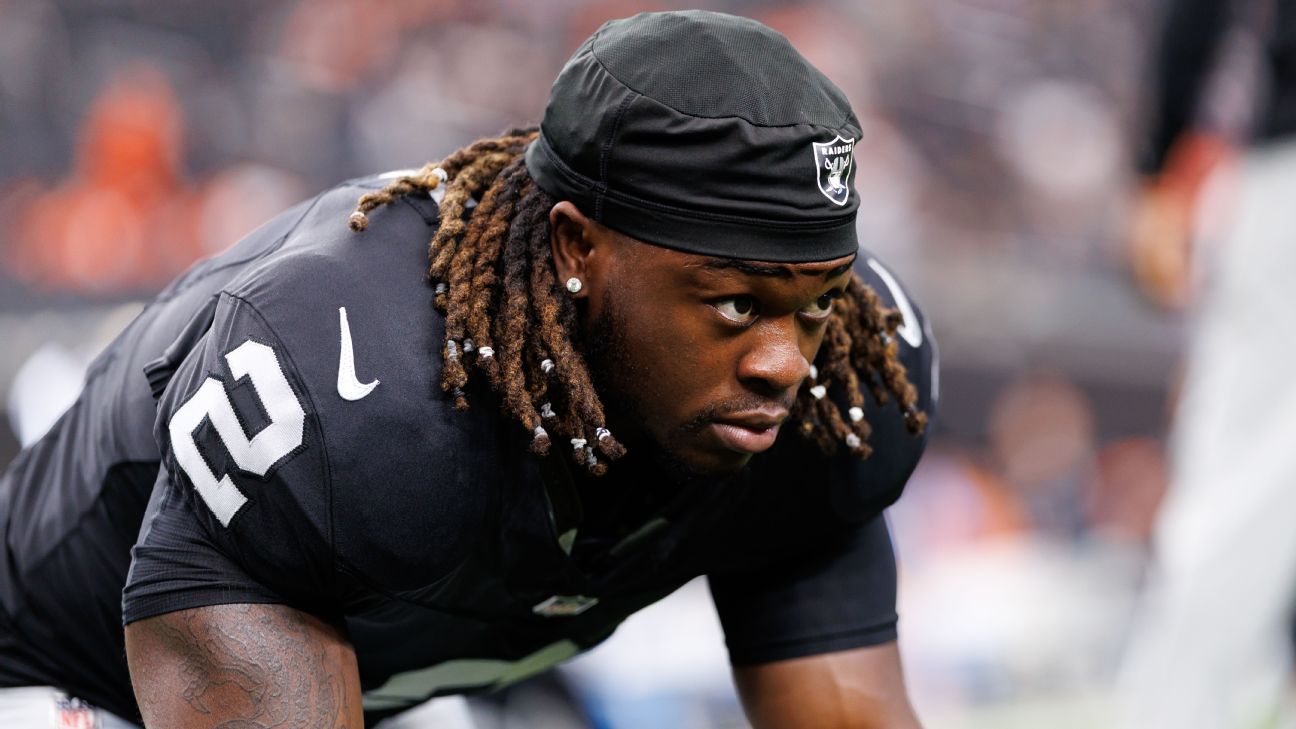
Klint Kubiak arrived in Las Vegas with a clear mandate for his offense, and it centers on one player: second-year running back Ashton Jeanty. As ESPN reported, the new Raiders coach has stated his intention to keep Jeanty on the field at a rate comparable to San Francisco's Christian McCaffrey—roughly 83% of offensive snaps—rather than splitting carries with fourth-round pick Mike Washington Jr. That's not offseason talk. It's a structural commitment that rewires how the Raiders will attack defenses in 2026.
Jeanty's rookie season produced 975 rushing yards and 1,321 yards from scrimmage despite operating in what may have been the league's most dysfunctional rushing ecosystem. The Raiders' ground game ranked dead last in efficiency, a byproduct of a broken offensive line and a playcalling scheme that didn't maximize his skill set. Now he's operating under a new OC philosophy in an offense built around heavy personnel usage, and he's got a year of tape and institutional knowledge. The gap between "talented rookie in a broken system" and "featured back in a designed system" is where prop value lives.
Kubiak's explicit volume commitment matters because snap share directly translates to touch accumulation. McCaffrey averaged 18.4 touches per game last season; if Jeanty hits similar usage rates—a stated goal, not speculation—his seasonal rushing yards ceiling climbs substantially from last year's 975. The Raiders improved their offensive line during the offseason, and with Jeanty now the focal point rather than a complementary piece, defenses can't rotate coverage the way they did when the passing game was uncertain. That's not regression noise. That's a deliberate tactical shift.
For bettors, the angle isn't just season-long rushing yards (though that's directionally positive). It's weekly rushing attempts and receiving targets. Jeanty's current market pricing likely still reflects his rookie role as a change-of-pace back; if Kubiak delivers on his McCaffrey-lite usage model, the books will have underpriced his touch distribution. Look for his weekly rushing attempts line to trend toward 16-19 attempts per game once the market recognizes the snap-share floor has been raised. Early-season overs on rushing yards (assuming lines price him conservatively relative to his new role) will fade as the market adjusts, so the edge exists now in preseason and Week 1 betting before Vegas recalibrates.
The wildcard is whether the improved line actually materializes. If Las Vegas's front five remains injury-prone or underperforming, even Kubiak's volume commitment won't generate the same per-carry efficiency gains. The mechanism is clear—more snaps in a designed system beats fewer snaps in a broken one—but execution risk remains. Still, a head coach willing to publicly state his workload target for a player is rare enough that it deserves weight in your pregame math.