NFL · transaction
Porter's Rejection Sets Up Week 3 Absence Risk for Steelers Secondary Against Chase-Higgins Duo
Joey Porter Jr. turned down $27 million to stay in Pittsburgh; now the Steelers face Cincinnati's elite receivers without their shutdown corner and no leverage to negotiate mid-season.
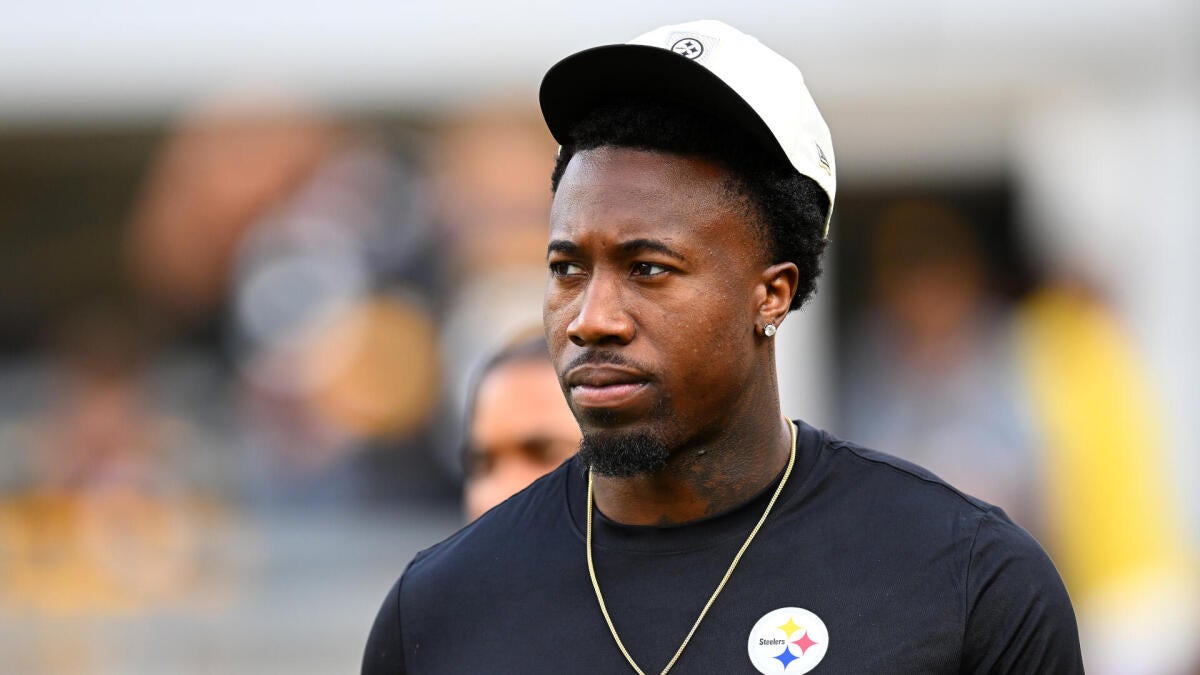
Joey Porter Jr. rejected a contract extension worth slightly over $27 million for the 2026 season, according to Pittsburgh Post-Gazette reporter Gerry Dulac. The offer would have ranked him seventh among NFL cornerbacks by average annual value—ahead of Carolina's Jaycee Horn ($25M AAV) and just below Houston's Derek Stingley Jr. ($30M AAV). The rejection landed before Pittsburgh's Week 2 loss to New England and signals a fundamental breakdown between the star cornerback and the organization heading into a matchup against the Bengals' lethal pass-catching tandem.
Porter has been absent from the Steelers' first two games due to a back injury, though CBS Sports sideline reporter Tracy Wolfson reported that Pittsburgh has cleared him medically heading into Week 3. Coach Mike McCarthy confirmed the injury flared during practice last Wednesday and said he would evaluate Porter on Wednesday morning—leaving his availability in a game the Steelers desperately need him for still uncertain. The timing is brutal: Cincinnati is 2-0 and features Ja'Marr Chase and Tee Higgins, arguably the league's premier receiving pair. The Bengals' offensive firepower demands elite coverage, and Porter's absence or limited snap count creates a measurable liability for Pittsburgh's secondary.
Last season, Porter led the NFL in passer rating allowed as the primary defender (minimum 60 pass attempts) with a 49.1 rating—the only corner to post a sub-50 mark. He outpaced All-Pro and Pro Bowl recipients like Denver's Patrick Surtain II, Derek Stingley Jr., and New England's Christian Gonzalez, all of whom command significantly larger deals. That performance difference didn't translate to an offer Porter found acceptable, and Pittsburgh's longstanding policy forbids negotiating contracts once the regular season begins. With no extension deal in place and no indication the team will deviate from precedent, Porter will play the remainder of 2026 under his rookie contract—or not at all if a trade emerges.
The Steelers have not actively shopped Porter and fielded no trade inquiries as of Sunday, per Wolfson's reporting. That positions Pittsburgh in a bind: they have a shutdown defender with a credible injury concern, a compensation standoff that won't resolve until the offseason, and a Week 3 matchup that exposes their secondary's fragility. If Porter plays, he'll be operating without financial security and amid organizational tension. If he doesn't, Pittsburgh pivots to its secondary depth against a pair of receivers who combined for 247 receiving yards in Cincinnati's Week 2 win over Houston. Either scenario suppresses Pittsburgh's defense-side prop value. Coverage metrics for second-option corners against Chase and Higgins will likely show elevated completion percentages, fewer forced incompletions, and reduced pressure-to-sack conversion rates relative to season averages—the textbook signature of a secondary missing its anchor player.
Bettors should discount Pittsburgh's defensive performance props for Week 3. Sacks, interceptions, and yards-allowed markets should all lean toward worse outcomes for the Steelers defense if Porter is inactive or operating on limited snaps. The back injury adds variance, but the contract impasse removes any guarantee of his full availability. Cincinnati's passing props benefit directionally—Chase and Higgins receiving-yard totals merit elevation relative to their season baselines—because the Steelers cannot reliably deploy the one coverage specialist who repeatedly neutralized elite receivers last season.