Travis Hunter's Two-Way Workload at Camp Signals Durability Risk for Year Two
By Erik Schwartz ·
Jacksonville's expanded role for its franchise pass rusher comes seven months after an offseason LCL tear, raising questions about whether the Jaguars are rushing a medical timeline for versatility.
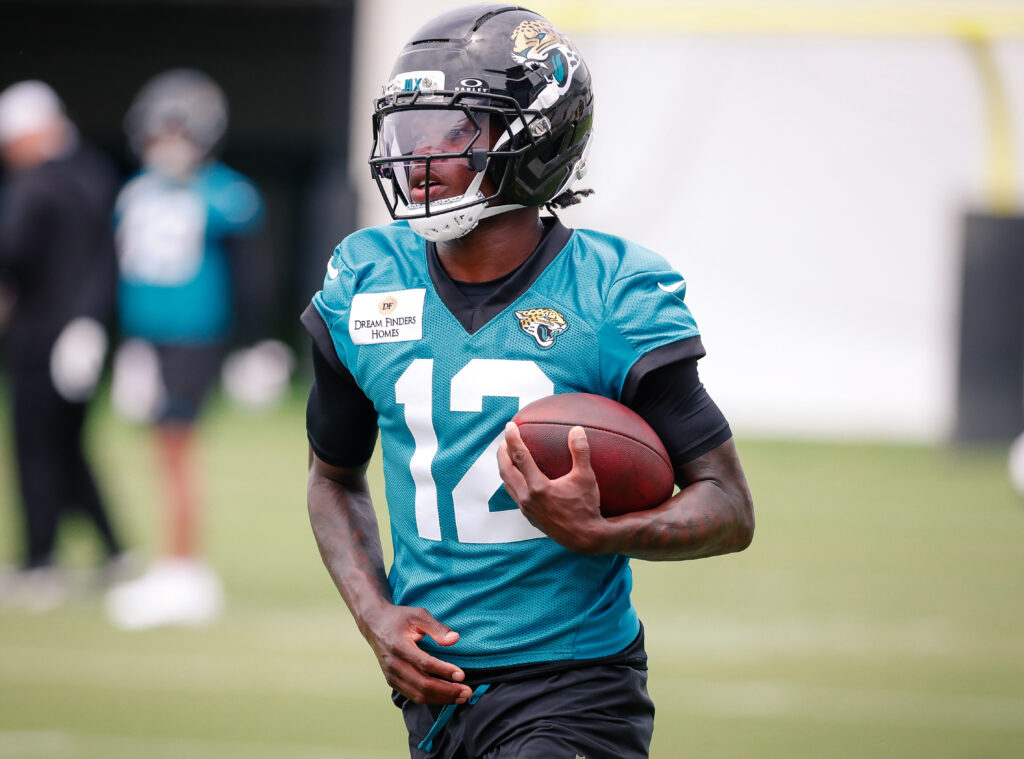
Travis Hunter cleared Jacksonville's active/PUP list this week and is participating in full-contact drills for the first time since rupturing his lateral collateral ligament during a midseason workout last December. The Jaguars are deploying him across both edge and interior defensive line positions at training camp—a more expansive role than he saw during his rookie year. On the surface, this looks like organizational confidence in his recovery and a strategic unlock of versatility. But the timing and scope of that expanded workload warrant scrutiny.
Hunter was the No. 2 overall pick last year and, before the injury, showed the kind of two-way upside that made that draft capital defensible. His ability to play both pass-rush and run-stopping roles at a high level is rare enough to be worth maximizing. Jacksonville's medical staff cleared him for increased snaps. The team has skin in the game—franchise picks don't get rested for sentiment—so the fact that they're running him at multiple positions suggests they believe the ACL (correction: LCL) has healed structurally. But there's a gap between structural healing and neuromuscular readiness, and seven months is a tight timeline for a defensive lineman to build enough proprioceptive confidence to absorb the lateral stresses of both inside and edge techniques.
The durability risk here isn't speculative noise. Hunter's injury came during an offseason conditioning session, not a contact rep, which means his body was already under stress. The expanded camp workload—especially if it includes full-speed edge sets with footwork changes and interior gap penetration—loads his lateral compartment repeatedly, the exact mechanism that blew out the LCL in the first place. Add preseason games starting in three weeks, and the injury vector is very much live.
For prop bettors, Hunter's defensive snap count and sack line are the barometers here. If he's rostered at 8+ sacks this season, that's pricing in sustained health and consistent edge reps. But a player managing a reconstructed LCL while learning a new positional split is more fragile than his pedigree suggests. The safer read is to fade any aggressive defensive line props on Hunter through Week 4—the window where recurrent LCL tears cluster most densely in the medical literature. After four weeks of full-speed, game-condition exposure with no setbacks, his durability profile normalizes. Before that, any spike in his snap-count line (above 70% per game) or tackle props (above 5.5 combined) is underpricing the binary re-injury risk that a second procedure would introduce mid-season.