Cardinals' Brissett Standoff Creates Roster Chaos at the Worst Moment
By Erik Schwartz ·
Arizona signed a new QB in free agency and drafted another in round three, yet won't commit long-term money to its starter—a signal of organizational dysfunction heading into the offseason.
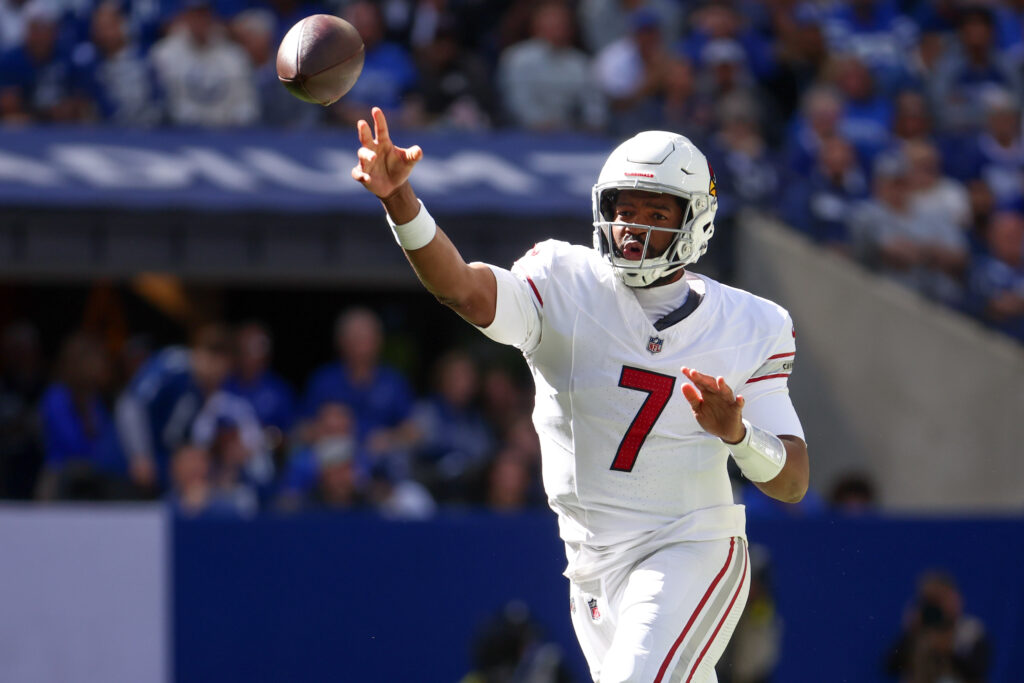
The Arizona Cardinals and Jacoby Brissett have hit a wall in contract negotiations, with ESPN reporting the two sides are "significantly" apart on terms as they attempt to rework his deal. This isn't a minor haggle over guaranteed money or vesting schedules. The gap is substantial enough that both parties have publicly signaled the talks are troubled—a rare tell from a franchise trying to project stability at quarterback.
The timing exposes a deeper problem. Arizona used free agency to sign Gardner Minshew and burned a third-round pick on Carson Beck, moves that suggest the front office lacks confidence in Brissett as a long-term solution. Yet the team still views him as its starter, at least on paper. That contradiction—investing in replacement-level competition while treating the incumbent as a bridge—is the kind of mixed signal that erodes locker room clarity and accelerates veteran defection. If management doesn't believe in Brissett enough to pay him, why would the defense buy into him? Why would offensive linemen extend themselves in pass protection for a guy the organization is quietly shopping alternatives to?
Brissett started 16 games in 2025 and completed 63.4% of his passes for 3,643 yards and 17 touchdowns against 12 interceptions—numbers that don't scream franchise QB, but solid enough for a recurring starter in a weak-to-moderate offense. The problem isn't his performance; it's the organization's indecision masquerading as negotiating leverage. Teams that know what they want close these deals in July. Teams that remain "significantly" apart in May are usually teams that haven't solved the real problem: whether they should move on entirely.
For prop bettors, this uncertainty creates a specific edge. Brissett's passing volume and efficiency are directly tied to locker room cohesion and offensive line execution—both of which degrade when a starting QB is in a public contract standoff with ownership. Over-under markets on his passing yards (likely to land in the 3,800–4,200 range for the full season) will open assuming 2025-level performance. But a distracted, undervalued starter in an organization that's publicly hedging against him tends to leave yardage on the table. Watch for line movement if Brissett is ultimately released or traded; if he remains, expect him to underperform season projections by 200–300 yards as the dysfunction bleeds into Sunday play-calling and receiver separation. The edge isn't that Brissett is bad—it's that bad organizations suppress good QB metrics.