NFL
The Backup RB Market is Overpriced—Here's Where the Real Value Lives
Fantasy consensus on handcuff running backs misses the distinction between injury insurance and genuine workload upside, creating mispricing opportunities for disciplined prop bettors.
The fantasy football industry treats backup running backs like actuarial instruments: you draft them to hedge the starter's injury risk, nothing more. But this framing obscures a sharper reality. Some backups carry genuine path-to-volume value independent of injury, and the market conflates the two buckets, leaving clear edges for those willing to separate signal from noise.
The canonical example is Rico Dowdle, who finished last season as the RB10 from Week 5 onward despite being selected in only 8.3% of ESPN leagues. Dowdle wasn't a lottery ticket on Chuba Hubbard's durability—he was a situational flex with a defined role that happened to explode into league-winning value once opportunity arrived. That distinction matters because it tells you which backups are truly one injury away (priced as such, no edge) and which carry standalone workload probability even if the starter stays healthy.
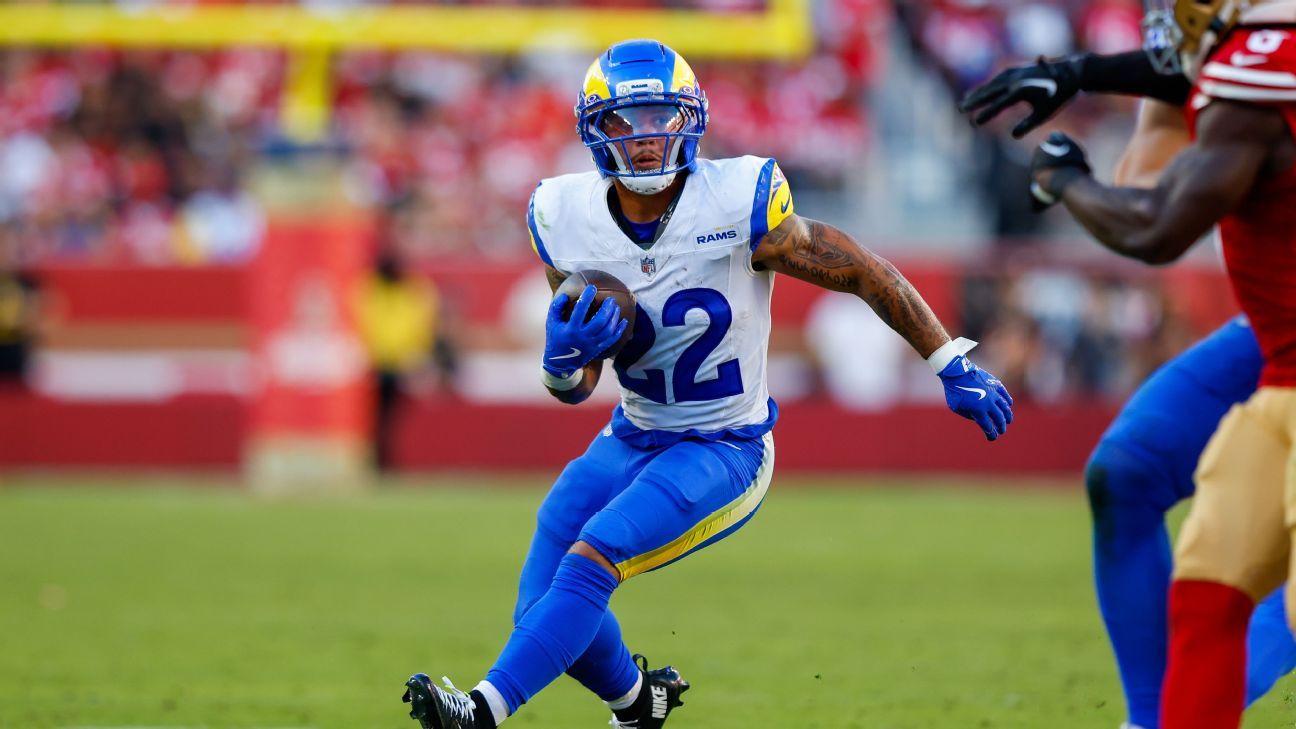
Take Blake Corum in Los Angeles. The Rams project a 60/40 split between Kyren Williams and Corum, with Corum averaging 5.1 yards per carry last season behind the league's second-ranked run-blocking line. If that projection holds, Corum's baseline isn't "injury hedge"—it's a complementary back with consistent low-volume touches in an elite scheme. Sean McVay's system makes Williams and Corum interchangeable, meaning Corum sees genuine game script and personnel flexibility even without injury. The market treats him as pure insurance; his actual profile is closer to a defined flex contributor who unlocks upside if Williams misses time. Kenny Gainwell at Tampa Bay operates similarly. Irving sat out seven games last season and struggled efficiency-wise. Gainwell has averaged 18.6 fantasy points in games where he exceeded 14 touches—a 10-game sample across his career. Tampa Bay didn't sign him to be a practice-squad warm body; the team valued him enough to add him to a 90-man roster in August 2026, a signal that internal models project meaningful volume. Gainwell's floor is higher than the zero-touch emergency phone call his insurance-bet classification suggests.
For prop bettors, this distinction translates into a concrete edge on rushing and receiving volume lines. The market will price Corum's season rushing yards line based on a blended expectation of the baseline workload (60% of touches) plus injury probability (Williams' durability risk). But if you have conviction that the 60/40 split is durable and Williams stays healthy, Corum's rushing-yards under becomes vulnerable to underpricing—the book has baked in injury correction that won't materialize. Conversely, if you believe the split widens (Corum getting 45%+ of touches instead of 40% in an efficient offense), his over becomes a value play against a line still anchored to historical backup volume. Gainwell's yards-per-touch and receptions line face similar asymmetry. The book will assume he stays at 25-30% of touches; if Tampa Bay's internal deployment data suggests 35-40%, his seasonal receiving and rushing totals are undercut. These are multi-week patterns, not single-game variance plays, which means the edge persists across the season as sample size accumulates.
Jonathon Brooks at Carolina presents a different texture. He's being framed as a "low-cost, high-upside bench stash," which in fantasy terms means "don't expect anything until November or later." That's actually correct—Brooks has nine career carries following two ACL tears. But if Dave Canales' offense prioritizes the running game and Brooks shares the backfield with Chuba Hubbard at a projected 46% of touches, the question isn't whether Brooks will be valuable someday; it's whether that volatility compounds across the season into measurable production or stays dormant until a specific injury trigger. For prop purposes, Brooks' season rushing-yards total is heavily skewed by variance—high ceiling if Hubbard misses time, low floor if Brooks stays in a strict change-of-pace role. That skew makes his lines harder to exploit; you're betting on injury timing, not on a durable workload projection. The sharper play is on Corum and Gainwell, where the market is pricing floor-level insurance while underweighting the baseline workload case.