Caleb Downs' Crash Course: Why the Cowboys' First-Round Safety Is a Live Defensive Bet in Week 1
By Ty Whitney ·
A rookie cornerback-turned-safety with three college schemes under his belt and nine days until his NFL debut against the Giants—the market hasn't fully priced the gap between pedigree and operational readiness.
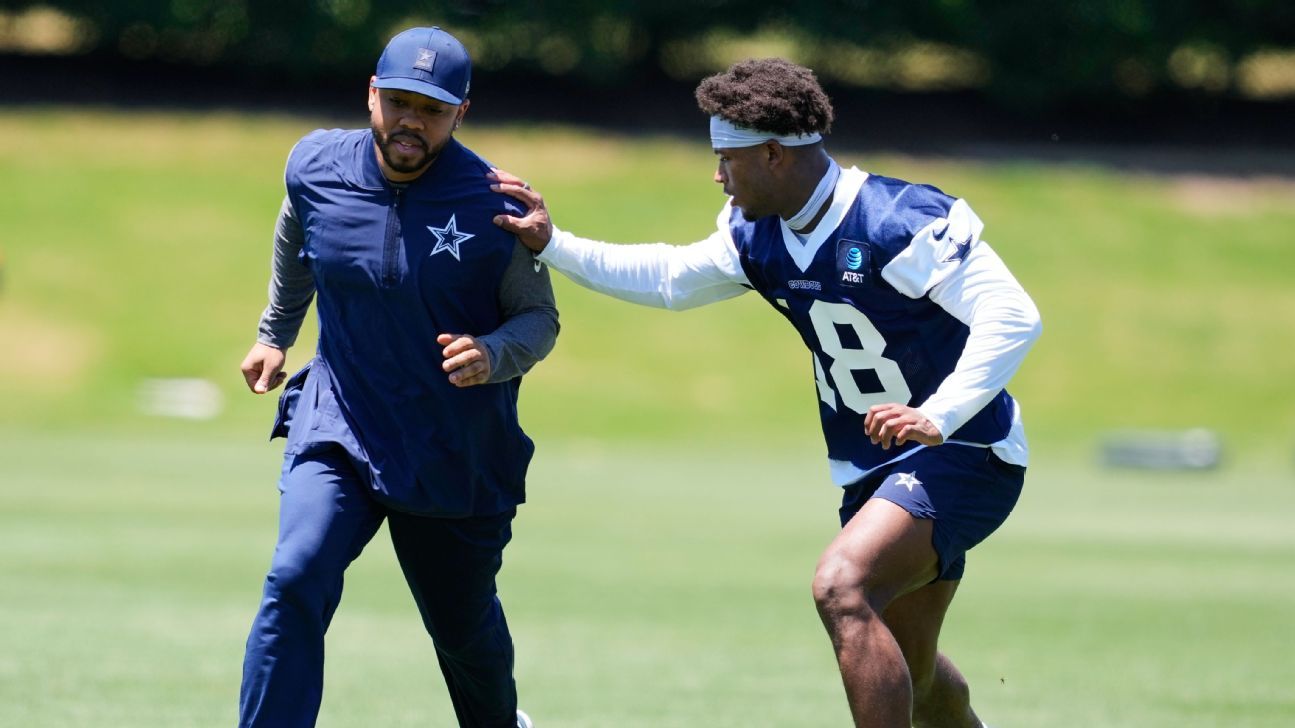
Caleb Downs takes the field against New York in nine days as perhaps the most scrutinized safety prospect in recent memory. Dallas traded up one spot to secure him at No. 11 in April, signaling organizational conviction that transcends typical first-round consensus. The rookie arrived in Frisco already fluent in defensive complexity—a true freshman who led Alabama in tackles in 2023, then pivoted to Ohio State where he absorbed Jim Knowles' scheme before facing the architecture Bill Belichick bequeathed to defensive coordinator Christian Parker. That pedigree matters, but it's incomplete without understanding what Downs has actually done in the nine days since training camp broke.
Parker has operated as Downs' extended tutor throughout the offseason, a mentor relationship visible enough that rookies spoofed it in the final skit. The depth of that partnership—pre-practice walkthroughs, on-field positioning drills, conceptual reviews during breaks—reflects something beyond typical rookie onboarding. Downs has not simply attended meetings; he's absorbed three distinct defensive systems across three college seasons and is now learning a fourth. Secondary coach Ryan Smith noted the urgency: "He's hungry for knowledge. He wants immediate feedback... That's what you get usually with guys who've been in the league for a while." The observation cuts both ways. Hunger and study ethic are durables; but actual reps against NFL receivers are not.
The Giants' passing game in Week 1 will test this foundation immediately. Downs has rotated between nickel coverage assignments—shadowing receivers like CeeDee Lamb and KaVontae Turpin in practice—and safety responsibilities. In joint practices against the Rams and Saints, he faced legitimate NFL route runners in Puka Nacua and Chris Olave. The feedback loop is real. The reflex threshold, however, is still being established. A rookie safety, however cerebral, typically requires 3-4 weeks of live action before the game slows to his processing speed. New York's receiver corps—Malik Nabers, Jalin Hyatt, and role players operating from the slot—will operate at a tempo Downs has experienced only in drills.
For prop bettors, the angle lies not in Downs' ceiling but in the gap between market expectations and starter-level execution. If sportsbooks have priced his tackle volume (combined tackles + assists) assuming typical rookie coverage efficiency, the early-season liability sits in negative volume—missed assignments, communication gaps, and over-pursuiting that inflates opponent completion percentages over his zone. The Cowboys' defense allowed 267 passing yards per game last season; Downs' presence as a rookie nickel might temporarily elevate that number, not suppress it. Conversely, if you're tracking Giants receiver props, the Downs insertion creates marginal opportunity on crossing routes and intermediate slants that exploit communication breakdowns between a rookie safety and cornerbacks still learning Parker's adjustments.
The narrative—hungry, curious, coachable—is genuinely supported by offseason tape. But narrative and first-game execution are orthogonal events. His tackle totals and coverage snaps will carry heavy variance through Week 4; his ceiling is not in question. His floor, and the market's willingness to price rookie growing pains into defensive totals, defines the real edge.