Derrick Henry's Durability Rewrites Baltimore's Running Back Instability
By Ty Whitney ·
After a decade of carousel backfields, the Ravens have found something rare in the modern NFL: a workhorse back who stays healthy and stays put.
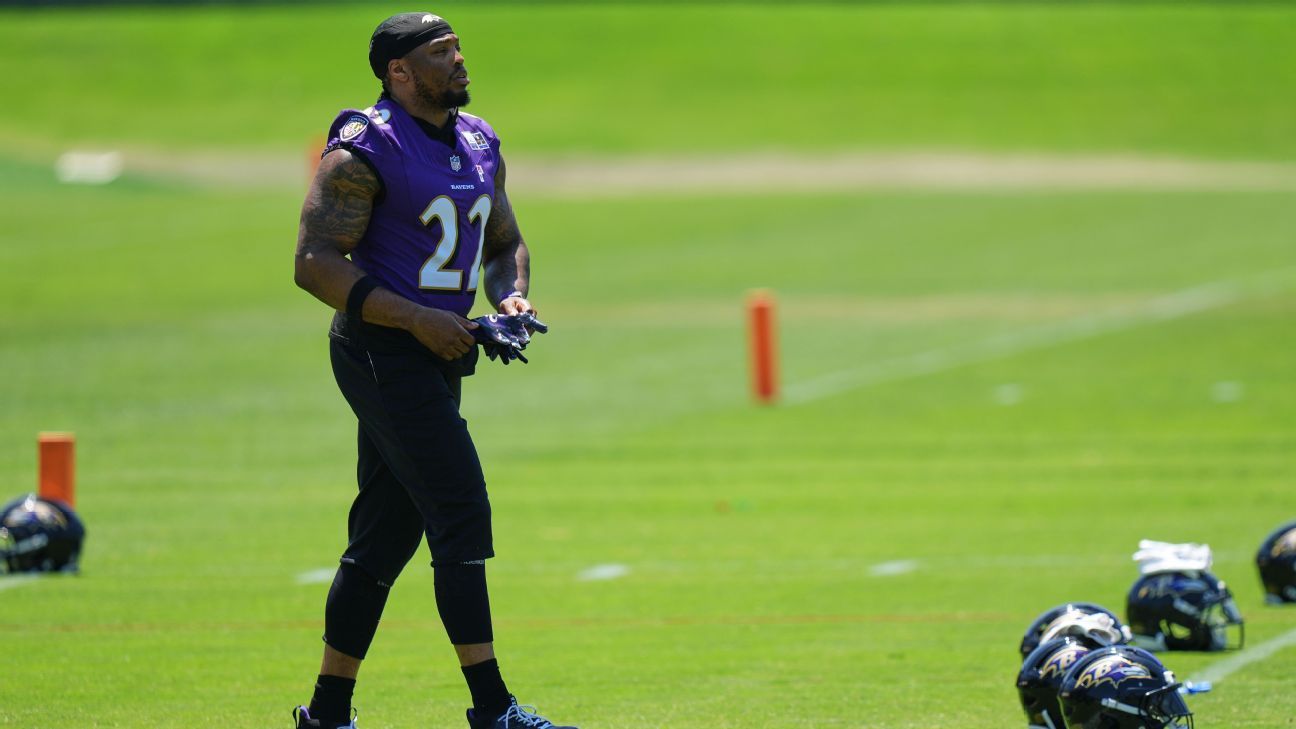
Derrick Henry took a knee-to-knee collision during Baltimore's first organized team activity, hit the turf hard enough to draw visible concern from teammates, and was back running routes within minutes. The moment crystallized what the Ravens have been building: a ground game anchored by a player whose durability has become the franchise's most reliable asset.
That stability is new. Between Ray Rice's 2013 exit and Henry's 2024 arrival, Baltimore cycled through eight primary ball carriers across ten seasons—Forsett, Collins, Edwards, Ingram, Freeman, and others in a perpetual shuffle. The team remained competitive in the ground game (yards per carry stayed respectable), but consistency in personnel and scheme suffered. A running back needs reps, scheme familiarity, and faith from the offense around him. The Ravens couldn't offer that continuity. Until now.
Henry's workload tells the story. He carried 325 times in 2024 (second-most in franchise history) and 307 times last season—seasons stacked back-to-back with elite volume. Over his last four seasons, he's been sidelined exactly once. He's started 51 consecutive games. At 30 years old, operating at a wear-and-tear level that would typically invite regression, Henry has instead flipped the script: the Ravens now build their identity around his presence rather than preparing for his absence. That structural confidence filters down. Lamar Jackson knows he has a 6-foot-3, 247-pound run-game anchor. The offense can scheme power concepts that demand a back willing to take full-contact workload. Offensive line rotation and development improve when focused on one proven runner rather than rotating targets.
For prop bettors, this matters acutely in two frames. First, the immediate: Henry's rushing volume will remain elevated (240+ carries likely) because the Ravens are investing in establishing him as their generational closer. When teams deploy that level of commitment to one back, that back's season-long yardage total becomes predictable—less subject to backfield committee variance. A 1,200-1,400-yard season is the pin they're aiming at, and the market will price Henry's rushing yards line accordingly. The edge here isn't spike-based; it's structural persistence. Second, the implicit hedge: the Ravens' confidence in Henry's durability means reduced reliance on contingency backs. If Keaton Mitchell or another reserve typically sees 8-12 carries per game in a healthy season, that volume shrinks further. Market prices for reserve back rushing yards often lag the reality of who controls the workload; Henry's durability compounds that lag.
The brief scare at OTA was a reminder, not a warning. A healthy, committed workhorse in the NFL is a rarity. The Ravens have one, and they're building accordingly. The market will price volume accordingly—but often doesn't account for the persistence of that volume once a team truly commits to the model.