Declan Doyle's Playbook Overhaul Targets Ravens Passing Game Rebound
By Erik Schwartz ·
Baltimore's new 30-year-old offensive coordinator engineered a dramatic offensive transformation in Chicago last season—and he's already stress-testing Lamar Jackson with a knowledge base Zay Flowers describes as too much, too fast.
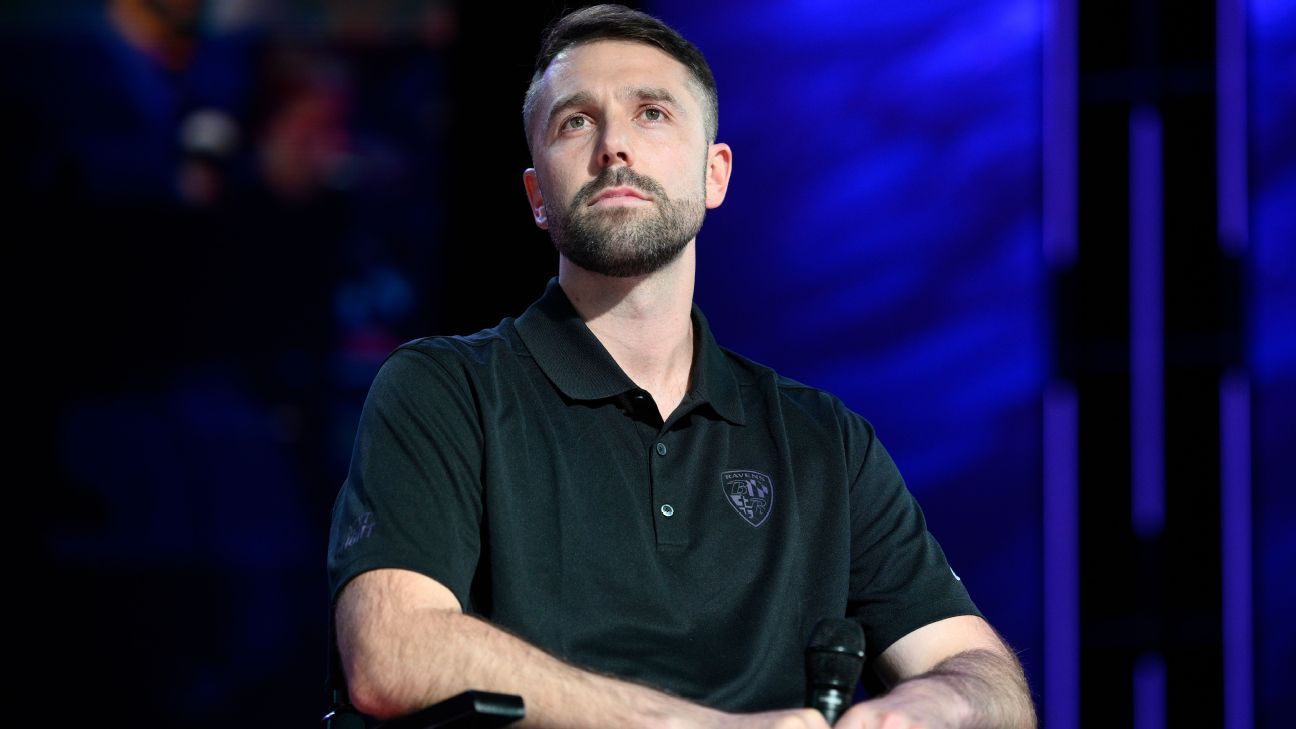
Declan Doyle is three months into his tenure as Baltimore's offensive coordinator, and the pace of his spring install is already causing friction. Per ESPN, Ravens Pro Bowl receiver Zay Flowers has had to pump the brakes on the rapid-fire playcaller multiple times during team activities. "I'm like, 'Hey, coach, chill, chill,'" Flowers said. That tension between Doyle's information density and his players' absorption capacity will matter when the lights come on in September, but it also signals something important: Doyle isn't here to tweak the existing scheme. He's here to rebuild it.
The numbers justify the urgency. Baltimore's offense collapsed in 2025, dropping to No. 16 in total yards and No. 11 in scoring after leading the NFL in yards just one season prior. That's not a regression—that's a structural failure. Doyle's mandate is direct: restore an offense that has underperformed its talent level. His track record at least suggests he can execute the assignment. In 2024, the Bears' offense ranked dead last in total yards; under Doyle's 2025 regime, it vaulted to No. 6. That's not a marginal improvement. That's a 25-spot swing in a single offseason.
The mechanism behind that Chicago turnaround—increased efficiency in the passing game and a more diverse offensive identity—applies directly to Baltimore's situation. The Ravens still have Lamar Jackson, still have an elite run game anchored by Derrick Henry, and still have receiving weapons like Flowers and Mark Andrews. What they lacked last season was a coherent system for moving the ball through the air on schedule. Doyle's playbook, by all accounts, is built on a Rolodex of looks that force defensive recognition and exploit coverage weaknesses at the snap. Ravens defensive coordinator Anthony Weaver called it "a photographic memory" of offensive concepts. That's not hyperbole—it's an organizational bet that systematized quarterback decision-making can unlock a stalled passing attack.
For prop betting, the implication is straightforward: expect Jackson's passing volume and efficiency to climb as the season progresses and Doyle's system settles. Early-season unders on Jackson's completion percentage and passing-yard totals carry elevated risk because they're being priced against a baseline that includes 2025's dysfunction. Once the playbook clicks—and the Spring install intensity suggests it will—defenses will face more organized pre-snap reads and better route spacing, which historically correlates to higher completion rates and fewer negative plays. Week 1-4 passing totals for Jackson may reflect conservative market positioning on a retooled offense; Weeks 9-17 will reflect the actual scheme efficiency. The book will adjust midseason, but early numbers often underestimate how quickly a capable young coordinator can stabilize a broken passing attack.
Flowers' comment about Doyle's pace also hints at a secondary angle: the Ravens' receiving production floor could dip early before rising. When playcallers compress timelines and receivers are still learning route tree variations, miscommunications spike. That means Flowers and Andrews might see lower target efficiency in September, even if total team passing yards climb. Veteran consistency typically lags system implementation by 3-4 weeks. Bet receiving yards for both early in the season with caution; the upside comes in October.