Saleh's Bet on Ward: Why Year 2 Completion Rates Will Test Tennessee's QB Faith
By PropBetEdge Editorial Team ·
Robert Saleh has staked his job on Cam Ward's Year 2 leap, but the mechanical fixes Daboll is engineering—streamlined decision-making and slot-heavy route trees—carry real passing-volume implications.
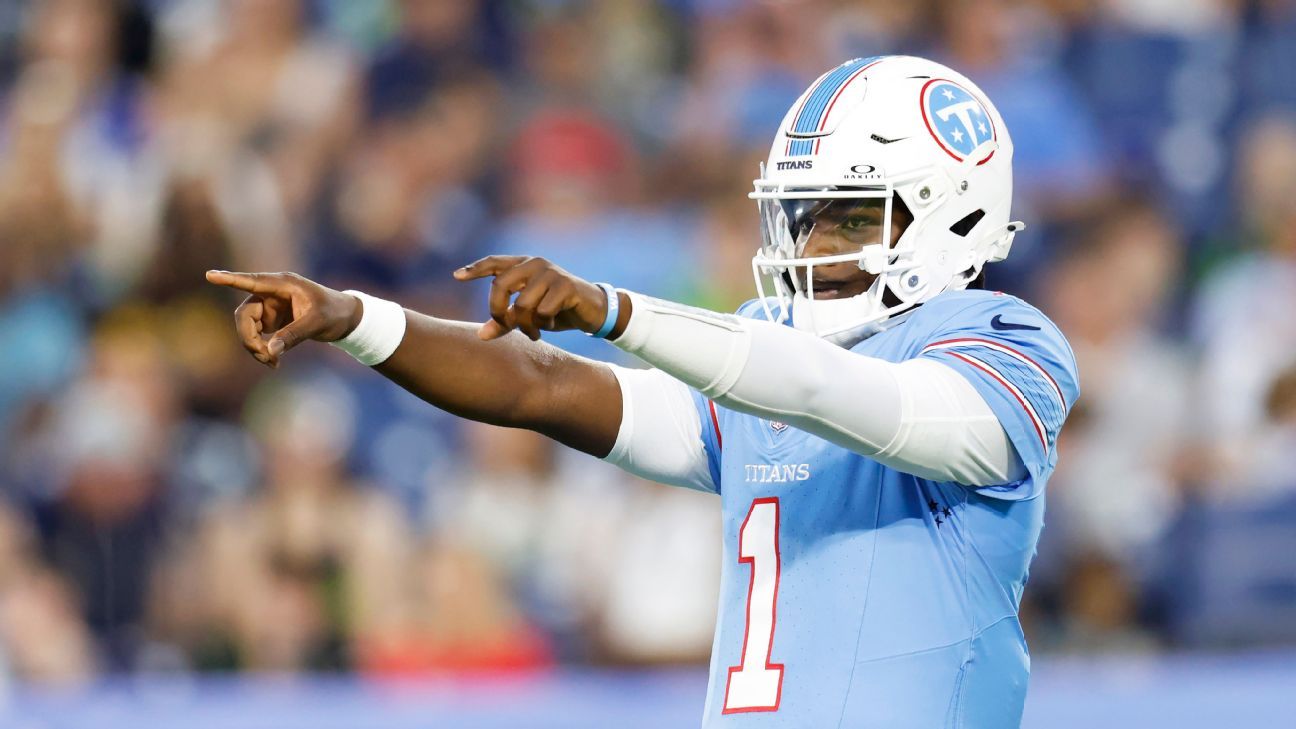
Robert Saleh walked into the Titans job this offseason with a singular mandate: fix the quarterback situation. With new offensive coordinator Brian Daboll now in place and Ward entering his second NFL season, the coach has made an unambiguous public declaration: the young quarterback will succeed, and Saleh's employment hangs on it. That kind of organizational confidence rarely surfaces without conviction, and it's worth taking seriously as a signal of internal valuation—but it also telegraphs exactly what the Titans plan to do with Ward moving forward.
Last season, Ward posted a 3-14 record and finished 17th in passing yards (3,169), 25th in touchdowns (15), and tied for 10th in interceptions (7). His completion percentage sat at 59.8%, a figure that ranked 33rd. Those numbers tell a story of volume inefficiency—a young arm taking too many chances, processing slowly, and bleeding yards through incompletion. The final five games offered a lifeline: eight touchdown passes against a single interception, a dramatic swing that convinced Daboll and Saleh the arrow was already pointing upward. The wager is that Year 2 consistency can extend that trajectory across seventeen games.
Daboll's coaching approach, though, doesn't rely on mechanical tweaks or throwing motion adjustments. Instead, he's building a decision-architecture around Ward that prioritizes game management over freelancing. The offensive scheme will lean heavily on slot receivers and short-passing concepts designed to accumulate completions and flow before exploiting downfield shots. This is efficient-volume design: higher completion rates by architecture, not by accident. Daboll has signaled that Ward's job is to "take what the defense gives him" and "make good decisions on a play-by-play basis"—language that directly constrains the types of throws (deep shots, off-platform escapes, high-risk windows) that inflated his incompletion rate last season. Ward must manage the game, not ignite it.
For prop bettors, this creates a durable edge in completion-rate and short-range receiving markets. If Daboll's system works, Ward's completion percentage should climb toward the 62-65% band—well above his 59.8% baseline—because the route tree is being architected to produce catchable balls at higher frequency. That's not a single-game variance play; it's a seasonal design signal. Conversely, total passing yards could tighten even if touchdown rate improves, because volume will be redistributed from failed deep shots to completed short passes. Expect his raw yardage to settle in the 3,200-3,600 range rather than spike above 3,800; the offensive identity is efficiency-first, not volume-first. The market will initially price Ward's Year 2 props as a simple "he's better in Year 2" regression, but the Daboll effect is more surgical: higher completion percentage, lower raw yardage volatility, and a higher floor on decision quality. That precision is where the edge lives.
Saleh's public confidence is real, but it's also a bet on system fit, not pure talent elevation. If Ward thrives, it will be because Daboll's short-passing architecture aligned with his quarterback's strengths—patience over improvisation, accuracy over arm talent. That's a testable thesis, and the early-season lines will likely underprice completion-rate improvement while overestimating downfield volume gains.