Mayfield's Durability Becomes Centerpiece of Buccaneers Contract Talks
By Ty Whitney ·
Tampa Bay is pricing injury risk into extension negotiations with its starting quarterback after two injury-marked seasons.
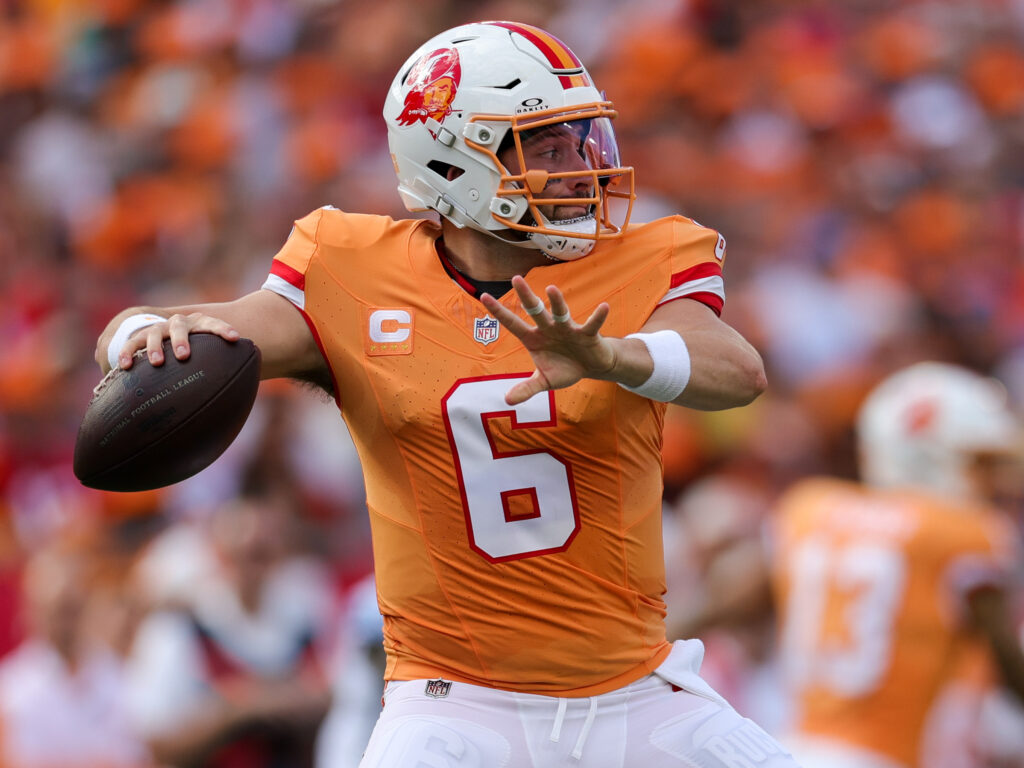
Baker Mayfield's path to a long-term deal with the Buccaneers has hit a familiar obstacle: his body. As the quarterback enters the final year of his three-year agreement, both sides have signaled urgency to avoid letting him play out the contract. The sticking point, however, centers on how heavily Tampa Bay will discount guaranteed money to account for the injury history that plagued the past two seasons.
Mayfield played through soft-tissue issues and managed pain in both 2024 and 2025, never missing starts but clearly operating at diminished effectiveness in stretches. Those durability questions now sit at the negotiating table. The Buccaneers' medical staff has documented the toll, and that documentation influences what the front office believes it should pay for a multi-year commitment. Extension conversations that might otherwise focus on market rate and years have instead shifted toward injury hedging—the team seeking either lower guarantees, performance escalators tied to games played, or both.
From a contracting standpoint, this is straightforward risk management. Mayfield has proven he'll tough through discomfort and keep the offense moving, but he hasn't proven he can sustain a full season without degradation. The market for aging quarterbacks with injury flags typically reflects a 10–15% guarantee discount relative to fully healthy peers at the same performance tier. A player of Mayfield's caliber in a clean health situation might command $250M+ over four years with $180M guaranteed. The durability question likely pushes that to $250M+ over four years with $155–165M guaranteed—or restructured language that vests guarantees based on consecutive games started.
For bettors, the significance runs through game-to-game variance in Mayfield's arm talent and decision-making. A quarterback managing pain typically shows measurable regression in late-game efficiency, shorter completion windows downfield, and increased interception volatility in the fourth quarter when his mechanics tighten. If Mayfield signs an extension with incentive-laden guarantees tied to starts, expect the Buccaneers' offensive game plan to be more conservative early in 2026 while both sides lock in durability data. That conservative approach—more short routes, fewer deep shots, higher checkdown frequency—will suppress his passing yard totals and touchdown upside in the early regular season, though it may improve team total variance by reducing picks and sacks.
The prop angles surface most clearly in Week 1–4 lines. Mayfield's passing yardage projections will anchor to his seasonal norms (roughly 4,200 yards) without accounting for load management or play-calling restrictions. Smart syndicates already understand the health discount is real; softer books may price him as a full-health option. Early-season unders on his passing yards and passing touchdowns carry edge value if the Buccaneers deploy a run-heavy, short-passing offense designed to keep him upright and accumulate durability data for the extension finale.