Giants Restructure Thomas Again: Cap Flexibility Masks Offensive Line Durability Crisis
By PropBetEdge Editorial Team ·
Andrew Thomas restructures for the second consecutive year, signaling New York's chronic inability to keep its anchor left tackle healthy—and raising questions about offensive line stability heading into the 2026 season.
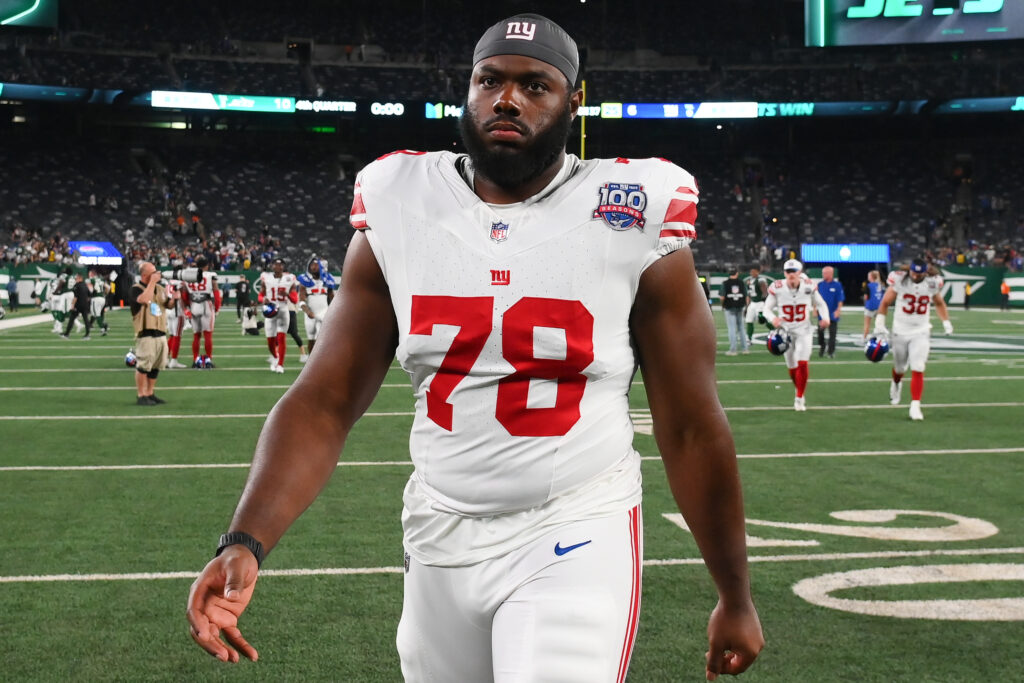
The Giants and Andrew Thomas have restructured his contract again, converting a portion of his 2026 base salary into a roster bonus to carve out $6.46 million in immediate cap space. It's the second such move in as many years—a pattern that reveals less about Thomas as a negotiator and more about the Giants' precarious financial position and a deeper organizational concern: their franchise left tackle has become unreliable precisely when they need him most.
Thomas inked a five-year, $23.5 million-per-year extension in 2023 on the strength of his durability through his rookie deal. Since then, the narrative has inverted. He missed significant time in 2024 (six appearances), was forced into a restructure last September, and now needs another one before the 2026 season even begins. At 27, he's entering what should be his prime years on a contract with no guaranteed money beyond this season—a structure that typically suggests a team is bracing for decline or departure. The Giants, sitting near the bottom of the league in cap space, are using Thomas's deal as financial scaffolding rather than anchoring their investment in him.
For the Giants' offensive line, this instability matters enormously. A healthy, consistent left tackle is the foundation for pass protection schemes, which in turn dictates how aggressively a quarterback can operate. When that anchor becomes a game-to-game question mark, coordinators and quarterbacks adjust downward—less aggressive route trees, shorter time-to-release windows, fewer deep shots. The Giants' 2026 passing game will be designed and called with the assumption that Thomas is unavailable or limited, not with him as a guaranteed pillar.
On the prop-betting side, this restructure compounds an existing liability. If Thomas plays all 17 games, the Giants' passing offense has more ceiling. If he misses time (which his injury history now suggests is more likely than not), the team defaults to shorter, safer patterns—quick slants, checkdowns, screens. That directional shift shows up in quarterback volume and efficiency metrics: fewer passing yards, longer average time-to-decision, tighter completion percentages. For Giants passing props specifically—QB passing yards, receiver receiving yards, completion totals—building in a durability discount is now mandatory, not optional. The market may still be pricing Thomas as a 15-17 game contributor; the team's repeated restructures are telling you otherwise.