Dynasty's Timing Problem: Why Henderson and Watson Command Attention Before the Market Corrects
By Erik Schwartz ·
Four players reshape dynasty calculus mid-summer—but the real edge belongs to those who move now, before the rest of the room recalibrates around changing roles and opportunity.
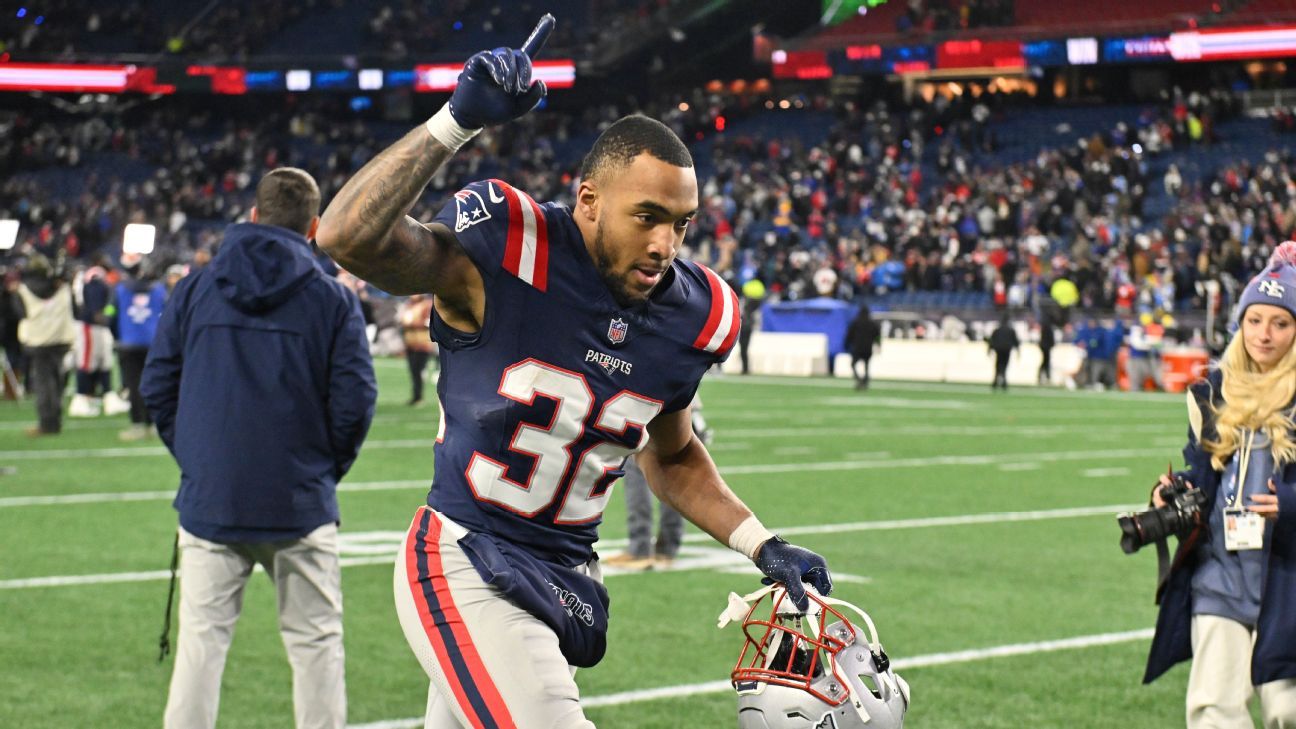
Dynasty fantasy football rewards early positioning on talent shifts that the market hasn't yet priced. TreVeyon Henderson's second-season arc at New England presents exactly that moment. The Patriots back accumulated 1,132 scrimmage yards and 10 touchdowns last season despite Rhamondre Stevenson's continued involvement—a genuine productivity floor in a crowded backfield that signaled explosiveness (5.1 yards per carry) rather than volume accident. More important: Stevenson's fumbling problems and Henderson's documented offseason investment in pass-catching and blocking mechanics create a structural opening for workload shift. Drake Maye's presence at quarterback elevates the entire Patriot offense, and a back with Henderson's receiving chops becomes far more valuable in that context. The market has noticed enough to keep him relevant, but not enough to price in a full-scale role consolidation.
Christian Watson and Ladd McConkey operate from opposite pressure points but share identical timing logic. Watson remains off the floor due to injury history—he's played only 10 complete games in his young career—yet those 10 games generated a 13.2 fantasy-point average with four outings above 18 points. The Packers' massive extension wasn't accident; it was internal valuation that the receiving market hasn't fully absorbed. Romeo Doubs' departure removes a target competitor, and Watson's positional ranking (second in average depth of target across two seasons) locks in downfield opportunity. McConkey presents the inverse: a player whose perceived decline last season (No. 13 finish in 2024 to No. 30 in 2025) obscures a role that remained stable at 106 targets. The efficiency dip was real, but opportunity was not the culprit. Enter Mike McDaniel's offensive system and Keenan Allen's 122 targets entering the market as available volume. McConkey's yards-after-catch profile aligns with McDaniel's scheme far better than his predecessor's vertical-heavy approach. The market punished him for a bad year without accounting for the structural fix now in place.
Marvin Harrison Jr. presents the harder read. Two seasons into his career (29 games, 103 catches, 1,493 yards, 12 touchdowns), he's generated elite draft capital output even as the broader market has cooled on his timeline. Injuries and chemistry questions with Kyler Murray have dented perception faster than talent decline would justify. The calculation here turns on whether you believe the Arizona receiving room has stabilized or remains fractured. If the former, Harrison's discount is exploitable; if the latter, it's deserved.
For prop bettors, these dynasty valuations matter acutely. Henderson's receiving breakout—conditional on actual workload expansion—would reshape New England's passing attack underneath the coverage. If he reaches even 40 targets (Stevenson averaged 25-30 the past two seasons), Maye's completion percentage and short-yardage efficiency climb. Watson's role solidification in Green Bay creates a floor on target share that supports 7-8 reception games, which translate to low-variance receiving-yard props (60-75 yard ranges where the efficiency gap between