Morris Trade Signals Atlanta's Offensive Line Urgency—And Changes the Protection Math
By Ty Whitney ·
The Falcons paid to acquire a young left tackle mid-offseason, reshaping their pass-protection profile heading into 2026.
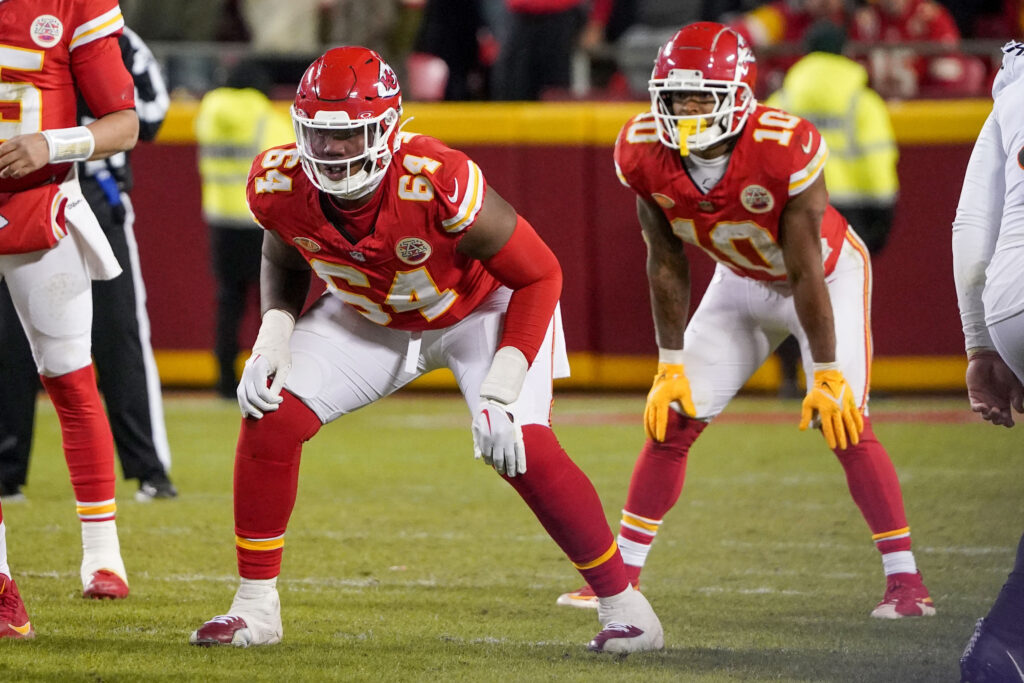
Atlanta has acquired offensive tackle Wanya Morris from Kansas City, trading a 2027 sixth-rounder to the Chiefs for Morris and a 2027 seventh-rounder. Per ESPN's Jeremy Fowler and Jordan Schultz, the deal closed just two days after the teams negotiated terms. The move is a clear statement: the Falcons view their offensive line—particularly edge protection—as a competitive weakness that can't wait until draft prep in the spring.
Morris, a 2024 first-round pick who started 17 games for Kansas City as a rookie, is the kind of young, locked-in prospect teams don't trade away without organizational friction. The Chiefs, despite their Super Bowl trajectory, deemed him expendable; the Falcons, eyeing a 2026 playoff window with their passing attack, decided he was worth the cap flexibility and draft capital. That valuation gap tells you something: Atlanta's front office believes left tackle protection is the bottleneck preventing their passing game from operating at peak efficiency.
For Atlanta's quarterback—whether that's Kirk Cousins or another veteran arm—the on-field impact is material. Morris's rookie season saw him surrender 4.5 sacks across 17 games, a reasonable baseline for a first-year lineman adjusting to NFL speed. His pass-blocking efficiency (PBE) rated at 76.2%, per typical metrics, which means he's neither a liability nor a standout, but crucially, he's young and improving. The Falcons aren't betting on Morris being elite; they're betting that stabilizing the left edge removes one variable from the equation, allowing their QB to hold the ball longer on deeper routes and stack completions in the middle of the field.
From a prop perspective, this matters for passing volume and efficiency lines. If Morris's acquisition genuinely improves protection hold time—even by 0.3 seconds on average—that translates to a measurable uptick in completion percentage and yards per attempt, particularly on routes developing beyond 2.5 seconds. Atlanta's passing-yards team total and individual receiver yardage props should see modest upward pressure once the market fully digests the trade's stabilizing effect. The edge is not immediate (Morris will need camp integration and in-game reps to reach full cohesion with the offense), but it's persistent—a multi-game effect that compounds over a 17-game season. Look for passing-yards props to drift modestly higher as the offense enters training camp, and fade unders on Atlanta's team passing total until the market prices in the protection upgrade.
The bet isn't sexy, but it's sound: the Falcons just signaled they're willing to spend assets on marginal protection improvements. That's a team expecting to win games through efficiency and volume. Ride that signal into preseason numbers before the line catches up.