Robinson's Contract Talks Signal Atlanta's Offensive Commitment—and Cap Constraints
By Erik Schwartz ·
The Falcons are negotiating Bijan Robinson's extension while managing a tight-end standoff and a budget-bin QB room, reshaping offensive leverage for the 2026 season.
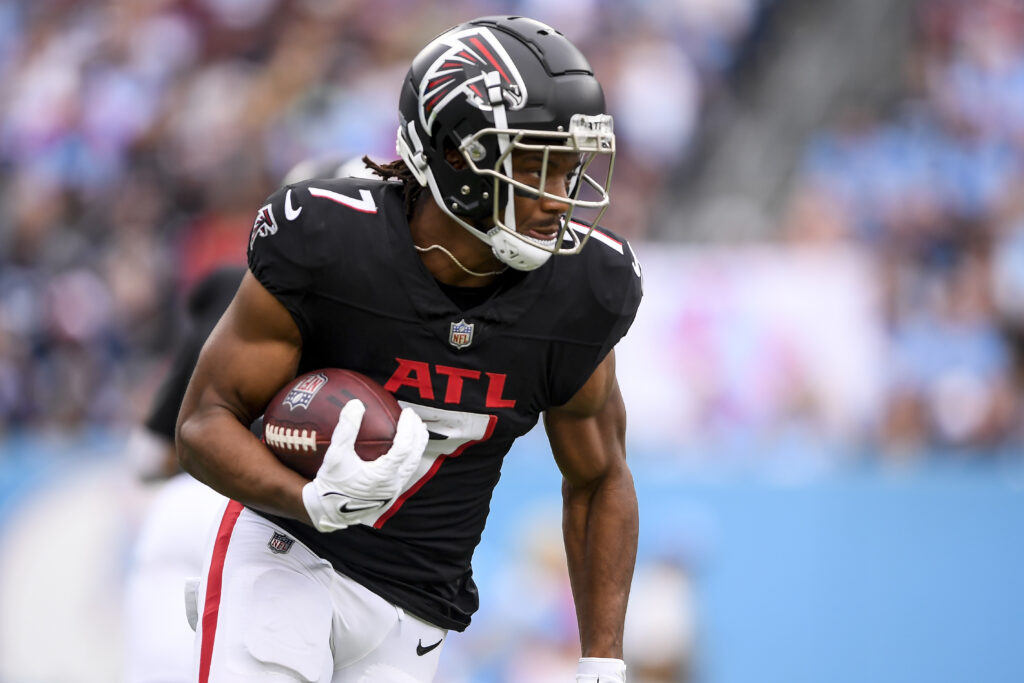
The Falcons are in active extension talks with running back Bijan Robinson, ESPN reported Monday, following their completion of Drake London's four-year, $150MM deal earlier in the offseason. Atlanta's negotiating timeline reflects comfort: the team exercised Robinson's 2027 option in spring, eliminating the cap-year cliff that usually forces both sides to the table. Still, Robinson's three-year résumé—1,003 touches, 5,648 scrimmage yards, 34 total touchdowns at age 24—has positioned him among the league's elite ground-game engines, and Atlanta appears willing to finalize a deal before training camp or Week 1.
The market backdrop matters here. Saquon Barkley set the Eagles' standard at $20.6MM per year; Christian McCaffrey follows at $19MM with San Francisco; De'Von Achane just locked in $16MM annually with Miami. Robinson's camp will point to his volume and production as justification for a top-three figure among backs, possibly exceeding what Achane secured. Jahmyr Gibbs looms as a competing wild card—the 2023 co-first-rounder with Detroit could reset the market again, creating a negotiating shadow play between two young franchises trying to lock down their respective workhorse backs before the next spike.
Atlanta's broader offensive architecture shapes Robinson's value proposition. Kyle Pitts remains franchise-tagged and unsigned, creating uncertainty at tight end. The QB situation is aggressively budget-conscious: Michael Penix Jr. is still on his rookie deal, and Tua Tagovailoa signed for veteran minimum. That cap flexibility—combined with London's extension eating up receiver dollars—suggests the Falcons view Robinson as foundational enough to invest heavily. His workload will anchor the offense; the contract extension is organizational confirmation of that dependency.
For bettors, Robinson's extension status has tactical timing implications. A signed deal typically signals confidence in his health and role sustainability, which can tighten his receiving and rushing-yard lines slightly as the market prices in full-season predictability. Conversely, if negotiations drag into late summer, unresolved contract ambiguity could keep his props underpriced through preseason, since oddsmakers hedge against mid-training-camp deal announcements that suddenly shift snap distribution or game scripts. The mechanism is straightforward: locked-in role clarity invites tighter, more confident lines; lingering negotiation creates volatility in the Robinson slate until resolution. Watch for the announcement timing. If signed within the next 4-6 weeks, expect modest line compression across his rushing and receiving props as bookmakers remove the contract-limbo discount. If talks extend past mid-July, the underpricing window widens.