Eight Coach-Player Mismatches Could Reshape 2026 Receiving Economics
By Ty Whitney ·
Half the NFL hired new offensive play-callers this offseason; the receiving target distribution that follows will crater some over-unders and balloon others.
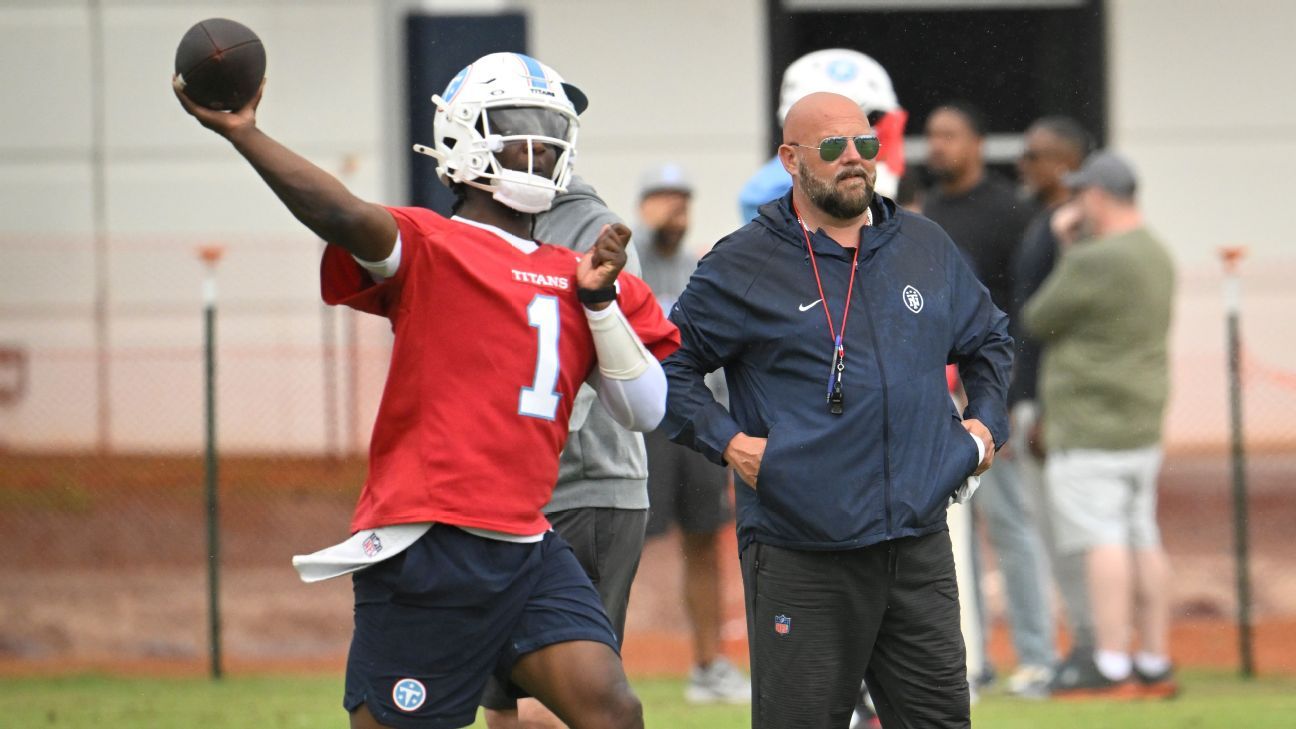
The NFL's offseason traffic in 2026 has fundamentally altered quarterback-receiver partnerships across the league. Eight high-profile pairings—Sean Payton arriving in Denver to work with Jaylen Waddle, Brian Daboll inheriting Cam Ward in Arizona, Kevin O'Connell taking over Kirk Cousins' playbook with Malik Murray, and five others—represent the kind of offensive schematic wholesale that reshapes target allocation, air-yard distribution, and ultimately player prop ceilings and floors.
The core mechanic driving this recalibration is organizational philosophy on receiver utilization. Payton, who spent 14 seasons in New Orleans and three in Denver, has never operated a system where a single pass-catcher commanded more than 30% of team targets in a season—a threshold four teams hit last year. His preference for distributed production, deep receiver rooms with varied skill sets, and the strategic deployment of tight ends into receiving trees directly suppresses what the market prices as "star pass-catcher volume." Waddle, by reputation a volume accumulator, enters an offense architecturally designed to fragment targets. Similarly, other franchise players moving into new schemes face either expansion or compression of their receiving opportunity depending on the coordinator's philosophy on consolidation versus distribution.
This matters because Vegas doesn't always price target scarcity into opening numbers. A receiver moves teams and carries his prior-season usage rate in public memory; the book sets his receiving yards line based on his old role, not his new coordinator's historical fingerprint. When Payton's system takes the field, Waddle's actual target share will likely track 15-18% lower than what a straight historical projection from his Miami seasons would suggest. Daboll, by contrast, has shown willingness to game-plan around elite young talent—his use of Saquon Barkley in Philadelphia and his early work with Joshua Allen in Buffalo both featured above-league-average touch consolidation on star players. Cam Ward may actually see target inflation in Daboll's scheme, a reverse pressure on the over.
The nine weeks between now and NFL week one provide the market a window to misprice these adjustments. Training camp reports, preseason snap counts, and early-August beat coverage will gradually surface the true allocation picture, but opening numbers—posted before the full schematic picture crystallizes—will carry ghosts of last season's target economy. For bettors, the immediate angle is identifying which coaching hires represent target compression (Payton additions, specific Ryan Grubb-school minimalists) versus expansion (Daboll arrivals, schemes designed around singular playmakers). The gap between pregame opening numbers and what the offense actually produces over weeks 1-4 is where the edge lives.