Dolphins Linebacker Depth Test Begins: Rodriguez Steps In as Brooks Faces New Competition
By Ty Whitney ·
Miami's linebacking room reshuffles before Week 2 as Ronnie Harrison hits injured reserve, but the real story is Jacob Rodriguez's immediate readiness exposing a deeper roster construction problem.
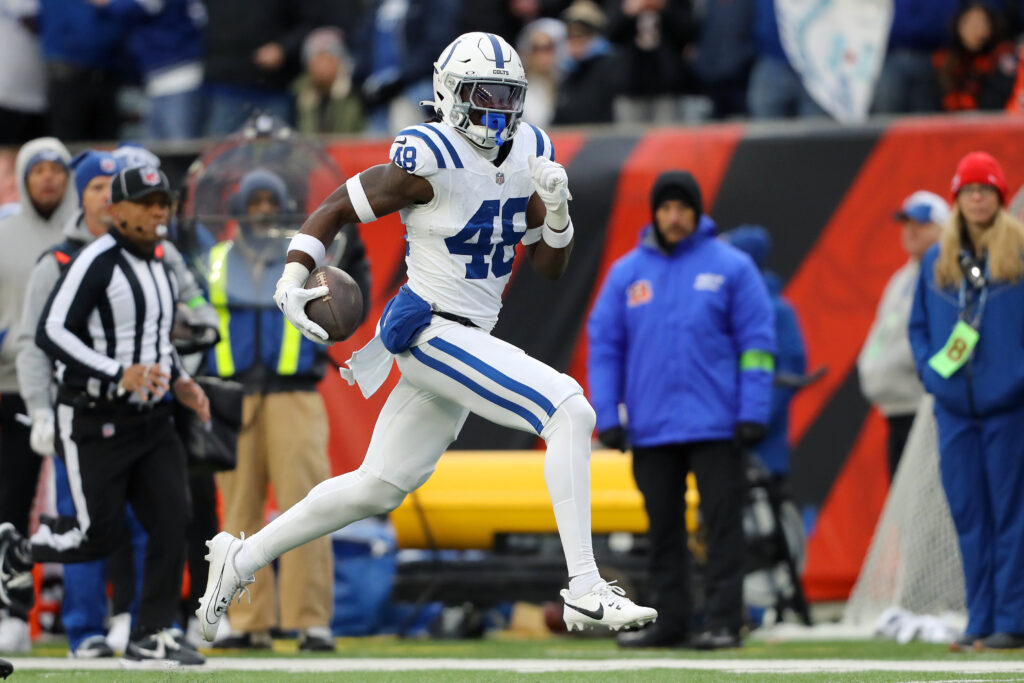
The Dolphins placed veteran linebacker Ronnie Harrison on injured reserve Saturday, forcing Miami to elevate Liam Anderson from the practice squad to manage depth before Sunday's Week 2 matchup. Harrison, who signed as a free agent in the offseason, saw only special teams snaps in the Week 1 opener—a telling indicator of his standing in a linebacking group that was supposed to ease his transition into what was billed as a reserve role. His absence matters far less than what his benching reveals: Jacob Rodriguez, the Dolphins' second-round rookie, arrived NFL-ready and immediately displaced the veteran hierarchy.
Rodriguez posted 14 total tackles in Week 1, matching the intensity of a linebacking corps anchored by All-Pro Jordyn Brooks. That output wasn't a one-game spike; it was a credential. When Miami selected Rodriguez in round two, the organization signaled confidence in his ability to contribute immediately. Harrison's signing suggested depth insurance. Rodriguez's performance rendered that insurance redundant. A four-week IR stint for Harrison is the natural outcome—not punishment, but mathematical reality. Miami has its linebacker rotation sorted, and Harrison doesn't fit it anymore.
The broader point: Brooks, last year's NFL tackle leader, is now sharing territory with a rookie who can match his impact in week one. That kind of peer-level competition at the position changes how defenses allocate their coverage and tackling workload. For Brooks specifically, the presence of Rodriguez as a capable co-anchor means his tackle totals may distribute across two players rather than concentrate on one. Last season, Brooks accumulated tackles at an elite rate partly because Miami's secondary coverage and scheme construction forced opposing offenses into predictable short-gain situations. If Rodriguez proves sustainable at that 14-tackle floor, Brooks' individual tackle ceiling contracts proportionally.
For prop bettors tracking Brooks' tackle lines, the Rodriguez factor is now structural. Early-season lines on Brooks totals likely priced him as the team's singular tackle magnet—a reasonable assumption given his All-Pro credentials and last year's numbers. But one week of data showing Rodriguez as a 14-tackle contributor shifts the math. If Miami's scheme distributes tackles across two productive linebackers, Brooks' average will normalize below what his standalone performance from last season would suggest. The market may have overweighted Brooks' tackling volume on the assumption that he'd retain monopoly-level access to the position. Rodriguez's Week 1 snap count and tackle production suggest he's competing for that access, not backing up into it. Shops that haven't adjusted Brooks' tackle lines lower by 0.5–1.0 tackles per game are pricing a one-man defensive core that Rodriguez's actual performance contradicts.