Dolphins Face Contract Crunch With Brooks: Defensive Star Caught Between Legacy Ambition and Cap Reality
By PropBetEdge Editorial Team ·
Jordyn Brooks' All-Pro season and contract uncertainty signal Miami's defensive priorities—and their limits—entering a pivotal rebuild.
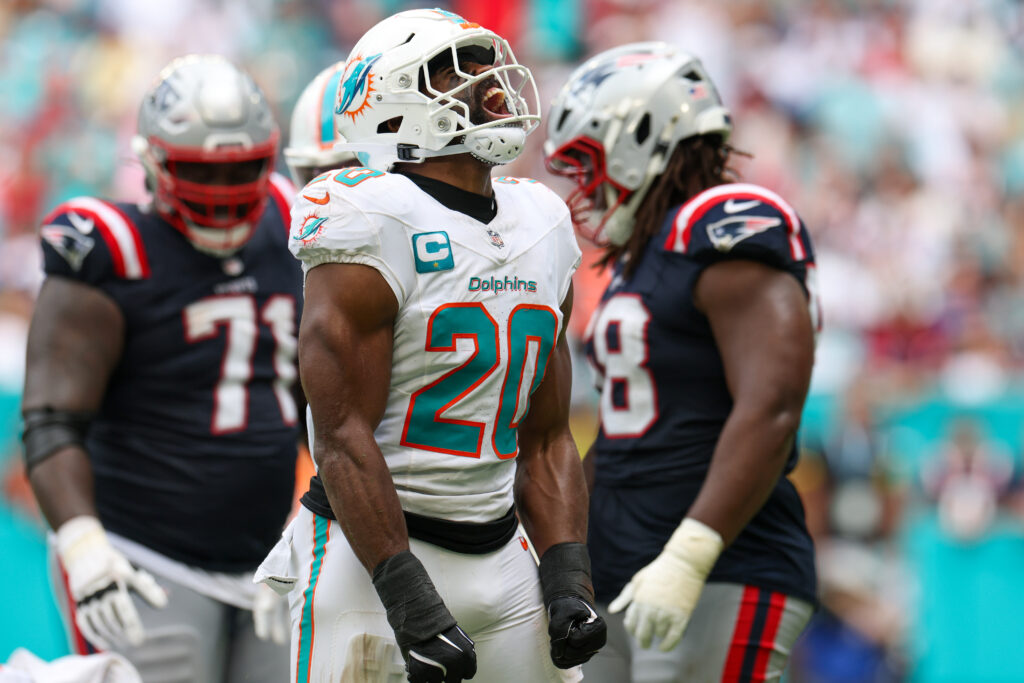
Jordyn Brooks entered the offseason as Miami's most obvious extension candidate. The All-Pro linebacker posted a league-leading 183 tackles in 2025, earned a first-team nod, and solidified himself as the franchise's defensive anchor. Instead of a routine contract conversation, Brooks is now broadcasting uncertainty. Speaking to reporters at OTAs, he admitted he doesn't know whether the Dolphins will offer him new money—a telling comment from a player of his production tier, and a clear signal about the organization's financial or strategic constraints heading into what Miami has publicly framed as a rebuild.
Brooks arrived on a three-year, $26.28M deal in 2024. His $8.76M annual value was reasonable at the time but has become undermarket for a first-team All-Pro. The comp here matters: Azeez Al-Shaair just signed a three-year, $54M extension with Houston ($18M AAV), more than double Brooks' current rate. Pro Football Focus graded Brooks 11th among 88 linebackers and third in run defense—elite two-down production. He's entering the final year of his contract with zero guaranteed money remaining, which means he's negotiating from a position of strength on the open market but also knows Miami holds leverage on timing. The Dolphins' brass hasn't closed the door—GM Jon-Eric Sullivan said in March he wants Brooks to be "a pillar on the defensive side," and new coach Jeff Hafley described him as a "fun guy to coach" with "elite" work ethic. But words aren't contracts, and the team's financial position suggests they're making hard choices.
From a defensive-stability standpoint, Brooks' presence matters. His tackle volume—whether it signals elite sideline-to-sideline range or reflects Miami's overall defense being overmatched—anchors the team's film study and locker-room credibility during a reset. Losing him would force the Dolphins to either develop a younger linebacker prospect or absorb significant snaps by a lower-grade replacement. The betting angle isn't about Brooks personally; it's about what his contract status tells us about Miami's secondary and edge-rush construction. If the Dolphins decline to extend him, defensive efficiency metrics (yards allowed, sack rate, turnover margin) will deteriorate. If they do extend him, it comes at the cost of secondary help or pass-rush reinforcement elsewhere.
For prop-betting purposes, Miami's defensive efficiency props and team totals become more volatile depending on the outcome. A Brooks extension signals the Dolphins are willing to invest in linebacker stability at the cost of depth investment elsewhere, which typically correlates with higher opponent scoring and fewer team defensive stops. Conversely, a non-extension scenario (where Brooks plays out the final year without a deal looming) often produces quieter statistical performances as veteran players focus on prove-it seasons rather than aggressive gap responsibilities. Brooks' tackle totals—if he remains a Dolphin—sit as the one stable defensive prop, but team totals and spread movements on Miami's defensive slate should track this negotiation closely. The rebuild narrative masks a simple truth: the Dolphins can't afford to pay Al-Shaair money to a linebacker while simultaneously fixing their secondary and pass-rush deficiencies. Brooks' extension status will reveal which unit gets that priority.
The uncertainty Brooks expressed is honest, but it's also a negotiation statement. He showed up to OTAs, avoided holdout theater, and let his film speak. What comes next depends entirely on Miami's appetite for allocating $18M annually to a run-defender in 2026 when secondary talent is scarce. The Dolphins have until the franchise tag deadline and the season to decide. That timeline means clarity should emerge by mid-June, which is early enough for the market to adjust team-total lines and defensive efficiency props before training camp.