Browns Training Camp Will Settle Watson vs. Sanders; Market Hasn't Priced the Uncertainty
By PropBetEdge Editorial Team ·
Todd Monken wanted clarity at quarterback before camp; instead, Cleveland will resolve a two-man competition through July and August, creating volatility in Browns passing props until Week 1.
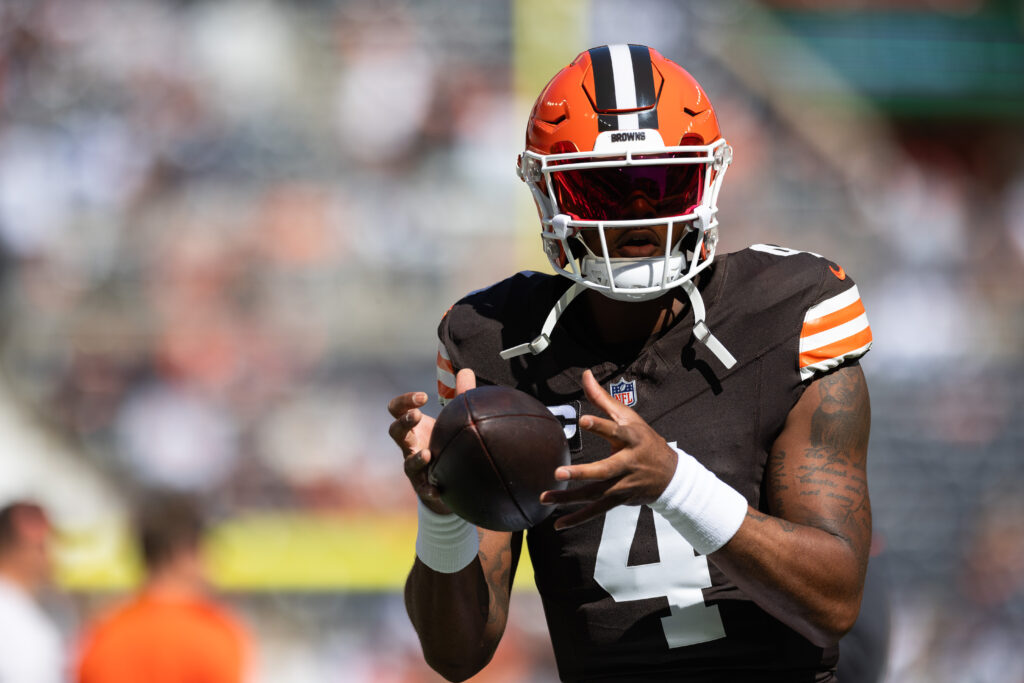
The Cleveland Browns will enter training camp without a named starting quarterback, forcing head coach Todd Monken to adjudicate between Deshaun Watson and Shedeur Sanders over the next six weeks. Monken had publicly stated a preference to have the position settled before camp opened, but organizational inertia and the complexity of Sanders' draft capital (second-round pick from 2025) have left the decision unresolved. The setup leaves both signal and noise in the market simultaneously: Watson carries injury history and $230 million guaranteed, Sanders has no NFL reps, and the coaching staff must evaluate one against the other in live situations.
The Watson-Sanders calculus hinges on risk tolerance and timeline. Watson's durability concerns (shoulder, Achilles, cumulative mileage) are baked into public perception but may carry higher weight in a coach's operational decision-making than in betting lines, which default to recency and pedigree. Sanders, a Heisman winner with elite arm talent, has no preseason tape and enters a crowded deadline situation—the Browns cannot simply hand him the job without demonstration, but extended reps against first-team defense in July may accelerate his learning curve beyond what the market assumes. Monken, known for offensive innovation, will lean toward the quarterback whose mechanics and decision-making clearest align with his system. This is not a two-week subplot; it's a six-week evaluation window that will produce practice film, joint-team scrimmages, and preseason performance data that the market cannot fully price until August.
For prop bettors, the immediate implication is QB-dependent volatility. If Watson wins the competition and takes Week 1 snaps, his passing-yards and touchdown props will anchor to his career averages (265 yards per game, 1.9 TDs per game over his career in Brown—a modest profile despite the salary). If Sanders breaks through and gets meaningful preseason snaps that translate to a Week 1 start, his market-making spreads will be far wider (rookie volatility, system novelty, opponent film advantage). Browns team totals, spread positioning, and all passing-category props linked to the starter will move in discrete jumps as the decision clarifies. A Watson declaration in late July will tighten the range; a Sanders upset would widen it, since bettors and books would face genuine uncertainty about his floor.
The operational signal to monitor: practice reps. In the first two weeks of camp, watch which quarterback receives the bulk of first-team snaps in two-minute drills and red-zone work. Monken has 120 live snaps of training-camp evaluation to make this call. If Watson is receiving 65% or more of team reps by late July, the market is likely to price him as a 75%+ favorite for Week 1 starter status by late August, and his individual passing props will compress tighter toward his season averages. If Sanders is getting 50%+ of team reps in month two, expect a sharp repricing of Browns total and passing-yardage lines—wider, lower floor. Books will not move decisively until preseason Week 2 (late August) when live film materializes; until then, early-August lines on Browns QB passing props will carry elevated variance.
The betting edge exists in the lag between practice clarity and market adjustment. If you have access to training-camp reports (local beat, team reporters) or preseason film from mid-August, a Watson confirmation or Sanders breakthrough will be knowable 3-5 days before public prop lines fully rationalize the change. Lock in early unders or overs on Browns team totals in mid-July while the market still prices 50/50 uncertainty; then pivot when the starter becomes clear and the QB-dependent efficiency profile locks in. This is a timing edge, not a durability edge—it depends on your information advantage relative to the market's adjustment speed.