Cowboys Lock Down Williams Early: What the $38M Market Means for Dallas's Defense
By PropBetEdge Editorial Team ·
Quinnen Williams and the Cowboys are aligned on an extension before the 2027 market winds tighter—and the price tag just reset the defensive tackle baseline.
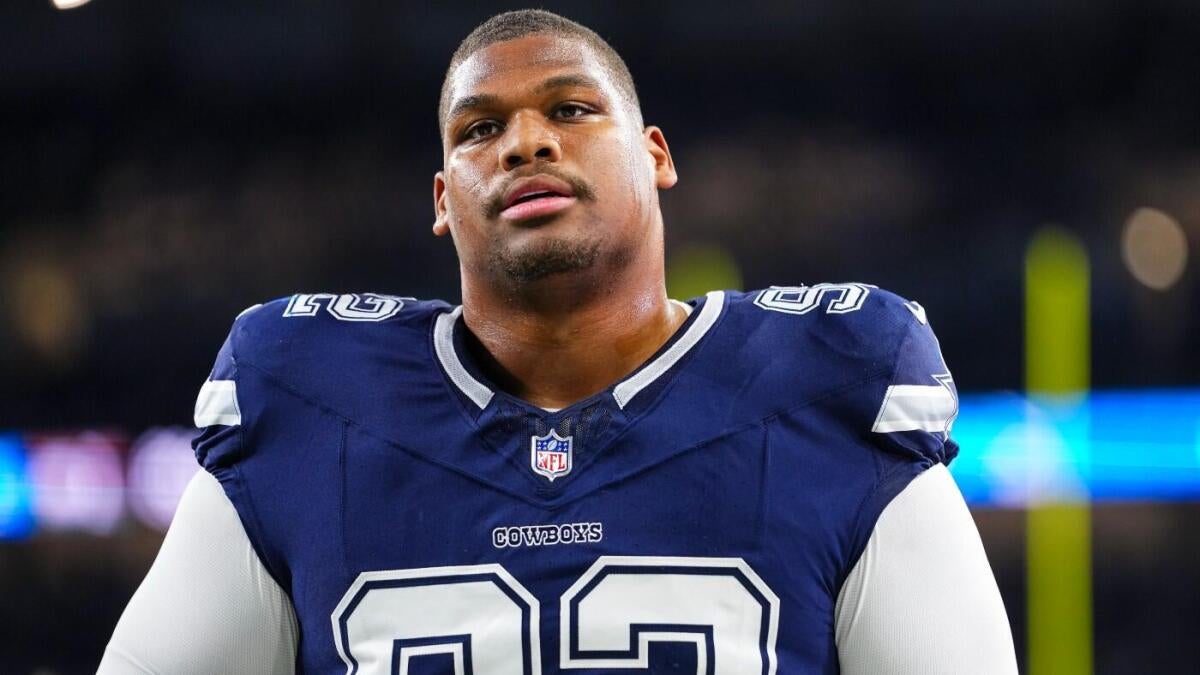
Quinnen Williams is heading toward a contract extension with the Dallas Cowboys, and both sides are already in the room. Per Stephen Jones at training camp, the organization is 'very open' to moving quickly, while Williams stated Wednesday he would 'love being here for the long haul.' The momentum is real, mutual, and economically urgent: the defensive tackle market exploded this offseason, with Jalen Carter landing a four-year, $152 million deal ($38M annually) at 25 and Jeffery Simmons signing three years, $105.828 million ($35.276M per year) at 29. If Dallas waits, the next DT anchor contract will reset even higher.
Williams arrived via midseason 2025 trade (the Cowboys sent a top-50 pick, a second-rounder, and Mazi Smith to the Jets), and the investment already looks sound. He finished 2025 as one of only two defensive tackles in the NFL's top 10 in both pass rush win rate and run stop win rate—the other was Osa Odighizuwa. That dual-threat profile—elite interior pressure and run-stuffing in the same snap—is rare enough to command premium pay. The Cowboys made Williams the new anchor of their defense after trading Micah Parsons to Green Bay, and Williams embraced the role: he said wanting to win drove the decision more than money, and his presence immediately repositioned Dallas's defensive identity around a disruptive interior line rather than edge dominance.
What makes this negotiation leverage-asymmetrical is timing. The Cowboys are locked into Williams through 2027 anyway, so waiting costs them nothing—until it does. Every month another star DT gets extended, the baseline inches higher. Carter and Simmons have nearly doubled the salaries that once anchored to Fletcher Cox and Aaron Donald. If Williams hits free agency in 2028 (or if Dallas lets the negotiation slide into 2027), the market will have reset again, and $38M per year will look quaint. By moving now, the team can lock in an elite two-way interior rusher at market rate instead of chasing him at premium-plus. Williams knows it too. He's studied the recent deals closely and joked with Kenny Clark about how fast the DT market has climbed. That awareness is mutual negotiating leverage—he won't take a discount, but he won't ask for the $42M-plus that will become standard if he hits UFA.
For bettors, the defensive impact flows downward. A settled, extension-happy Williams integrated fully into Christian Parker's scheme (the new defensive coordinator arrived from Philadelphia) means interior pressure becomes a reliable engine. That stability in the trenches—a known, locked-in pass rusher operating within continuity—typically boosts sack totals and QBR variance. The Cowboys defense isn't carrying meaningful individual player totals in 2026 comps yet, but if Williams puts up sack numbers this preseason or early season, any 'sacks' or 'tackle+assist' lines tied to Dallas's defense as a unit will price in a higher floor. The team's investment in extension talks also signals organizational conviction: they're telling the market, 'This guy matters to our construction.' That conviction usually translates to role expansion, not contraction. Watch for increased snap counts in competitive situations if extension talks finalize before the season.
The real betting angle emerges at the micro level: if Dallas's pass rush improves measurably once Parker's scheme is fully installed with Williams as the centerpiece, opponent team totals and spread movements will lag the adjustment. A defense that generates interior pressure earlier in the down creates negative CPOE for opposing QBs and depresses passing volume. Any team facing Dallas early in 2026 that has a slower adjustment timeline could be overpriced on passing totals or team totals if the market hasn't yet priced in the Williams-plus-Parker efficiency bump. But that edge is live only in the first 2-3 weeks before real performance data forces market recalibration.