Commanders Add Douglas to Secondary Before Training Camp; Defense Rebuild Enters Veteran-Depth Phase
By PropBetEdge Editorial Team ·
Washington's cornerback room just got another nine-year veteran with a recent strong year as a full-time starter, but the timing and contract structure suggest caution on defensive uptick expectations.
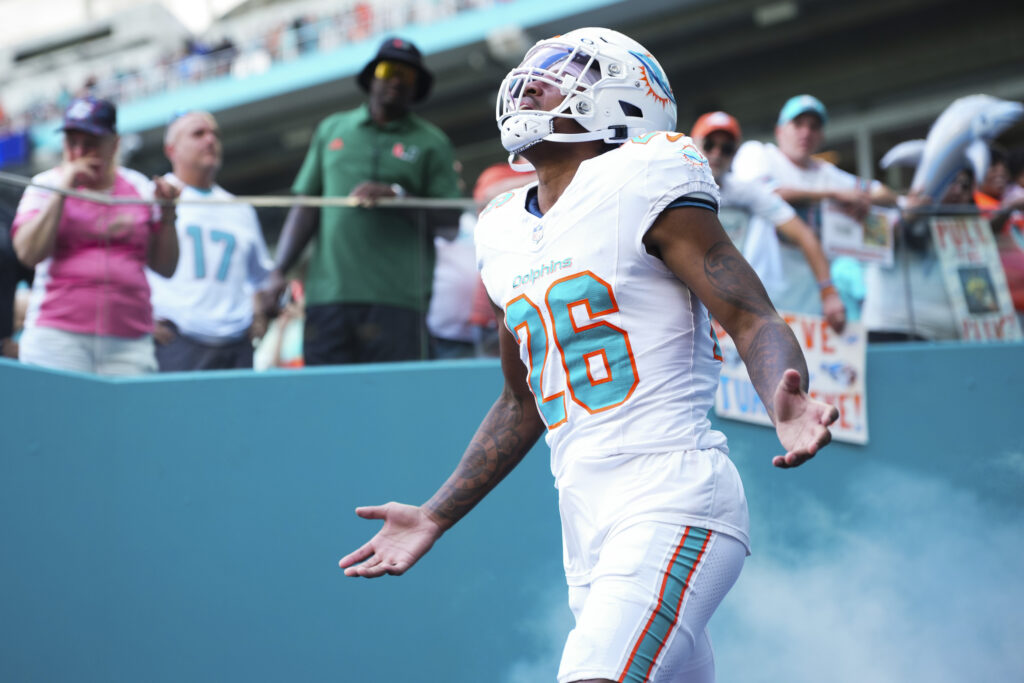
Rasul Douglas has agreed to a one-year deal with the Commanders worth up to $3.8 million, joining Washington's secondary before training camp begins. The move arrives after Douglas spent last season as a full-time starter for Miami, collecting two interceptions and 13 pass breakups in 2025. At 31 years old (turning so in August), Douglas becomes the fourth cornerback addition to a Washington defense that surrendered 27.8 points per game last season—the second-worst in the league.
The Commanders released Marshon Lattimore in March after his underwhelming tenure and now field a cornerback rotation of Mike Sainristil, Trey Amos, Amik Robertson, Ahkello Witherspoon, and Douglas. On paper, the depth looks respectable; the mechanism, however, reveals a secondary constructed through volume signing rather than strategic upgrades. Douglas operated as a full-time starter in Miami primarily because injury necessity drove deployment, not because he elevated Miami's pass defense efficiency—the Dolphins ranked 24th in pass defense EPA per play. Douglas's career 93 starts across 135 games average to just 0.69 starts per game, a number that climbs when injuries strike but deflates during healthy seasons. The one-year, low-guaranteed structure signals Washington views him as depth insurance and potential slot-inside coverage depth, not a cornerstone piece.
The Commanders allocated roughly $43 million in remaining cap space before this signing, meaning Douglas's deal barely dents their summer flexibility. The franchise remains in active rebuild mode on defense after a historically poor 2025 showing. Linebackers, edge rushers, and secondary depth all require attention. Douglas fills a void created by Lattimore's exit, but he does not meaningfully improve coverage metrics. His interception-to-opportunity ratio has fluctuated significantly year to year (21 interceptions in 135 games suggests variance rather than consistency), and last year's Dolphins production—two picks in 16 games—aligns with his career average rather than representing a spike.
For prop bettors focused on Washington defensive performance, Douglas's signing is neutral to slightly negative for defensive props targeting the Commanders this season. The secondary remains permeable at the boundary; adding a 31-year-old depth cornerback does not repair a structural problem. If anything, the reliance on multiple depth signings (Robertson, Witherspoon, now Douglas) instead of investing premium draft capital or trade compensation in a lockdown corner signals the organization is managing the problem rather than solving it. Opponent passing volume and interception opportunities should remain elevated against Washington. Quarterback prop overs facing the Commanders in 2026 carry better equity than market pricing reflects, because the secondary improvement is cosmetic, not functional.
The timing—just before training camp, on a one-year prove-it deal—also suggests Douglas is not the long-term solution Washington hoped to build around. This is a band-aid, not a cornerstone. Expect the Commanders to remain one of the easier passing games on 2026 NFL schedules, and price passing props against Washington accordingly.