Colts Defense Overhaul Hits Linebacker: Youth Play and Turnover Risk Reshape Secondary Prop Landscape
By Erik Schwartz ·
Indianapolis has dismantled last year's linebacking unit, starting two rookies and a journeyman in a defensive reset that will test both the secondary and the betting lines built on 2025 coverage patterns.
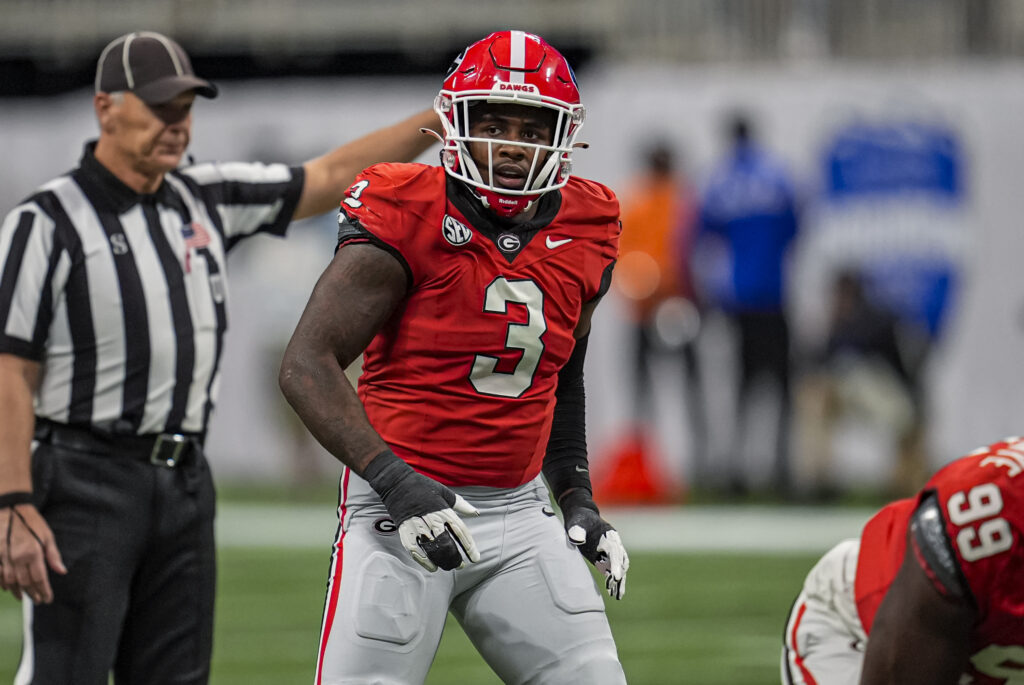
The Colts have erased their linebacking corps in a single offseason. Zaire Franklin moved to Green Bay via trade, Nick Cross departed to Washington in free agency, and Germaine Pratt left in free agency—three starters gone. The vacuum left them is being filled by second-round Georgia rookie CJ Allen at middle linebacker, fourth-round Oregon rookie Bryce Boettcher on the edge, and veteran Akeem Davis-Gaither, who spent 2024 starting 13 games for Arizona. This isn't a marginal refresh; it's a structural rebuild of Indianapolis's linebacker tier in a single offseason.
Allen and Boettcher arrive with elite production resumés. Allen racked up 88 tackles, 8 TFLs, and 3.5 sacks at Georgia and grades as a twitchy, gap-sound tackler with low penalty risk—exactly the kind of pre-snap diagnosis tool a young defense needs. Boettcher tackled at a machine-shop rate for Oregon: 230 tackles over his final two seasons with 13.5 TFLs and three sacks. The Colts aren't rolling out unknowns; they're deploying proven college tacklers into NFL gaps. Davis-Gaither, meanwhile, logged 117 tackles across 13 starts for Arizona last year, giving the unit at least one voice who's already lived a full professional season at starter pace.
The risk, however, is execution at scale. The Colts' defense finished 21st in points allowed and 23rd in yards allowed last year—mediocre, not catastrophic—but that unit had veteran anchors. A linebacker corps that was age 29, 27, and 24 (Franklin, Pratt, Cross) has inverted to 22, 21, and 28 (Allen, Boettcher, Davis-Gaither). Coverage communication, blitz timing, and screen recognition are not learned in film study; they're learned in 50-rep increments through August and September. The second-year nickelback Justin Walley and second-year defensive end JT Tuimoloau are also slotted for prominent roles, adding more green to the overall defense. This compounds the youth effect—it's not one rookie class maturing, it's a freshman corps sitting alongside sophomores, all tasked with holding edges and reading RPOs in real time.
For betting, this creates two distinct angles. First, Colts team total unders and divisional spread lines carry embedded value early in the season. Books have modeled preseason projections on 2025's 21st-ranked points-allowed defense. A unit that sacrifices familiarity for youth and athleticism often leaks early-season points through miscommunication and blown gap assignments. Week 1–3 numbers may not reflect the learning curve. Second, opposing passing yards and tight end receiving props in weeks 1–4 should be monitored for elevation above season-long baselines. Rookie linebackers struggling in coverage or Davis-Gaither getting buried in option routes creates soft zones that competent passing offenses exploit. If the market has built Week 1 totals and receiving lines assuming continuity from last year's defense, the youth factor creates a window where unders and receiving props against the Colts yield value before the market reprices for the actual personnel turnover.