Colts' Receiver Rebuild Opens Window for Veteran Bargains—and Prop Volatility
By Ty Whitney ·
Indianapolis dismantled its pass-catching depth to chase quarterback Daniel Jones, leaving Alec Pierce as the only reliable target and forcing the front office into a fire-sale hunt for aging veteran receivers.
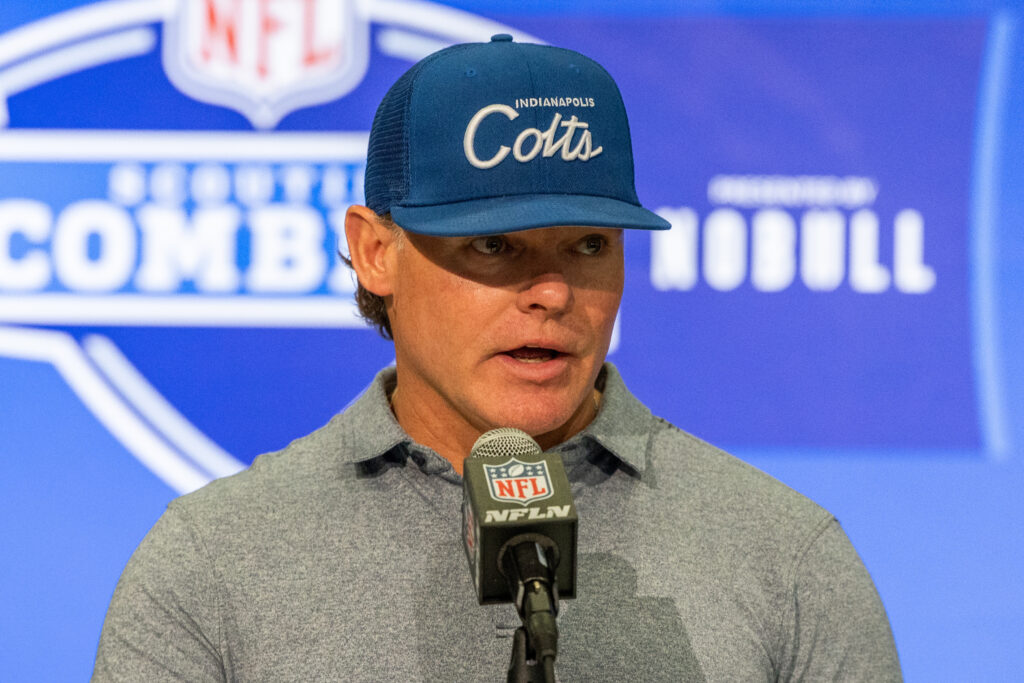
The Colts have systematically stripped their receiver room. Michael Pittman Jr. departed to Pittsburgh, Adonai Mitchell was bundled into the Sauce Gardner trade, and Josh Downs has vanished from the conversation entirely. What remains: Alec Pierce on a premium contract, a seventh-round draft pick, veteran minimum free agents, and Ashton Dulin—a special-teamer whose last 200-yard receiving season was 2022. The roster reset was deliberate, a financial sacrifice to accommodate Daniel Jones's massive extension after the Colts bet $88 million over two years that the former Giant could finally solve their quarterback problem. That gamble now defines the entire 2026 season.
Indianapolis is actively canvassing the veteran market. Stefon Diggs, Keenan Allen, DeAndre Hopkins, Tyreek Hill, Tyler Lockett, and Deebo Samuel remain unsigned—a rare constellation of accomplished pass-catchers available in June. Allen, now 34, has a genuine scheme connection to Colts offensive coordinator Shane Steichen (they overlapped in San Diego and Los Angeles from 2014-20, with Steichen calling plays for Allen's best seasons in 2019-20). Samuel, the youngest of the group at 30, stayed healthy last season with 72 receptions and 727 receiving yards. Diggs (seven 1,000-yard seasons) was cleared of suspension charges and could function as a possession complement to Pierce. The Colts' window to absorb a veteran remains open through training camp.
The problem is structural. Pierce alone cannot carry a passing attack—at 26, he has shown flashes but lacks the consistent target volume or efficiency profile to demand weekly defensive respect. If Indianapolis signs a singular veteran (likely a one-year deal under $3 million), that receiver becomes the de facto WR2, forcing either Pierce or the new addition into a role misaligned with their skillset. The Colts are hoping Jones transforms volume into production, but first-year chemistry with a new receiving group introduces execution risk that bookmakers will price as downside variance, not upside resilience.
For prop bettors, the immediate impact is volatility in Jones's season totals. If the Colts add a receiver of Allen's or Diggs's caliber before Week 1, expect his passing yards line to stabilize as early as late July—that addition removes the "thin receiver room" discount currently baked into his projections. However, the team's stated reluctance to pay top-dollar for depth (they used a seventh-round pick rather than a mid-round selection) signals they're comfortable with a lower-ceiling receiving corps. This isn't a situation where signing a star receiver suddenly vaults the Colts' offensive ceiling; it's triage. Jones's passing-yards line, if opened at 3,800-4,000 range based on pre-signing market estimates, will likely compress upward by 100-150 yards if a genuine WR1 talent lands in Indianapolis—but that same addition also introduces a fixed contract ($2-4M) that limits further upgrades. Back Pierce's receiving yards total; the volume should increase if the team adds a proven veteran who draws coverage away from him, but temper expectations on dramatic jumps in efficiency or touchdown probability.
The wild card is timing. Training camp practices and preseason film will reveal whether Jones has developed chemistry with his new receivers by late August. Early-camp reports will be crucial signals before oddsmakers finalize Week 1 lines. If no major addition materializes by the first week of July, the Colts are committing to a receiver-starved offense, and Jones's passing efficiency will likely disappoint relative to his yardage output—a textbook unders bet on yards-to-touchdown ratios.