Nelson's Third Deal Reshapes Colts Offensive Line Economics
By PropBetEdge Editorial Team ·
Quenton Nelson enters a contract year with the Colts signaling extension talks, forcing Indianapolis to choose between paying an elite guard or preserving cap room for Jonathan Taylor and a potential rebuild.
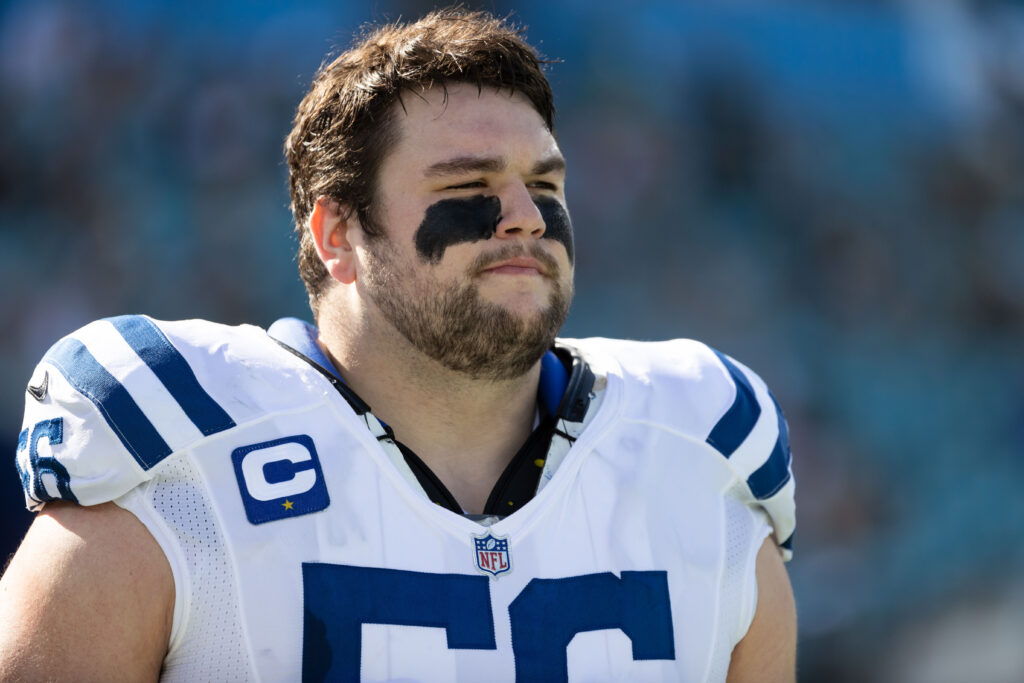
The Colts have opened negotiations on a third contract for left guard Quenton Nelson, per GM Chris Ballard, with Nelson's current four-year, $80MM deal expiring after the 2026 season. At 30 years old and entering his ninth NFL season, Nelson has maintained elite durability—he has not missed a game since inking his previous extension in 2022—while adding four more Pro Bowl selections to reach 8-for-8 since being drafted sixth overall in 2018. His Hall of Fame trajectory and consistency give him leverage in talks that will stretch into the offseason.
The market dynamics matter more here than Nelson's accolades alone. The Raiders' agreement with center Tyler Linderbaum—worth $27MM annually on a fully guaranteed structure—has reset the interior offensive line ceiling. Nelson's case to exceed Tyler Smith's current guard AAV record of $24MM and approach or exceed Linderbaum's $27MM is legitimate on merit, but Indianapolis holds the only negotiating path forward: Nelson cannot hit free agency and can only deal with the Colts until next year's legal tampering period unless franchise-tagged. A tag would cost Indianapolis over $30MM, a prohibitive expense if the team also needs to franchise Jonathan Taylor (whose tag would run $18.67MM). The math compresses available capital fast.
Ballard's openness to homegrown extensions—he has already moved on Raimann ($25MM AAV in 2025), Ryan Kelly, and Braden Smith—signals willingness to pay for continuity, but Nelson's third deal arrives during a critical organizational inflection. Ballard himself is in a contract year, and the Colts' secondary investments this offseason suggest a shift toward defending rather than just protecting their quarterback from the pocket. The franchise also lost Braden Smith to free agency, leaving Raimann as the lone veteran on the line alongside whoever caps Nelson's future. If Nelson secures a third contract at or near $26-27MM annually, the Colts' flexibility to retain Taylor, add exterior pass rushers, or supplement secondary depth erodes significantly.
From a betting lens, Nelson's contract situation carries indirect consequence for Indianapolis's offensive weapons. A lengthy extension locks in capital that could have addressed skill positions; conversely, a delayed deal (or franchise tag) signals the Colts may be preparing for a roster transition rather than an immediate Super Bowl window. Jonathan Taylor's receiving work and red-zone opportunity share often decline when offensive line investment stretches thin, and a guard market reset that pushes Indianapolis to allocate $26MM-plus annually shifts how many touches and targets flow to backs and tight ends. If Nelson's three-year deal is finalized before the 2026 season opens, expect a modest contraction in Taylor's target share—the Colts will be managing cap; if negotiations stall into 2027, Taylor's volume could spike as the team pivots away from paying interior linemen and toward offensive production. The timing of Ballard's decision will ripple through Indianapolis's pass-catching hierarchy.
Ballard stated that the Colts' crossroads status will not influence extension talks with Nelson or Taylor, but that framing often precedes selective cap cuts elsewhere. Watch for corresponding releases or restructures among pass catchers or edge defenders after a Nelson extension closes—Indianapolis cannot absorb a third major offensive line contract without trimming elsewhere. That roster churn creates volatility in individual receiving-volume props and tight-end opportunity shares heading into Week 1.