Richardson Stays Put: Why the Colts' QB Limbo Reshapes Indianapolis's Backup Leverage
By Erik Schwartz ·
Anthony Richardson's failed trade market leaves him competing for backup reps in Indianapolis, but Jones's injury history and contract structure could flip the narrative faster than the market prices.
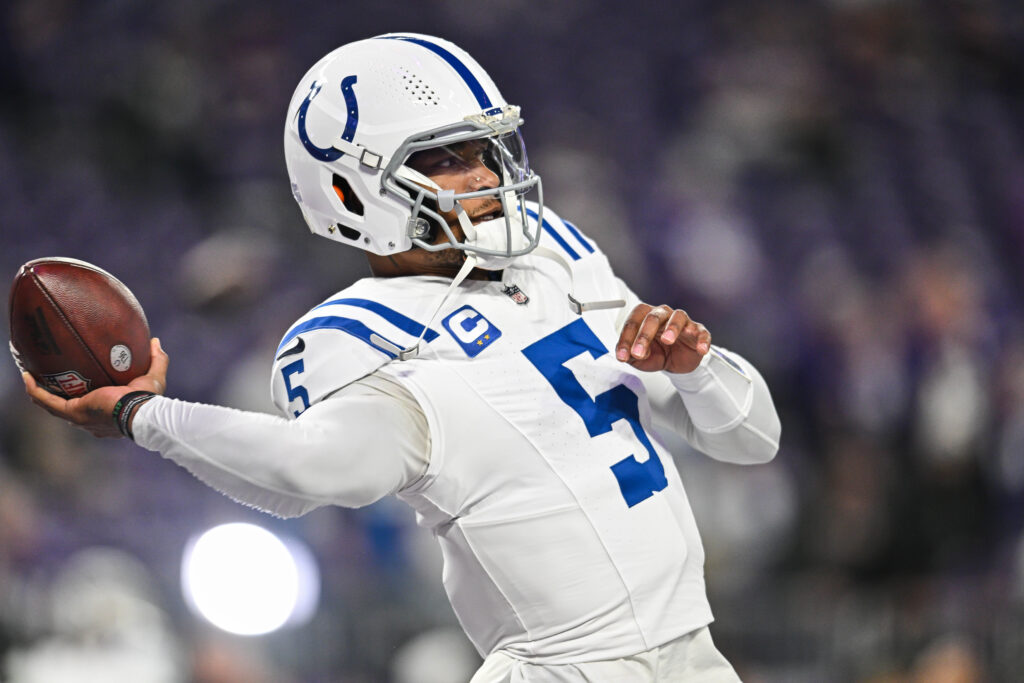
Anthony Richardson requested out. The Colts shopped him. No team called. Now he stays—not because Indianapolis suddenly believes in the former No. 3 pick, but because the economics of moving him don't work for anyone. Per the team's assistant general manager Chris Dodds, trade interest "never materialized." The reason is threefold: Richardson has started only 28 games across college and the pros; uncertainty lingers around his orbital fracture; and $5.4 million in guaranteed money sitting on his cap sheet makes him a risky developmental bet for another organization.
Daniel Jones's 7-1 start last season appeared to close the Richardson chapter. Jones won the training camp battle, established himself as the franchise centerpiece, and Richardson rode the bench until a freak eye injury sidelined him entirely. The narrative seemed settled—an expensive reclamation project had failed, and the Colts would move on. But Jones tore his Achilles in the same season, and suddenly the quarterback roster looked fragile again. Richardson's trade market dried up partly because of durability concerns around his health, but also because Jones's own injury history makes keeping a capable backup more valuable than the open market compensates.
The coaching staff hasn't buried Richardson. Head coach Shane Steichen described him as "back in the fold," and ESPN's Stephen Holder reported that Richardson would have assumed the starter's role had he been healthy when Jones went down. Richardson impressed in scout-team action late in 2025 and had his best training camp in 2024, suggesting the organization sees salvageable tape. He now competes with Riley Leonard for second-team reps, though Steichen hasn't established a clear depth order. The math is straightforward for Indianapolis: Richardson costs less to retain than to release (they still owe him $5.4 million either way), and keeping him costs nothing compared to what another team would demand in trade.
For prop bettors, the Jones injury risk reshapes backup quarterback leverage for the entire season. Jones's recovery timeline from an Achilles tear typically runs 6-9 months, placing his availability into mid-summer at best and more likely Week 1 or later with a rushed return. If Jones suffers any setback—a common pattern given his injury history across three teams—Richardson absorbs the starting role without needing a trade or a waiver wire transaction. This means Richardson's passing volume props carry hidden volatility: a three-week sample size with Leonard under center could suddenly flip to 16 games of a rusty, undershooting passer if Jones's Achilles doesn't hold. Sharps should monitor Jones's recovery updates closely and treat Richardson passing-yard lines (should they appear in markets) as mini-indicators of Jones's perceived health. A jump in Richardson props would signal the market pricing higher Jones injury probability; a collapse would suggest the team and betting market have converged on Jones's readiness.
The Colts' choice to keep Richardson also speaks to the failure of their quarterback evaluation process. A third-year starter with 28 career starts shouldn't still carry the developmental discount of a prospect. Yet he does—because he's injured, because the market doesn't see him as a reclamation, and because the team that drafted him still can't commit fully to anyone. That organizational uncertainty, now crystallized in a forced retention, will shadow every Indianapolis passing-game prop throughout 2026. Jones's health is the binary trigger; Richardson's competence is the unknown second-order outcome if it hits.