Kerby Joseph's Knee Gamble Forces Lions Into Defensive Shuffle Before Training Camp
By Erik Schwartz ·
Detroit's safety depth chart tilts toward Christian Izien and a more conservative free-safety scheme, compressing an already thin secondary and reshaping how the Lions defend the vertical passing game.
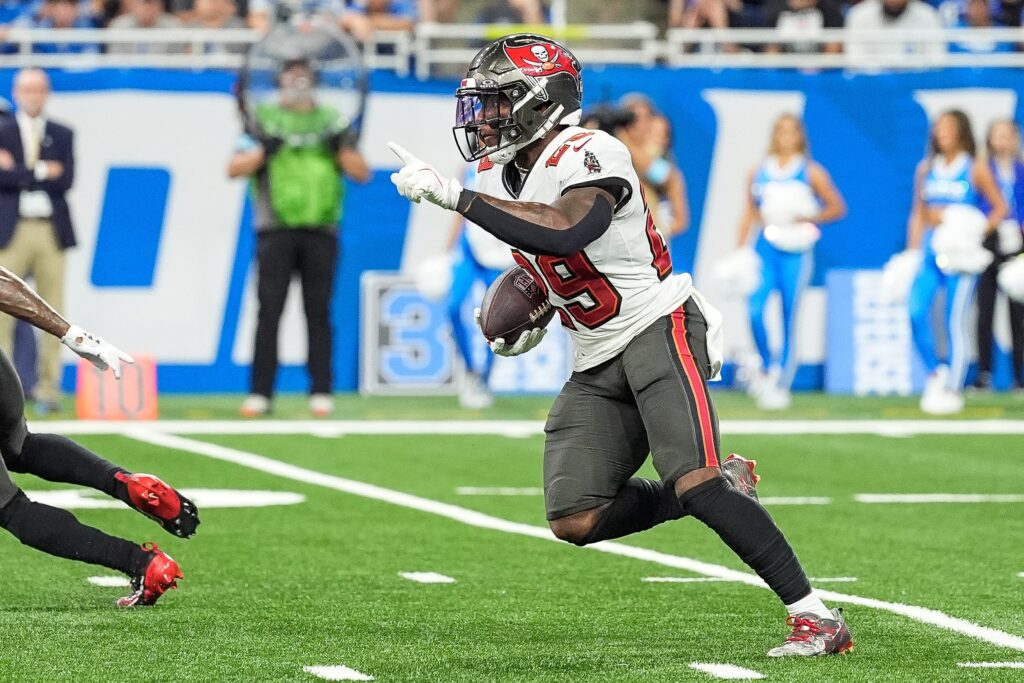
Kerby Joseph's degenerative knee condition has forced the Detroit Lions into a potential Week 1 reckoning. Head coach Dan Campbell indicated last week that the team won't have clarity on Joseph's availability until well into training camp—meaning the 2026 season opener (September 10) could arrive without a definitive answer from their starting free safety. In the interim, the Lions have elevated Christian Izien, a free agent signing and former Tampa Bay defender, as the primary candidate to absorb Joseph's role over the top of the defense.
The roster move isn't a clean swap. Joseph, across his career, has anchored the free safety spot while maintaining versatility across the secondary—24.7% of his snaps in the box, 14.5% in the slot, with the remainder at over-the-top coverage. That three-dimensional usage defined Detroit's secondary architecture under the previous regime. But last season, under new defensive coordinator Kelvin Sheppard, Joseph's deployment shifted markedly: fewer box snaps, fewer slot responsibilities, heavier reliance on his deep-coverage duties before his injury ended his campaign in six games. Izien's track record—308 free-safety snaps in 2024, substantial reps at nickel and in the box—should theoretically allow flexibility. Yet the Lions' other recent moves suggest a strategic choice: they've re-signed Brian Branch, added Chuck Clark, and appear comfortable delegating slot and box coverage to those options. Izien, by design, will anchor free safety and operate primarily in that lane rather than the multipurpose role Joseph commanded.
This narrowing of responsibility carries meaningful implications for how opposing quarterbacks will attack Detroit's secondary. Joseph's box-and-slot versatility forced quarterbacks to account for a rangier, more unpredictable safety. Izien, repositioned as a pure free safety after spending much of his recent career as a nickel defender, becomes more predictable—a classic single-high look that invites vertical and intermediate passing lanes. The Lions' front seven will need to generate pressure earlier in downs to compensate; if they don't, the secondary inches closer to a liability.
For betting purposes, this matters acutely for opposing passing games. Teams facing Detroit will find a defense structurally more vulnerable to vertical concepts and play-action bootlegs that create space against a free-safety-first coverage scheme. Quarterbacks who excel at 15+ yard throws into two-high safety looks—particularly on third-and-medium—should see opportunity. The Lions' Week 1 opponent will depend on whether Joseph returns; if he's inactive, expect opening-week totals and passing-props for Detroit's opponent to price in reduced secondary complexity. The market may initially account for Joseph's absence, but the specific mechanism—Izien in free safety, Brian Branch handling multiple roles, a less layered coverage picture—creates a distinct passing-game advantage. Additionally, sack totals against Detroit could compress if the team leans more on secondary coverage rather than aggressive front-four gambles, a byproduct of secondary downgrade. Joseph's timeline remains unset; if he's unavailable beyond Week 2 or 3, the liability compounds across a season rather than resolving as a short-term adjustment.