Chiefs Punt Salary Cap Pain Into 2027, Buying Trey Smith Restructure Window
By Ty Whitney ·
Kansas City converted $18.5M of Trey Smith's salary to signing bonus, freeing $12.5M in cap space before Week 1 but mortgaging future flexibility.
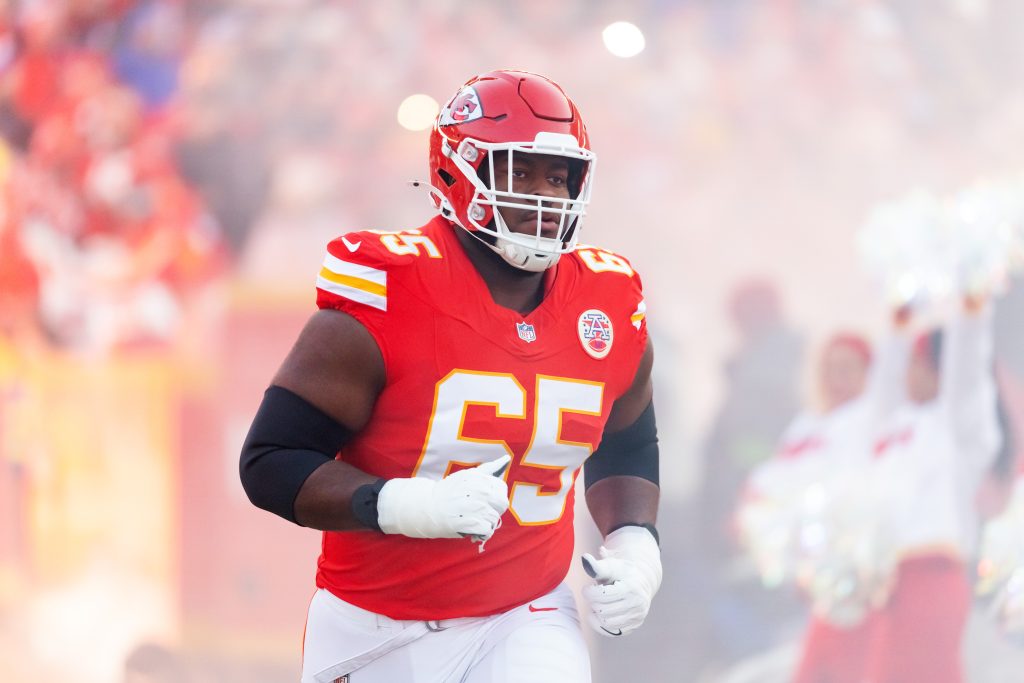
The Chiefs restructured Trey Smith's deal on Thursday, converting $18.54MM of his 2026 base salary into a signing bonus. The move generated $12.5MM in immediate cap relief, lifting Kansas City's available space to $13.85MM—still among the league's thinnest margins as rosters lock for Week 1, but enough runway to address late-season injuries or in-game adjustments without panic cuts.
This is a timing play, not a long-term fix. Smith's cap hit for the remaining two years of his contract now sits at $34.17MM, a 50% increase from the original structure. His 2027 base salary of $23.25MM is already fully guaranteed after vesting this offseason. The guard has become a cap anchor, a position the Chiefs clearly knew was coming but chose to defer rather than confront through an extension or release. Smith remains the league's joint-third highest-paid guard by average annual value at $23.5MM—a market-rate tackle at a position where inflation has already pushed elite players to $24-25MM annually (Tyler Smith to Dallas, Peter Skoronski to Tennessee). The 27-year-old two-time Pro Bowler is too young and productive to move, so the team kicked the problem into 2027, when another restructure or extension will almost certainly arrive.
What matters for bettors: Smith is healthy and entrenched. The restructure signals zero confidence questions about his availability or role. He will start every game at left guard for a Chiefs offense already ranked among the AFC's most efficient. Patrick Mahomes' pass protection—and therefore his prop volume on throws downfield—depends on interior line stability. Smith's presence removes one structural variable from the equation.
The cap compression, however, does suggest the Chiefs are not a free-spending team heading into the stretch. They may not have the flexibility to bolster secondary depth or secondary receiver help mid-season the way better-capitalized rosters can. In tight games against playoff-caliber opponents, Kansas City's offense may lean harder on Mahomes' arm talent and the running game, a pattern that typically correlates with lower passing yard totals and higher rushing volume. Watch for a down-the-stretch tendency toward shorter passing trees and ground-attack efficiency rather than vertical shot-taking. That directional bias matters for season-long passing yard props and weekly receiving yard aggregates, especially in games where the Chiefs lead and can preserve clock.