Rashee Rice's Prison Rehab Gamble: Why the Chiefs' Training Camp Timeline May Not Hold
By Erik Schwartz ·
Kansas City says Rice will be ready by camp despite a 30-day jail sentence mid-recovery, but the mechanics of rehabbing a knee procedure in confinement introduces variables no NFL team has priced yet.
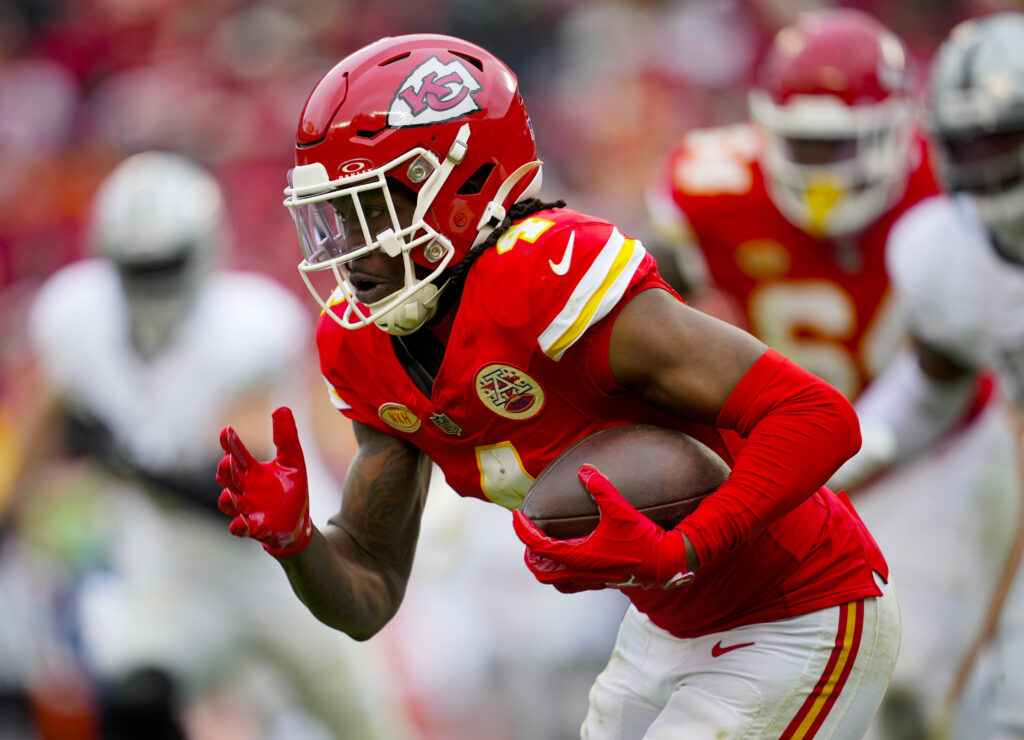
Rashee Rice is rehabbing a knee procedure while serving a 30-day probation violation sentence in a Dallas jail facility, a collision of circumstances so unusual that it's rewritten the baseline risk for one of Patrick Mahomes' top receiving targets heading into the 2026 season. Per ESPN's reporting, Andy Reid stated the Chiefs expect Rice ready for training camp—scheduled for late July—despite the receiver's surgical recovery occurring during incarceration. The normal rehabilitation window for the knee procedure, which removed debris from Rice's September 2024 injury, runs approximately two months. Rice's jail stay compresses that window and introduces compliance unknowns: facility access to specialized trainers, weight room equipment, medical supervision continuity, and the psychological toll of confinement during a high-stakes athletic comeback.
Reid's public confidence suggests the Chiefs have conducted internal assessments and cleared this with the league. No additional NFL discipline has been flagged, at least not yet. But the organization's track record of off-field stability has eroded significantly. This isn't a small injury delay; it's a rehab protocol executing in an environment where external variables—visitation hours, facility restrictions, medical staffing consistency—sit outside normal team control. The Chiefs are also managing Mahomes' own ACL/LCL recovery on a parallel timeline, meaning the offense will be operating without its franchise QB for an unpredictable stretch of camp and early season.
Rice's receiving target share and red-zone opportunity distribution depend on his on-field availability and mental sharpness upon return. Even if he clears the physical baseline by late July, game-speed conditioning and route synchronization with Mahomes—who will himself be ramping up—represent a second hurdle. Teams don't typically push injured players through camp at full volume; Rice may see limited reps in July and August while the medical staff monitors pain, range of motion, and lateral movement integrity. Xavier Worthy and the broader receiver rotation will inherit a larger share of snaps and targets in the interim, reducing Rice's early-season volume ceiling.
For prop bettors, Rice's receiving yards and reception totals in Week 1–4 represent a layered risk. The market may treat his camp clearance as a binary return-to-form signal and shade his lines upward as if he's played a full offseason of integration. Instead, the edge sits in treating his September availability as probabilistic, not guaranteed. A second setback—medical or legal—carries non-zero risk and could push him to the PUP list or worse. His anytime TD frequency and seasonal reception totals should trade at a discount relative to his talent tier because the denominator of available snaps in 2026 is compressed. When books price Rice as if he's a full-season weapon, that's a fade. When they price him as a cautious re-entry asset, that's closer to fair.
The Chiefs' internal confidence is worth respecting; teams don't signal readiness for camp lightly. But the precedent here doesn't exist. No NFL team has managed a top-tier receiver's post-surgery rehab during a jail sentence with full confidence in an on-time return. Early-week prop lines on Rice will likely overshoot based on Reid's statement alone. By Week 2–3, after the first few practices, sharper information emerges—either Rice is moving freely and integrating quickly, or the prison recovery has left him behind schedule. That's when the real value appears, not in the open announcements.