Lightning Delay Doesn't Change the Verdict: Browns Steal Week 2 in Tampa
By PropBetEdge Editorial Team ·
A two-hour weather stoppage with 2 minutes left couldn't erase Cleveland's 23-19 road upset—and Deshaun Watson's bounce-back performance carries real implications for his remaining-season prop pricing.
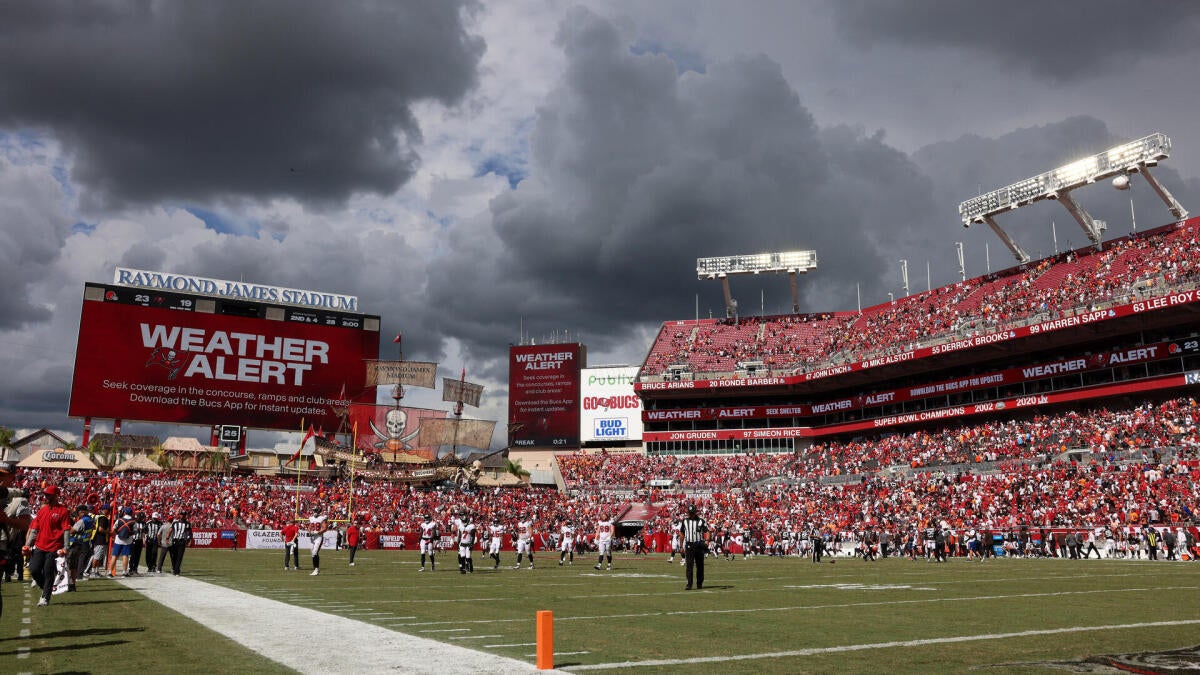
The Browns completed a Week 2 road upset over Tampa Bay 23-19 on Sunday evening, but not before a lightning delay of more than two hours froze the contest at the two-minute mark with Cleveland ahead. Lightning within 8 miles of Raymond James Stadium forced players and fans into shelter; the NFL's weather protocol mandated the stoppage until 30 minutes had passed since the most recent lightning strike. When play resumed just after 6 p.m. ET, the Buccaneers had one final drive from their own side of the field—a second-and-4 from Cleveland's 28-yard line. Tampa Bay moved to a first down, but a holding penalty derailed the threat, and a turnover on downs sealed the result.
The weather delay masked what was otherwise a straightforward defensive performance by Cleveland. Kickers dominated the first half, with Tampa Bay leading 9-6 at intermission. The Buccaneers' first touchdown came on the opening drive of the third quarter, but the Browns answered with two scoring drives in quick succession to take their first lead. That sequence—a pair of touchdown drives in response to falling behind—underscores Cleveland's offensive identity: opportunistic, not explosive. The team leaned on field position and turnover margin rather than sustained yardage gains or efficiency metrics that would show up prominently on season-long prop cards.
Deshaun Watson's performance in this game is the throughline for Browns-focused props moving forward. After a pedestrian Week 1 outing, Watson orchestrated two touchdown drives in the third and fourth quarters, demonstrating the kind of two-minute decision-making and rhythm that gets priced into passing yards and touchdown markets over a season. His interception rate—critical for a quarterback coming off a 2025 season where volatility was a recurring theme—remained clean through this contest despite the pressure of a road game in a lightning-affected environment. Bettors had already begun adjusting Watson's season-long passing TD line downward after Week 1; this performance, if sustained, could stabilize or even uptick that expectation.
The prop-betting angle here is measured and conditional. Watson's pass-attempt total for Week 3 and beyond deserves scrutiny: did the Browns call a conservative game because of weather volatility, or because they believe this is the optimal usage profile? The source data—23-19, two field goals in the first half, a pair of touchdown drives—suggests Cleveland is comfortable in a lower-volume, higher-efficiency scheme. Against the Buccaneers' defense (which did not surrender explosive plays), Watson threw his way to two scores without forcing the volume. For bettors tracking Watson's passing-yards props on a weekly basis, this is a data point suggesting that Week 2 efficiency (not raw yardage) may be the more reliable signal. If the Browns' game plan holds—methodical, field-position dependent—Watson's under on season-long passing yards becomes more attractive the deeper you project into October and November.
The delay itself, while striking as headline fodder, did not meaningfully alter the game's outcome or the teams' ability to execute their respective gameplans. Cleveland's final drive sequence after the two-hour pause saw them convert one play and commit a holding penalty—execution under pressure, not weather-related breakdown. For future games involving either team, weather delay risk is back-of-mind context rather than a primary driver of line movement or prop pricing.