Nix Clears Ankle Hurdle Six Weeks Before Season Opener
By Erik Schwartz ·
Denver's QB confirms full mobility heading into training camp, erasing injury recovery risk that could have compressed his 2026 ramp-up.
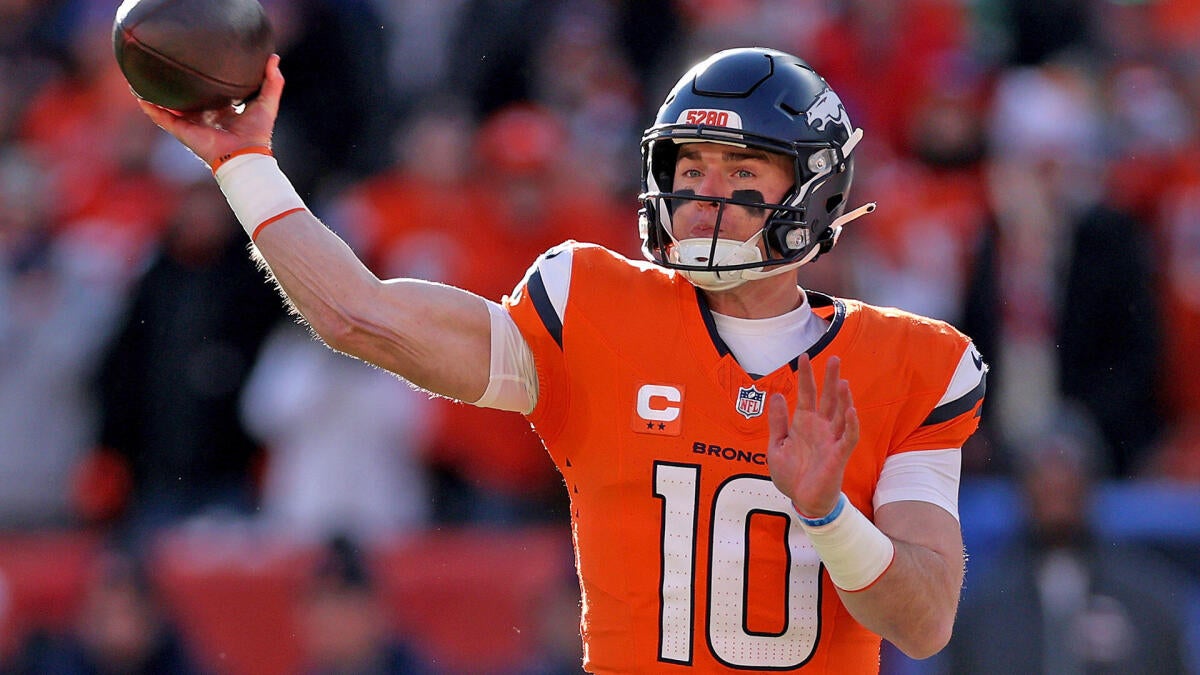
Bo Nix fractured his right ankle on the second-to-last play of overtime in Denver's divisional-round loss to Buffalo in January—a break that immediately triggered worst-case scenario thinking among Broncos backers: a compressed offseason, limited mobility work, potential Week 1 limitations. Six weeks before the Sept. 14 season opener against Kansas City, Nix and Sean Payton have both signaled the injury is not a factor. "I feel great," Nix said during training camp. "Nothing's holding me back. I'm going to roll, and I'm going to be as athletic as I can be."
The timeline matters here. A fractured ankle in early January gives a quarterback roughly 30-32 weeks to return to full mobility and strength before regular-season play. Nix's boot was coming off right on schedule by late spring, and training camp participation confirms he's tracking ahead of a conservative rehabilitation curve. Payton's comment—"We're right where we wanted to be, where we hoped to be at this time"—is the coaching equivalent of an all-clear signal. Teams don't say that if a QB is moving gingerly or limited in footwork. The fact that Nix is already describing himself as further along than he was entering summer last year is the kind of internal valuation signal that matters: the coaching staff has seen enough on-field reps to validate the injury's resolution.
What gets priced into season-opening totals and passing-volume props is often a blend of last-year's performance and assumed status-quo health. Nix's injury created real uncertainty through the spring—any team beat reporter worth their byline was tracking his rehab timeline. But that uncertainty was always binary: either he'd be ready or he wouldn't. Now that the coaching staff has confirmed readiness, the baseline for his expected volume and efficiency is no longer discounted for injury risk. He's operating at full mechanical capacity, which matters directly for pass attempts and downfield throws—the meat of QB prop betting.
Denver's offense runs through play-action and Nix's ability to manipulate coverage with his legs; that asset was the one genuinely at risk. A QB throwing from the pocket only is a different betting proposition—lower ceiling on volume, different pre-snap read patterns, more reliance on structure. Nix's explicit statement that he will "roll and be as athletic" as normal removes that discount. The market had priced training camp participation with mild skepticism: is he really back, or is he managing? Payton's confidence and Nix's on-field evidence have answered that. For early-week bets on Nix's passing attempts or completion percentage, the injury recovery narrative is now closed. Any line movement from here is based on opponent scheme and game script, not medical caution.
The Kansas City matchup in Week 1 carries its own defensive profile—the Chiefs' secondary is built to pressure and create quick decisions—but that's a separate variable from whether Nix will physically execute the game plan. He will. The fractured ankle that haunted Broncos fans from January through July is now a resolved item. Expect opening-week volume on Nix props to track his season averages without injury discount; any team that was holding back investment in Denver passing volume out of lingering health concern can now deploy it.