Texans 2026: The Offensive Line Bet That Pays for Everything Else
By Erik Schwartz ·
Houston spent three draft picks and five free-agent signings on the line. If they work, Stroud's play-action offense becomes lethal again; if they don't, the team is still capped at 10 wins.
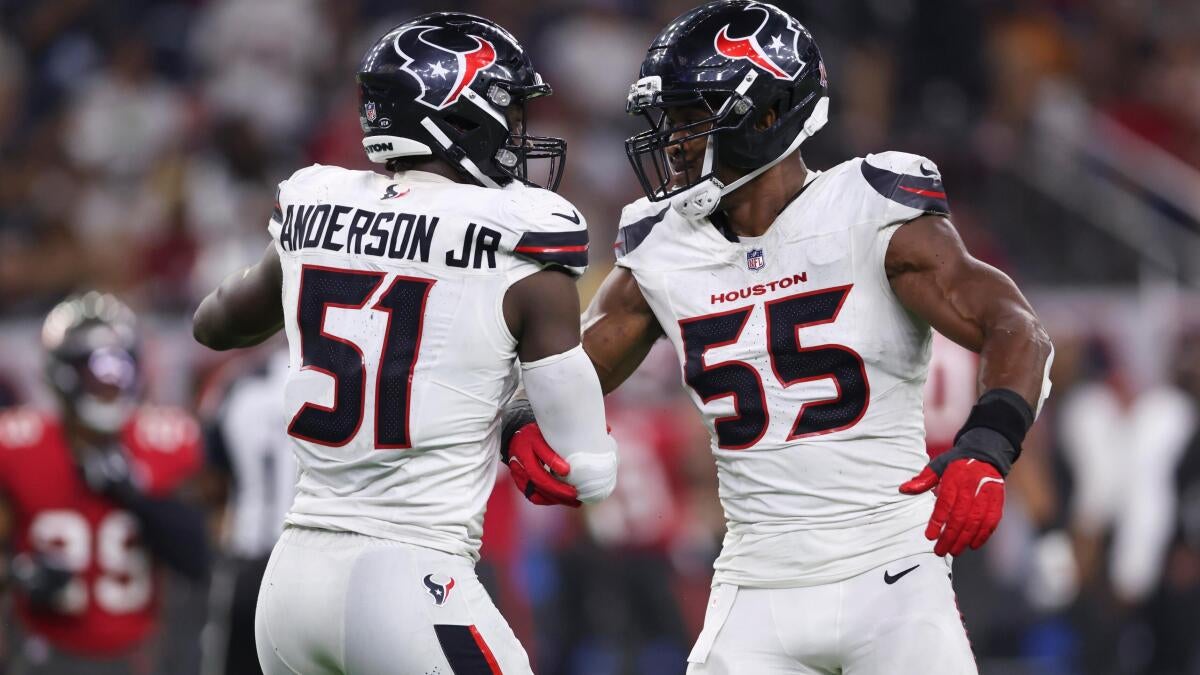
The Texans' 12-win season in 2025 was historically good for a franchise—best point differential ever, second straight Divisional Round trip—and still wasn't enough to escape the AFC South. Jacksonville's ascension, not Houston's decline, cost them the division, but the real diagnostic signal isn't in the season record. It's in what the roster couldn't do: the rushing attack ranked 29th in yards per carry at 3.9, and while C.J. Stroud's passing efficiency looked serviceable on a per-play basis (5.11 yards/play, 24th in the league), that number masks a critical dependency. The Texans excelled at what they controlled—eighth in sack rate, eighth in interception rate—but those are survival stats, not dominance stats. They won by not losing, not by forcing the pace.
The 2026 retooling is an explicit bet that offensive line depth was the throttle. David Montgomery arrives from Detroit with a 4.5-yard-per-carry average, a material upgrade over whoever was carrying the load last year. More tellingly, Houston invested three starting-caliber linemen in free agency (right tackle Braden Smith, left guard Wyatt Teller, center prospect Keylan Rutledge as a first-rounder) plus second-year interior depth, signaling an organizational belief that the rushing infrastructure, not the personnel, was the limiting factor. If that diagnosis is right, Stroud gets cleaner pockets and play-action space. If it's wrong, the pass protection still holds at eighth in the league—he just stays volume-limited.
The market has priced in moderate confidence: 9.5 wins, tied for 10th in Super Bowl odds at +1700, and -180 to make the playoffs (implied 64% playoff probability). That's roughly a two-win swing from 2025 if you expect regression, or flat if you think the line investment unlocks Stroud's second-year upside. The schedule will matter enormously—Buffalo in Week 1 is a measuring stick against an elite defense that does not commit errors—but the real variable is whether Montgomery and a healthier line create enough rushing efficiency to sustain 10+ play-action looks per game, which was Stroud's actual strength as a rookie in 2023.
For prop purposes, the edge lies in Stroud's passing volume and efficiency trends, not the team total. If the line holds and Montgomery settles into a 4-plus yards-per-carry role, Stroud's completion percentage and yards-per-attempt should rise relative to 2025, because play-action creates natural window advantages and fewer scramble situations. The market hasn't separated his individual ceiling from the team's win ceiling, and that's where value lives. Win total at 9.5 is fairly marked; individual passing lines will overshoot downward early if Houston stumbles in Week 1, then correct upward if the rushing game actually functions. The angle is contrarian accumulation during a 0-2 or 1-3 start, not a preseason lock.