Seahawks' Super Bowl Hangover and the Win Total Trap: Why the Market Is Overestimating Seattle's 2026 Ceiling
By Erik Schwartz ·
Seattle's championship run masks structural weaknesses that oddsmakers haven't fully repriced, and the market's reluctance to move the win total lower creates a sharp fade opportunity.
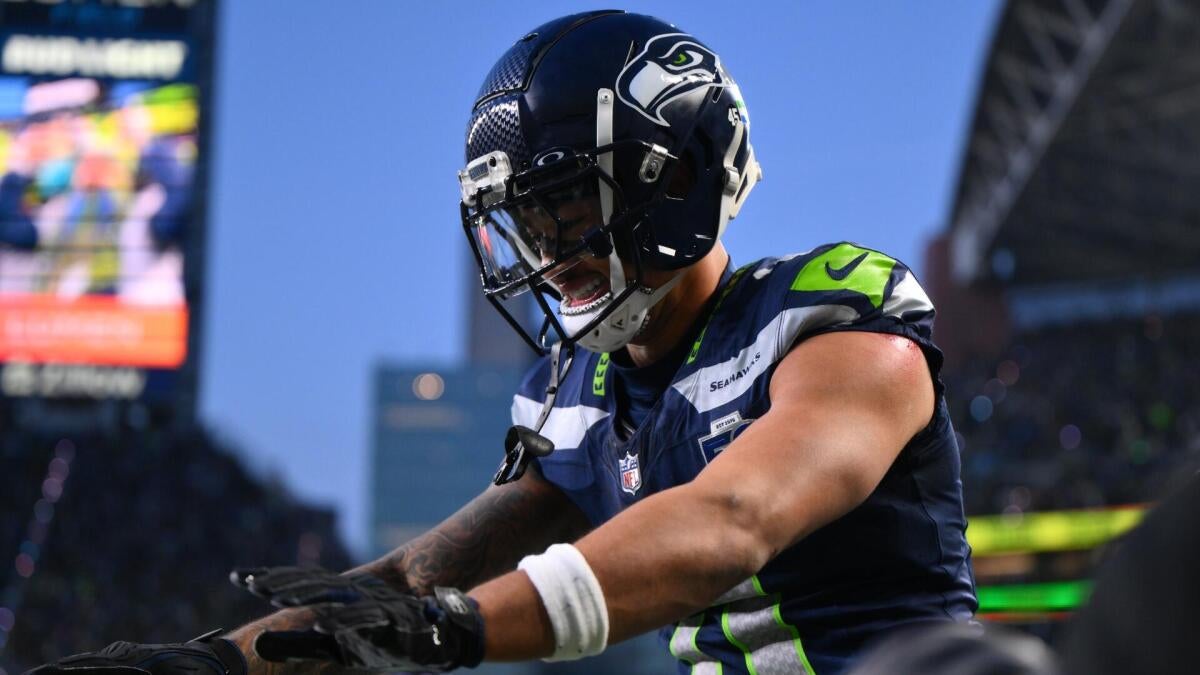
The Seahawks stunned the NFL in 2025, winning the Super Bowl at +6000 preseason odds—a run that hinged on Mike Macdonald's defensive transformation and Sam Darnold's unexpected competence at quarterback. But beneath that championship gloss sits a roster carrying meaningful liabilities heading into 2026. The offense that ranked top-three in scoring finished 28th in interception rate; Darnold threw 14 picks while the receiving weapons (Jaxon Smith-Njigba, Cooper Kupp) combined for a second interception on their only meaningful incompletion. The run game checked in 25th in yards per rush. The red zone ranked average or worse. These weren't statistical flukes—they were structural vulnerabilities that the Seahawks' historic defense (No. 1 DVOA, No. 1 scoring) papered over all season.
The offseason adds another layer of concern. Seattle lost cornerstone coverage players—Riq Woolen and Tyler Hall at cornerback, Boye Mafe on the edge—and replaced them with youth (second- and sixth-round cornerbacks, a seventh-round pass rusher). The team added depth at running back and receiver but nobody transformational. More tellingly, the Rams' acquisition of Myles Garrett in the interim reset the NFC West hierarchy; despite Seattle's championship, the market immediately moved the Seahawks from -160 to +196 to win the division and bumped Super Bowl odds from +1000 to +1100. That's not noise—that's the market correctly identifying that the Rams are now the division favorite even with Seattle coming off a title.
Macdonald has now outperformed the team's preseason win total by multiple games in back-to-back seasons, a pattern that has created a false sense of inevitability around Seattle's ceiling. But there's a crucial difference between 2024-to-2025 and 2025-to-2026: the defense is fully mature now, not ascending. Last year's defensive improvement was a one-time step function—the league's worst-ranked scoring defense in 2024 became No. 1 in 2025. That kind of delta doesn't repeat. Simultaneously, the offensive vulnerabilities are being masked by playoff momentum and championship narrative; the market hasn't yet punished Seattle for playing the second-worst pass defense schedule in the NFL by interception opportunity, yet finishing 28th in ball security. When Darnold faces a full season of aggressive coverage schemes designed around containing Smith-Njigba and exploiting the secondary, that turnover rate will surface.
The win total sits at 10.5 with the Under moving from -105 to -115 (a modest drift, not a collapse). That hesitation reflects the market's respect for Macdonald and Darnold's 2025 tape. But it also reflects a market still anchored to the championship run rather than forward-looking mechanics. The Seahawks' schedule in the second half of 2026 features multiple playoff-caliber defenses, and their margin for error—always thin in the NFC West—tightens when the defensive secondary is younger and less experienced. Seattle will remain competitive; they won't regress to 7 or 8 wins. But 11 or 12 wins (the implicit market case embedded in the 10.5 total) requires the 2025 version of the defense to hold and the 2025 version of the offense to improve, which is statistically and roster-wise unlikely.
Sharp bettors should lean toward the Under on Seattle's win total at current pricing, particularly if the Under drifts to -120 or beyond in the coming weeks. The Seahawks' path to 11+ wins requires simultaneous excellence across offense and defense—and their roster losses specifically target defensive depth, the one reliable pillar. This is not a fade of Sam Darnold or Mike Macdonald; it's a recognition that championship momentum is currently priced in more fully than the team's structural weaknesses deserve.