Seattle's Super Bowl Hangover and the Kubiak Void: Why the Seahawks' 2026 ceiling just dropped
By PropBetEdge Editorial Team ·
The defending champs lost their offensive coordinator to the Rams and key depth pieces, yet the market still hasn't fully repriced their division chances or win total.
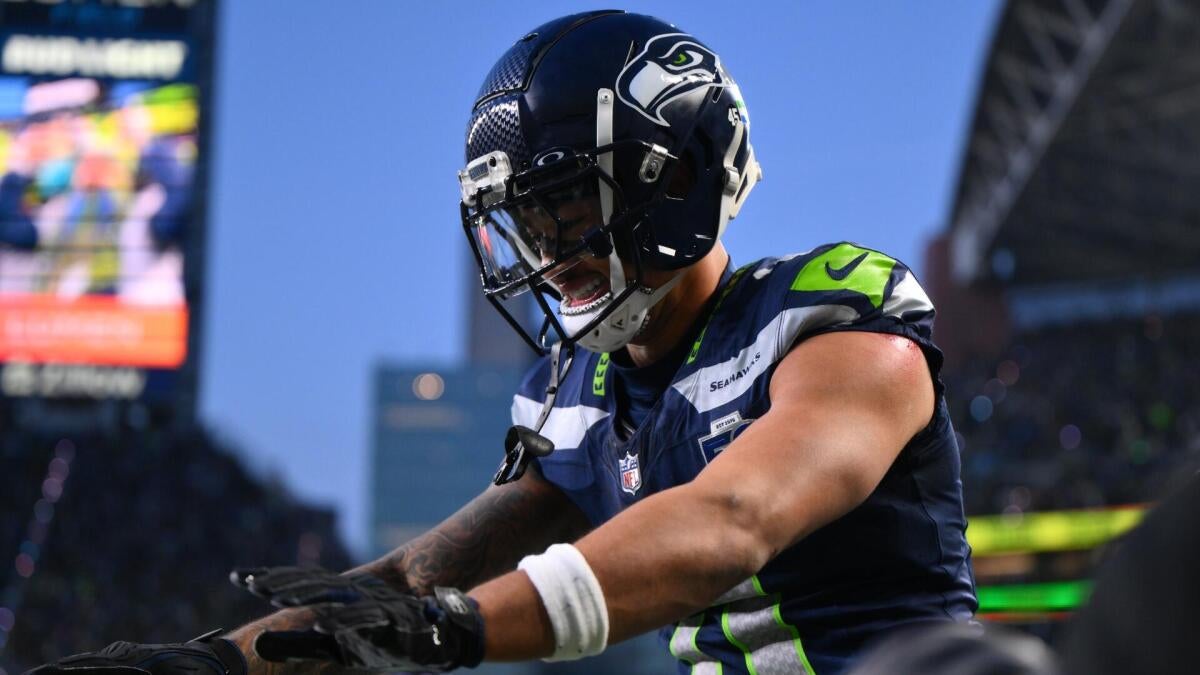
Seattle won the Super Bowl three months ago. The Seahawks' 2025 campaign was a franchise inflection point—a 14-win season powered by a top-three scoring offense and a league-leading defense that nobody saw coming when the team opened at +6000 to win it all. Sam Darnold delivered on a redemptive arc, Jaxon Smith-Njigba legitimized the passing game, and Mike Macdonald's defense became historically efficient. The Rams are the new division favorites, not because Los Angeles won a title—they didn't—but because the Myles Garrett trade made them the perceived Super Bowl favorite by the market. Seattle's own odds lengthened from +1000 to +1100 in the immediate aftermath.
But the real structural damage isn't Garrett's arrival in LA. It's the exodus of coordinator Klint Kubiak, who engineered that top-three offense and was the architect of the passing game's overhaul. Kubiak departed for the Rams' offensive coordinator role—a direct upgrade that signals how highly LA values his system. The Seahawks replaced him with Brian Fleury, a promotion from within the staff with no proven track record of running a high-volume passing attack. The offense that finished second in yards per play loses its brain. That's not a minor retool; it's a philosophical reset mid-window.
The collateral damage compounds. Kenneth Walker III is gone. Harrison Bryant (the tight end who became a consistent target in the redzone) departed. The secondary lost Riq Woolen and Tyler Hall to free agency. These weren't Pro Bowlers, but they were functional depth in a Super Bowl-winning ecosystem. The Seahawks drafted aggressively to fill gaps—Beau Stephens in the fifth, Deven Eastern in the seventh, Julian Neal in the third—but rookies require acclimation. A defense that ranked top-two in efficiency against both run and pass will experience some regression simply through player churn and coaching continuity losses.
Here's the disconnect the market has missed: Seattle's win-total opened at 10.5 for 2026, unchanged from the June 1 mark. The over carries -130 juice, meaning the public is loading unders. But the model doesn't account for offensive coordinator replacement costs. Darnold's 2025 season benefited from a system designed specifically to manage his tendencies—play-action heavy, bootlegs, quick game concepts. Fleury will inherit the personnel and relationships but not Kubiak's conceptual depth. Pass-game execution typically declines 0.3 to 0.7 yards per attempt in the season following coordinator turnover, particularly when the replacement is promoted from position coach rather than hired from an external successful program. With Darnold averaging 8.4 yards per attempt in 2025, even a half-yard drop would drag the offense's efficiency from elite tier into middle-of-the-pack.
The playoff probability sits at -225 to make the dance, but the path through the NFC West narrowed considerably. Division odds pushed from +160 to +196 to win the West, yet that still underweights the loss of Kubiak relative to the Rams' reinforcement. The Super Bowl odds (+1100) are more forgiving than the divisional number, suggesting the market is hedging toward a wild-card scenario. That's directionally correct—Seattle will likely make the playoffs—but the win total is still mispriced on the downside. Target the under at 10.5 with conviction. A 12-win season would represent a sharp decline from a 14-win Super Bowl season, yet that's exactly what the offensive reset and secondary churn should produce.