Giants' Harbaugh Hire and Young QB Development Create Structural Edge on Win Total
By Erik Schwartz ·
New York's offseason overhaul around a Super Bowl-winning coach and a second-year passer with clearer talent signals a contrarian path to 8+ wins—but market hasn't fully repriced the gap between last year's four wins and the team's true competitive level.
The Giants have won exactly four games in two of the last three seasons, a stretch that reads as catastrophic by NFL standards. What complicates that narrative is the Pythagorean wins calculation: based on point differential, New York played like a seven-win team in 2025, not a four-win one. Three of those four actual wins came by 17+ points, while seven of the 13 losses were one-score games. That margin—the gap between what the standings show and what the underlying metrics suggest—is the real story entering the Harbaugh era.
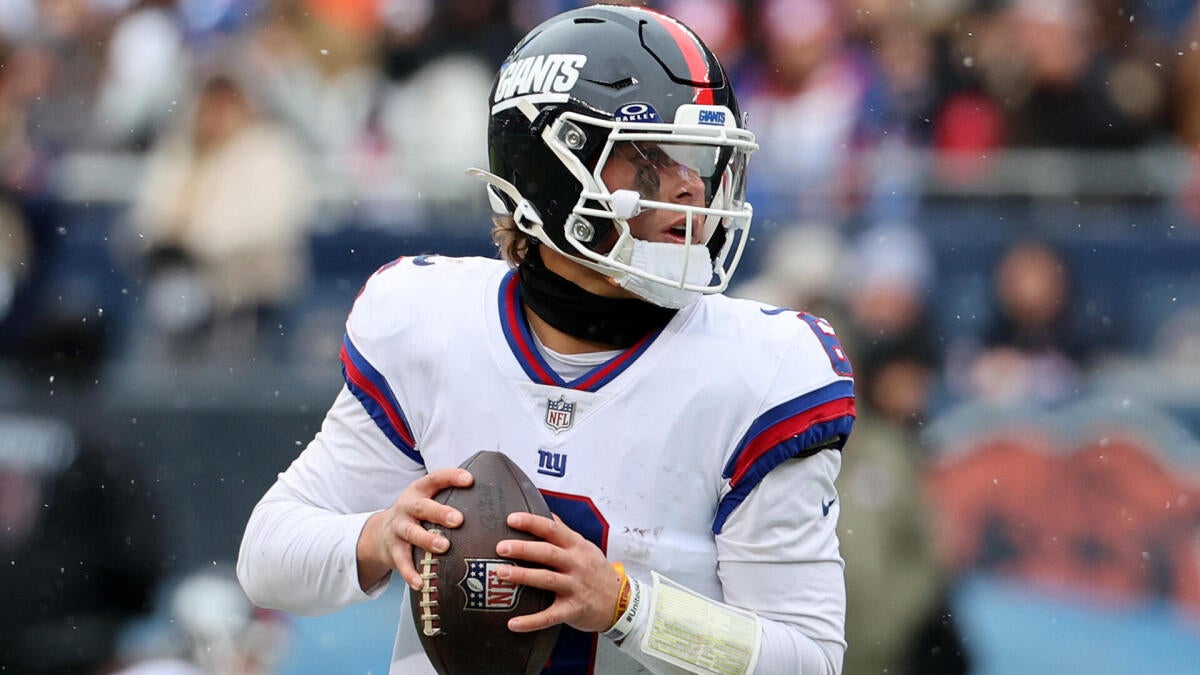
John Harbaugh's hiring represents the structural change most predictive of win-total improvement at the NFL level. In 18 seasons leading Baltimore, Harbaugh won fewer than eight games exactly once. The Giants are installing a coach whose career floor is nearly identical to the team's 7.5-win projected line. Couple that with Jaxson Dart entering his second year after flashing upside as a rookie despite a 4-8 record in games he started—a stat almost meaningless given the context of an imploding roster—and the recipe for upside acceleration is visible. Second-year quarterback progression, particularly for players who showed skill-set traits in year one, is one of the most exploitable angles in NFL futures betting when attached to a veteran coaching upgrade.
The offensive personnel overhaul underscores commitment to that bet. The Giants added Darnell Mooney, Odell Beckham, and JuJu Smith-Schuster to the passing game, replacing Wan'Dale Robinson and other departures. On the defensive side, the influx includes Greg Newsome at corner, Tremaine Edmunds at linebacker, and—critically—DJ Reader on the interior line. The defensive run-stopping failure (worst in the league in yards allowed per carry) was corrected by adding Shelby Harris and Leki Fotu. These aren't splash free agents; they're precision acquisitions targeting specific efficiency leaks. The draft class of Arvell Reese (top-10 edge), Francis Mauigoa (top-10 OL), and J.C. Davis (sixth overall) adds young talent precisely where the 2025 Giants bled efficiency.
The market has not repriced the distance between seven projected wins and the actual line set at 7.5. The over at 7.5 (-110 as of August 1) is undervaluing the combination of (a) Harbaugh's statistical consistency, (b) Dart's second-year uptick likelihood, and (c) the gap between a four-win outcome and a seven-win projection in the same season. The 2025 Patriots comparison embedded in the source is apt—that team moved from historical dysfunction to a playoff run in one cycle. The Giants' underlying metrics suggest they're not as far from that outcome as their win total implies. Eight wins is a plausible floor given the coaching hire and roster engineering; nine is a meaningful upside case if Dart's development tracks positively.
One caveat: the Giants' interior division rivals (Cowboys, Eagles, Commanders) remain talent-dense. The NFC East remains the hardest division to win within, which is reflected in the +600 odds to capture it. The over play is not a Super Bowl futures hedge; it's a disciplined read on a team whose expected wins outpace their implied ceiling at current odds. The line-movement history from February (7.5 at +110 underdog) to August 1 (7.5 at -110 favorite) shows modest confidence-building from sportsbooks, but the shift is toward the over, not away from it—and that's before the season's sample size runs.