Denver's Super Bowl Window Tightens After Waddle Trade—Market Still Underpricing Regression Risk
By PropBetEdge Editorial Team ·
The Broncos mortgaged three draft picks to add elite receiver talent, but their 2025 championship run was built on a historically dominant defense that may not repeat, and the market hasn't adjusted win totals accordingly.
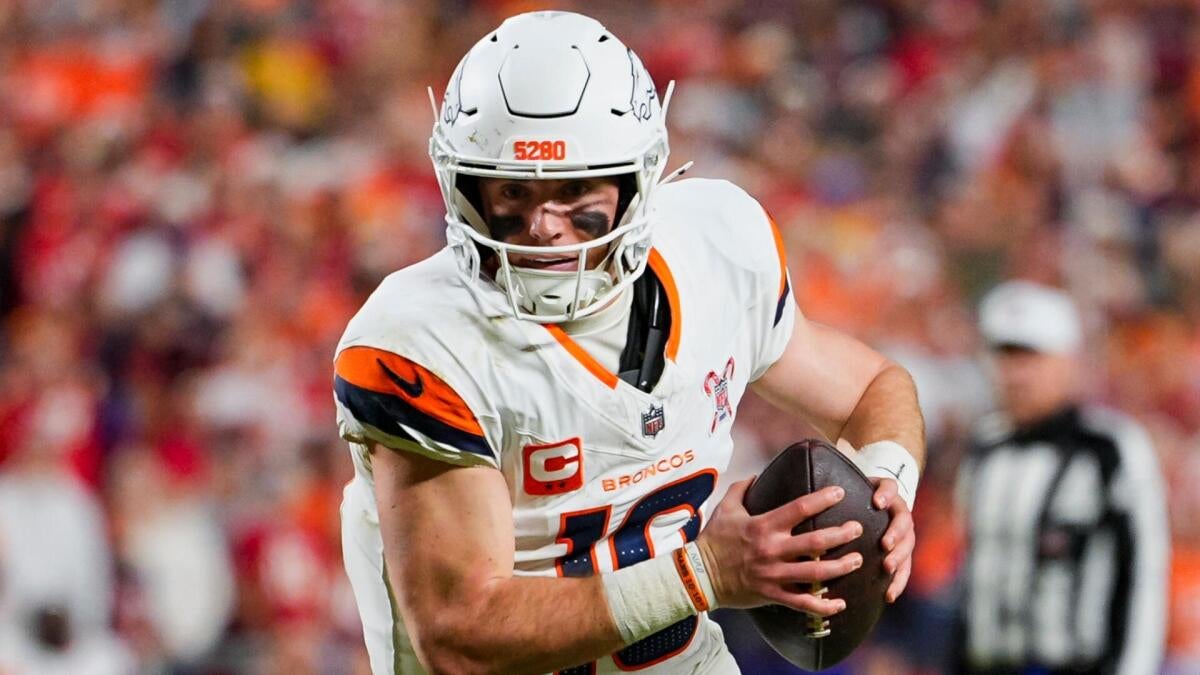
Denver's No. 1 seed finish in 2025 came as a surprise to almost everyone outside the organization. The Broncos lost Bo Nix to injury in overtime of the AFC Championship game, watched Jarrett Stidham nearly steal a Super Bowl berth against New England, and now enter 2026 as a team the sportsbooks treat with skepticism—third in AFC West odds despite coming one game shy of the title. The offseason acquisition of Jaylen Waddle signals confidence in the core, yet the underlying math tells a different story about sustainability.
Denver's 14-win season rested almost entirely on exceptional defense. The unit ranked first in yards per play allowed, dominated the sack rate league-wide, and posted the best red-zone success rate. But offense was the hidden weakness: 25th in yards per pass play, carried primarily by schematic advantage and elite run defense limiting field position problems. The Broncos outscored opponents by 108 points while ranking 14th in offensive DVOA—a gap that rarely sustains across consecutive seasons. Their point differential improved from third-best in the AFC in 2024 to fifth-best in 2025, a regression masked by the higher seed.
The Waddle trade represents an aggressive response to that offensive limitation, but it came at a high cost: first-, third-, and fourth-round picks for one receiver. That's a rental approach to a team that thrived on depth and continuity. Davis Webb takes over as offensive coordinator after being promoted from passing game coordinator—an internal promotion that addresses continuity but not proven track record at the position. The defense loses John Franklin-Myers on the edge and Dre Greenlaw at linebacker, replacements filled via draft and undrafted free agency. When a team regresses from historic defense to merely very good defense, three draft picks' worth of receiver help doesn't typically offset that loss.
For prop purposes, Nix's passing volume props are the most sensitive to this dynamic. In 2025, Nix threw 614 attempts across 14 games—an average of 43.9 per game. That volume benefited from game script: Denver's defense kept games close or ahead, limiting desperation passing late. If the defense regresses to league average (say, +50 points differential instead of +108), Nix faces fewer scripted advantages and higher variance in attempt totals. The Waddle addition will marginally improve yards per attempt, but the volume driver—point differential and game flow—is the actual prop engine. A 9.5 win total that hasn't moved since February reflects the market's belief that 14 wins was lucky. The reality is more nuanced: Denver can sustain 11-13 wins if Nix improves and Waddle's targets convert efficiently, but the 14-win floor from elite defense is gone. Fading the over at -115 makes sense for the regular season, where variance is lower than the market's mid-February pricing suggests.