Bengals Bet Against Their Own History: Why 2026 Win-Total Steam Is Misplaced
By PropBetEdge Editorial Team ·
Cincinnati's defense added elite talent and the market is backing Burrow's durability, but three years of injury and defensive collapse suggest the Over 9.5 is pricing in optimism the team hasn't earned.
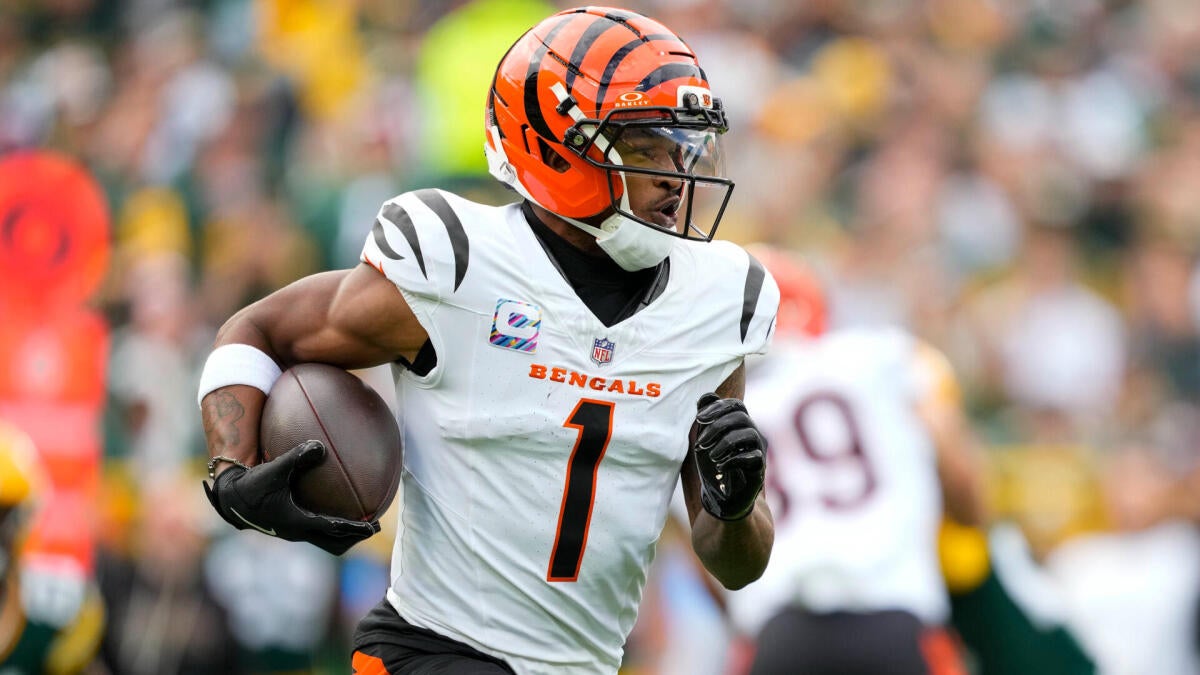
The Bengals are getting sharper money than their recent record justifies. After limping to 6-11 in 2025 with Joe Burrow sidelined again—his second major injury absence in three years—Cincinnati's win total has drawn significant steam toward the Over at 9.5. The market is betting on a three-win swing. That's plausible in theory. Head coach Zac Taylor retained his job despite the collapse, signaling organizational stability the division's other teams lack. The defense got a genuine overhaul, trading the No. 10 pick for Giants run-stopper Dexter Lawrence and adding pass rusher Boye Mafe, safety Bryan Cook, and first-round edge prospect Cashius Howell. On paper, this is the most aggressive defensive rebuild the franchise has attempted in years.
The problem is the pattern. The Bengals have missed the Over on their win total in three straight seasons—finishing 6 wins (2025), 9 wins (2024), and 9 wins (2023) against totals of 9.5, 10.5, and 11.5 respectively. That's not noise. Over that span, Burrow played 32 of a possible 51 games. The defense ranked 32nd in yards allowed per play in 2025, dead last. Upgrading the front four is necessary, but it's not sufficient—the Bengals still need better coverage and gap discipline in the back seven, and there's no evidence either has been systematically addressed. Lawrence is elite in his discipline, but he's one man on a unit that got torched consistently.
The real tell is what the Bengals didn't do on offense. Jake Browning left in free agency, replaced internally by Josh Johnson. The offensive line remains patchwork (10th in sacks allowed per play in 2025 is middling at best). The team kept the same scheme, same coordinator infrastructure, same everything—betting that Burrow's availability is the variable that swings the outcome. That's where the steam becomes questionable. Betting on a player's health when he's missed 19 of 51 games in three years isn't predicting performance; it's gambling on medical outcomes. Even if Burrow stays upright, the offense was below average per-play last season in both passing and rushing volume. The red-zone efficiency kept the unit afloat, but that's often a mirage—good teams sustain it; struggling teams regress to the mean.
The bookmakers opened the Bengals Over at -146 on DraftKings (Feb. 1), implying a 59% probability of hitting 10+ wins. By June 1, as steam poured in, the line moved to -115 (54% probability). The shift signals public confidence, not sharp edge detection. Market moves on narratives—"Taylor kept his job," "Lawrence is a star," "Burrow could be healthy." But the overlay is real: Cincinnati has undershot its win total three years running with a top-10 roster talent evaluation. The Under at +120 (Feb. 1) or even money around -110 (June 1) captures a more honest probability. The Bengals need 10 wins to hit the Over. That requires the defense to improve 3+ yards per play allowed—a historical jump for a unit that's been bottom-four since 2023—while Burrow avoids injury AND the offense generates league-average efficiency. That's three things. Teams usually accomplish one.
For prop bettors, the operational takeaway is narrower: fade Burrow volume props early in the season. If the Bengals fall behind early—a reasonable scenario given the defense's recent shape—Burrow will be asked to throw 35+ times per game out of necessity. That inflates passing-yard and attempt totals into exploitable territory. But in positive game scripts, where Cincinnati is actually winning, the offense regresses to its pedestrian 2025 baseline. The edge isn't in predicting what Burrow will do when healthy; it's in recognizing that the market has overcorrected on the probability of sustained health, and that even healthy, this team doesn't have the supporting cast to exceed 10 wins regularly. The season-long win total bet is better folded. The proposition bets hinge on knowing which games end up lopsided.