Burrow's MVP Case Meets Cincinnati's Defensive Reckoning
By Ty Whitney ·
The Bengals have finally invested in stopping the run and fixing a secondary that bled 7.0 yards after catch—but Zac Taylor's job security still hinges on Burrow staying upright.
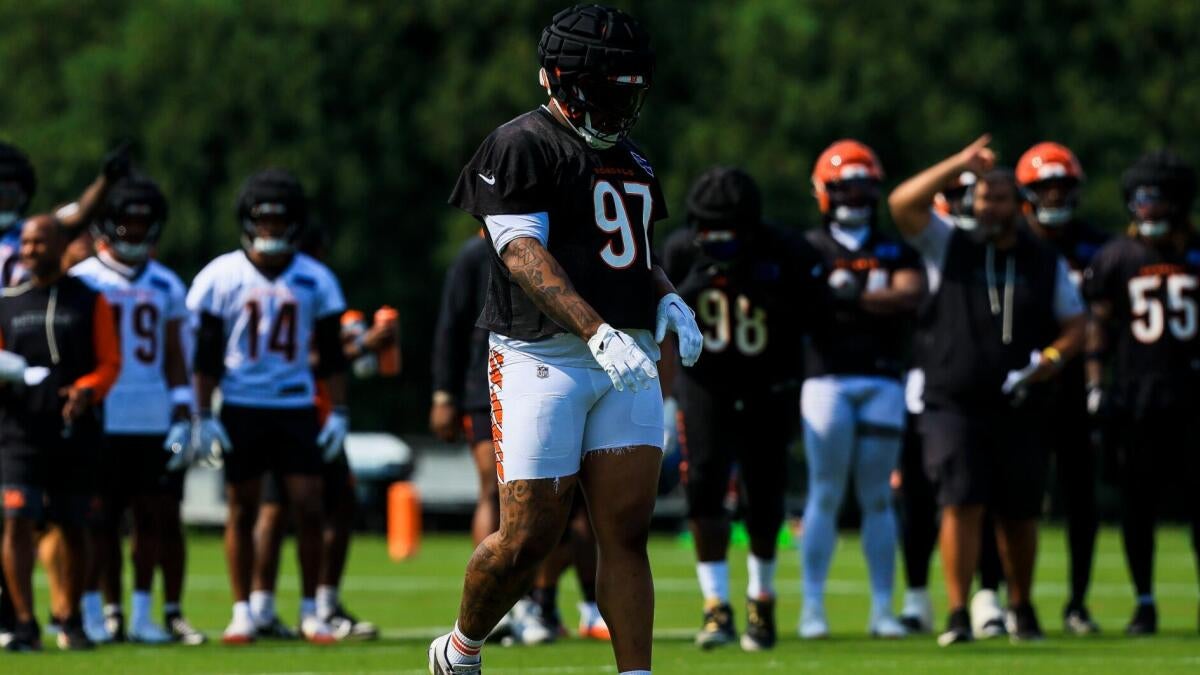
Joe Burrow is the betting public's third-favorite for NFL MVP at +900, commanding 13.9% of tickets on the prop at BetMGM. The math is seductive: a franchise quarterback returning to health after eight games in 2025, surrounded by Ja'Marr Chase and Tee Higgins, priced at +750 to lead the league in passing yards. But the real story isn't Burrow's ceiling—it's whether Cincinnati's defense will finally allow him to reach it without the season collapsing around him.
Last year the Bengals ceded 147.1 rushing yards per game and 6.2 yards per play, the worst efficiency rate in football since Detroit's 2022 disaster. Their secondary was functionally non-existent, surrendering 7.0 yards after catch per reception, a 20-year high. Cincinnati missed the playoffs for the third straight season despite back-to-back conference title game appearances two years prior—a whipsaw that put Zac Taylor's job in the crosshairs. Instead of firing him, ownership implicitly bet that Burrow's injury was the sole culprit. The 2025 season validated that read: in his eight games, Burrow looked sharp. The moment he exited, Cincinnati won one game.
The offseason investment suggests the front office recognizes the fragility. Dexter Lawrence arrived via trade (the No. 10 overall pick), Jonathan Allen signed in free agency, and Bryan Cook—a safety who missed just 5.7% of tackles last season—joined a secondary that was historically porous. Lawrence and Allen represent 810 total tackles and multiple first-step advantages off the edge. But there's friction in the plan: Al Golden, the defensive coordinator whose unit ranked 31st in points allowed in 2025, was retained for a second year. That decision creates a baseline question for bettors: Can new personnel overcome entrenched scheme limitations?
The prop angles split cleanly. Burrow's passing-yard and TD totals (3,999.5 yards, 32.5 TDs) assume a functional defense that keeps games competitive and demands volume. If the Lawrence-Allen addition stabilizes the line of scrimmage and Cook + Co. reduce yards after catch back to league average (5.2), Burrow gets the clean pockets and game scripts required to hit those overs. The +750 to lead the NFL in passing yards is the crown jewel: that edge materializes only if Cincinnati's defense is no longer a tire fire, because second-tier defenses and garbage time won't sustain historic passing volume. Conversely, if the secondary remains a sieve and the run defense doesn't improve materially, Burrow's TD prop compresses (teams game-plan around the passing attack) and his passing yards become volume chasing in lopsided losses. The MVP odds themselves are collision-course pricing: Burrow gets the award if he's healthy AND the Bengals win enough to be credible. If the defense doesn't click, that doesn't happen, and the +900 becomes a recency bet on eight games of tape, not a projection.
Taylor's survival matters more than the narrative allows. A team that won one game without Burrow isn't one defensive improvement away from playoff contention; it's one injury away from a blowout season. If Lawrence and Cook don't deliver immediate impact—which is entirely possible given the secondary's 20-year historical failure—the Bengals could drift toward another sub-.500 year. Burrow's MVP odds price in health and competitive games. Watch the first four weeks of the season closely. If Cincinnati is getting shredded on the ground and allowing explosive plays in the secondary despite the personnel additions, Burrow's passing-yard and TD totals are overlay, regardless of his own performance.