Williams vs. Flores: The Defensive Shell Game That Defines Week 2
By Erik Schwartz ·
Caleb Williams faces Brian Flores' scheme-shifting Vikings defense Sunday knowing that preparation stops where unpredictability begins.
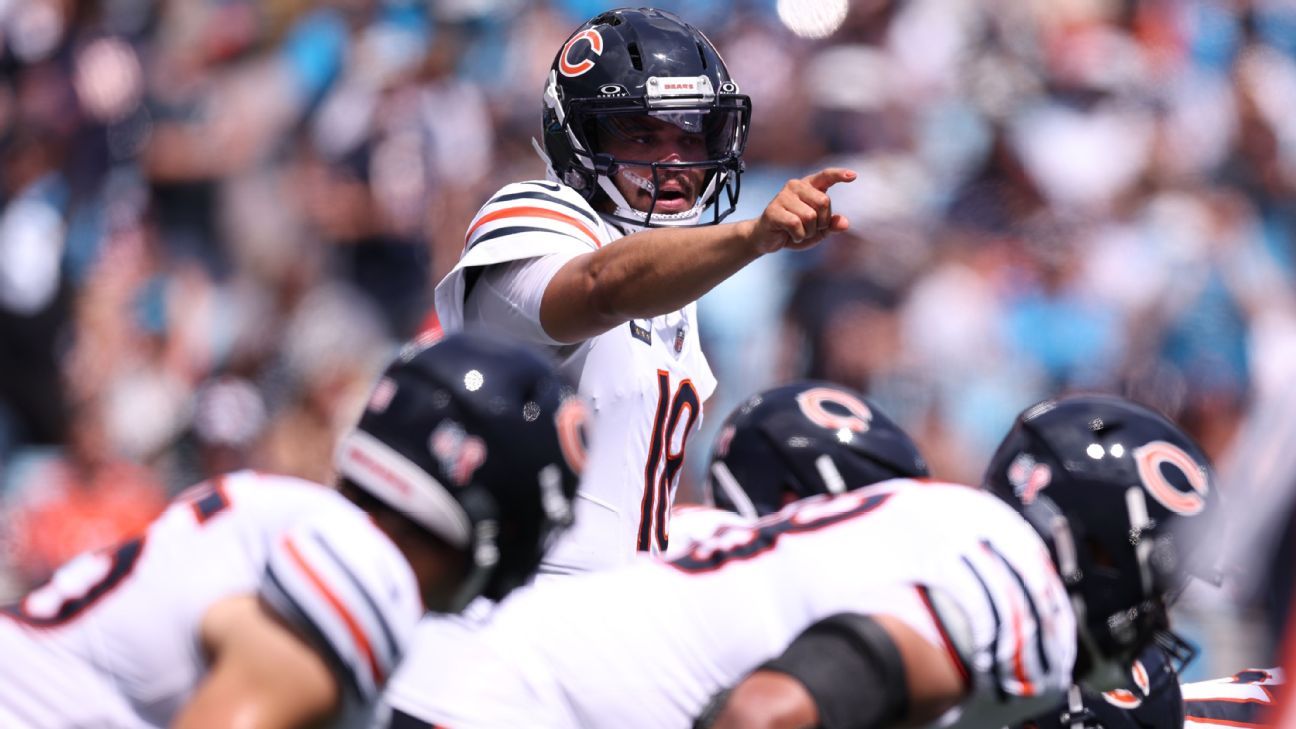
The Chicago Bears open their home schedule against Minnesota on Sunday with a problem that no amount of film study fully solves. Brian Flores' Vikings defense has spent three seasons in the NFC North operating from a philosophical foundation that defies pattern recognition. Williams, who has faced Flores five times already as a pro, called him the "King of the Cover-0 blitz" as a rookie—but that oversimplifies what the Vikings coordinator actually does. The real issue is what Flores doesn't repeat.
Bears offensive coordinator Ben Johnson framed the challenge plainly: "You'd like to think he's put everything he could possibly do on tape until you play him next and you realize he hasn't yet." The numbers bear this out. In Week 9 of 2025, Flores blitzed Williams on 66.7% of dropbacks; earlier that season, in Week 1, he sent pressure just 37.2% of the time. Both games produced similar outcomes—Williams managed to function within the chaos but never broke free. Against that 66.7% blitz rate, Williams completed 11 of 21 for 126 yards (6.0 yards per attempt), a performance that looks efficient on the surface but reveals a quarterback operating in react mode rather than rhythm.
The Bears' offensive firepower—demonstrated in their 59-point demolition of Carolina last weekend—relies on timing, spacing, and quarterback confidence in pre-snap reads. Nine scoring drives in 14 total possessions tells you the raw talent is there. But talent meets its match when the defensive coordinator introduces variables faster than a quarterback can process them. Williams knows this. His own words acknowledge the mental burden: "You've got to be able to go out there and bad things are going to happen...not allowing his defense to fluster you and get in your mind." That's a quarterback bracing for adversity, not anticipating rhythm.
For betting purposes, this creates a specific pressure point. Williams' passing yards line and completion percentage both carry elevated volatility against Flores' scheme because the defense's intent is to disrupt timing windows, not necessarily limit total offensive output. The Bears averaged 59 points against a weaker defense; they'll average fewer against Minnesota regardless of their talent advantage. The prop angle here targets receiving yards for individual pass catchers—specifically those with ability to work short windows and after-catch space—over Williams' aggregate passing yards or team totals. When a defense prioritizes scheme unpredictability over zone coverage, it often yields volume through checkdowns and underneath routes rather than 20-yard completions. The market likely prices Williams' passing yards based on his Carolina performance; Sunday will look structurally different even if the final score stays competitive.
The durable edge belongs to unders on team passing attempts and overs on pass-play duration (time to throw). Flores doesn't generate sacks through pure pressure volume—he creates them through coverage schemes that leave receivers covered long enough for the pocket to collapse. Williams will face decision-making pressure that forces him to hold the ball longer or take checkdowns earlier. Neither outcome inflates total passing yardage; both suppress it relative to a standard opponent.