Wright Extension Signals Chicago's QB Protection Priority—and What It Means for Bear Passing Volume
By PropBetEdge Editorial Team ·
The Bears lock in their All-Pro right tackle on a $116M extension, removing a major cap uncertainty and reinforcing a four-year offensive continuity bet around their quarterback room.
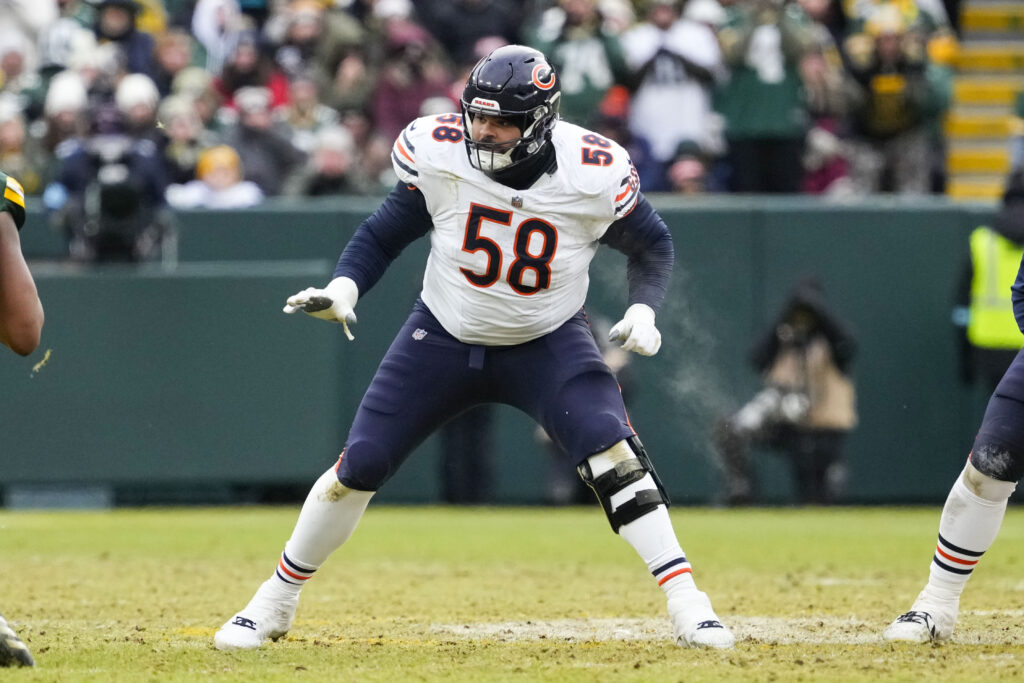
The Chicago Bears and right tackle Darnell Wright have agreed to a four-year, $116 million contract extension, removing one of the offseason's largest dominos from the board. Wright, an All-Pro performer who has anchored the Bears' right side since 2022, will remain in place through at least 2030—a deliberate signal that the franchise is betting hard on sustained quarterback protection and offensive identity over the next half-decade.
The extension's timing and structure carry organizational weight. At $29M per year, Wright lands in the upper tier of right tackle compensation, though not quite elite left-tackle money—a fair-market placement for a player of his caliber. More importantly, the four-year runway means the Bears are committing to a specific offensive philosophy: sustained pass protection that allows extended quarterback development and pocket patience. That's not cheap. It's a capital allocation choice that deprioritizes, say, a mid-tier pass-catcher upgrade or a rotational edge rusher in favor of the foundational element that lets everything else work.
For bettors, this is architecture intel. Teams that invest heavily in tackle continuity—especially right tackles, where Wright's assignment load is heaviest—typically see measurable increases in quarterback passer rating, time-to-throw windows, and play-action success rates. The Bears' defense will still carry the burden of actual point production, but Wright's anchoring presence directly affects the conditions under which their pass game operates. A quarterback with clean pocket conditions throws more yards, attempts more passes downfield, and hits higher completion rates than one under constant pressure. The Bears' passing volume should benefit from a multi-year stability that removes the chaos of annual tackle uncertainty.
The betting implication is durable rather than immediate. Wright's extension was not a surprise to the market—his All-Pro status made retention inevitable—so the line didn't shift on the news. But the extension duration itself is a tell. Teams that commit to four-year pacts with their blindside protection are declaring a multi-year passing identity. Bear quarterbacks' passing-yard and completion-percentage props should hold marginal advantages over the next two seasons compared to teams in flux on the offensive line. This is the kind of organizational decision that compounds: clean pockets in year one lead to better decision-making, which improves film study for year two, which justifies higher pass-volume assumptions in year three.
The real edge emerges if you're booking Chicago's pass-game props in seasons 2027-2028, when the stability becomes fully embedded. For the remainder of 2026, watch how the Bears' offensive play-calling evolves under the assumption that their QB will have time. If they shift toward more aggressive downfield progressions and fewer quick releases, the passing-volume step-up validates the extension's strategic intent.