Mayfield's Contract Standoff Signals Distraction Risk for Tampa Bay's Passing Game
By Ty Whitney ·
Baker Mayfield walked into training camp unsigned and visibly frustrated—a dynamic that could dampen efficiency at a moment when the Buccaneers need him executing at peak level.
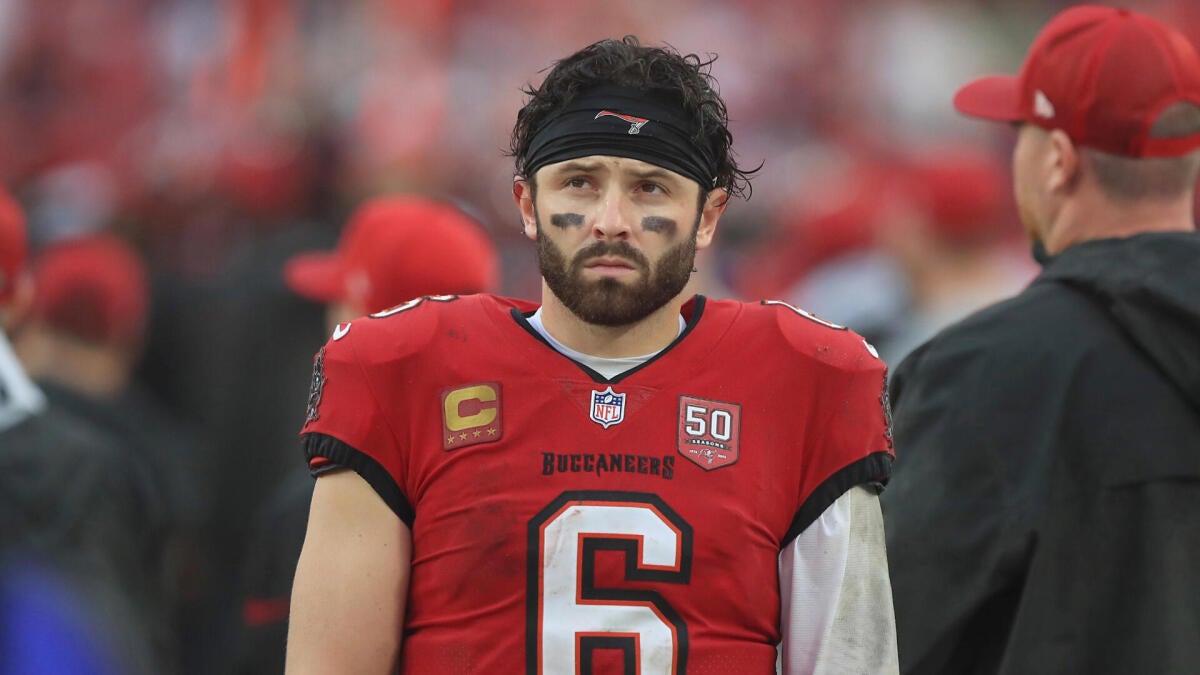
Baker Mayfield and the Tampa Bay Buccaneers have officially reached an impasse. The quarterback arrived at camp on Thursday with no extension agreement despite setting a self-imposed deadline at the start of training camp, and made clear his frustration in public remarks. The Bucs offered a two-year deal that fell well short of his $50 million-per-year target—a gap that reflects a fundamental disagreement about his tier as a starting quarterback.
The valuation dispute hinges on variance. Mayfield's 2024 season, operating under then-coordinator Liam Coen, produced video-game numbers: 71.4% completion, 7.9 yards per attempt, 41 TDs, 16 INTs. Strip that outlier away and his Tampa tenure reads differently. In 2023 and 2025, he completed 63-64% of his passes, averaged 6.8-7.1 yards per attempt, and threw 54 TDs against 21 picks. That profile—solid starter, not franchise-tier by the recent market standard of $50M annually—is where the Bucs' offer landed. The team is banking on Mayfield as a bridge-and-prove candidate, not a surefire cornerstone. Mayfield, having spent three seasons in Tampa and made two Pro Bowls, clearly disagrees with that characterization.
For betting purposes, this friction matters. A quarterback operating under a sense of undervaluation brings psychological weight into the building, and that seeps into performance data. Mayfield shot 27-24 as a starter in Tampa; consistency has been his challenge, not volume. The contract dispute now becomes a variable overlay on top of existing line movement—one that oddsmakers may not have fully priced into team totals or passing yardage props at the outset of camp. If the frustration translates into rushed decisions, incomplete communication with receivers during an unsettled offseason, or simply a fractured preparation mindset, passing yards and touchdown efficiency could compress relative to projections built on his three-year Tampa average.
The Bucs' offense also lost coordinator Liam Coen, the architect of Mayfield's 2024 spike. His replacement has not yet announced a system, and Mayfield will be learning it without the ballast of a resolved contract situation. New offensive systems typically require a 2-4 week acclimation window; distractions compound that friction. Early-season passing props on Mayfield (weeks 1-3) warrant a slight fade if lines don't account for this organizational churn. His passing yards line at the season level will likely remain calibrated to his three-year average around 4,300-4,500, but weekly volatility in the first month could skew lower as the offense settles.
Conversely, if Mayfield plays out the final year of his current deal with something to prove—a common script in contract disputes—volume could spike late season as the Bucs try to pad his case for next offseason or a trade. That risk is durable over a 17-game sample and worth monitoring in weeks 10-17 props, especially if the team sits outside playoff contention and has little incentive to protect him. The edge here is timing-dependent: fade unders in weeks 1-4, then reassess once the system stabilizes or the playoff picture clarifies.