The Colts' Contract Gridlock: Nelson and Taylor Force a Reckoning on Cap Discipline
By Erik Schwartz ·
Indianapolis must choose between resetting the market for its two best players or letting one walk—and that clarity cascades into rushing and offensive line volatility.
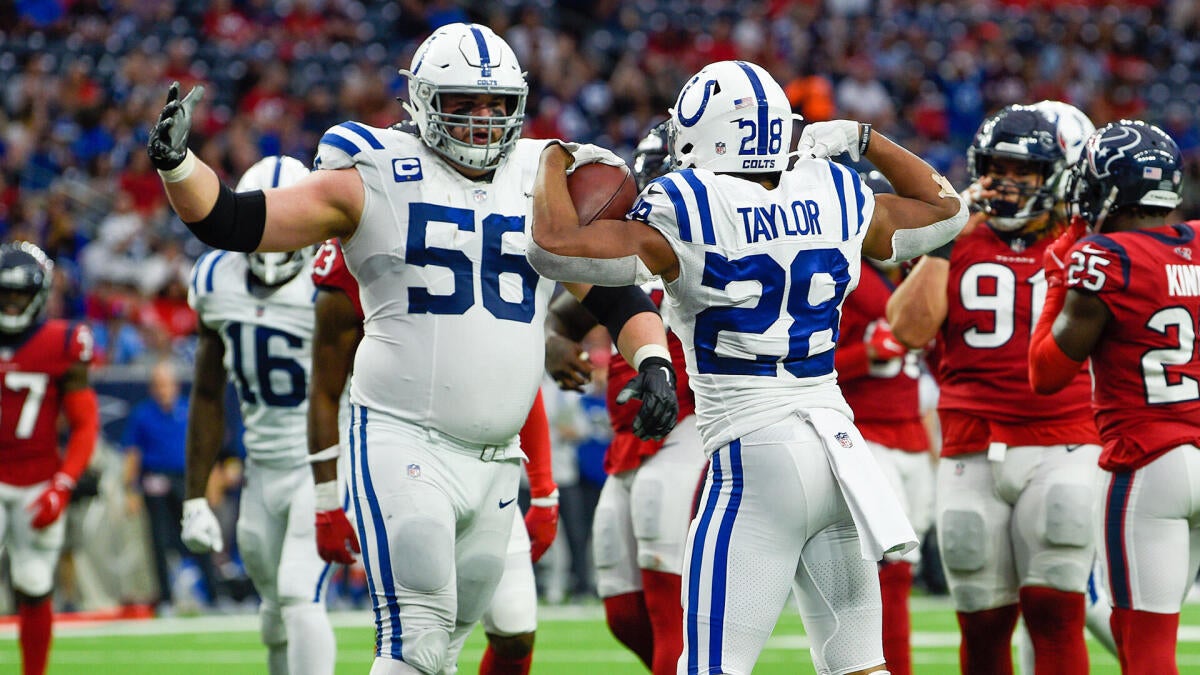
The Indianapolis Colts are staring down a resource collision. Both Quenton Nelson and Jonathan Taylor play contract years in 2026, and the team will struggle to extend both without creating structural cap problems that ripple through the next three seasons. Per agent analysis, Nelson—already the NFL's highest-paid guard at $20M/year since his 2022 extension—is positioned to demand $27M+ annually, reset again by Tyler Linderbaum's March signing with Las Vegas at $27M/year as a center. Taylor, meanwhile, finished 2025 with 1,585 rushing yards and 20 total touchdowns but faces a harder negotiating position after his production collapsed once quarterback Daniel Jones went down mid-season.
The market-reset math matters. Nelson has earned All-Pro honors six times in eight seasons and is just 30—guards routinely play at elite level into their mid-30s. When he last reset the market in 2022, he captured a 21% premium over the prior benchmark (Brandon Scherff at $16.5M). A similar percentage gain now would push him toward $29M/year. The Colts didn't budget for that when they signed Nelson at the old rate. Linderbaum's signing—a center commanding interior lineman money for the first time since 2015—has inverted the traditional pay hierarchy and left guard negotiations with no soft landing. Nelson will point to his consistent production; the Colts will point to their cap.
Taylor's leverage is weaker. He won the rushing title conversation until Week 14, when Jones's Achilles tear forced opponents to stack the box relentlessly. Taylor still cleared 1,585 yards and led the league with 20 touchdowns, but the injury context gives Indianapolis an out: a franchise tag at roughly $10-12M (likely 150% of his $13M salary) becomes defensible rather than insulting. The Colts' implicit calculus is becoming clear—extend Nelson and tag Taylor, or watch Nelson walk and reset the guard market elsewhere. Either choice destabilizes the Indianapolis backfield for fantasy and prop purposes.
From a prop lens, this financial fork directly pressures Taylor's 2026 volume. If tagged rather than extended, he loses leverage for usage guarantees and becomes vulnerable to offensive design changes under a new or tweaked system. His carry total—projected around 280-300 in a healthy season—could compress to 260-280 if the Colts pivot toward a committee approach to preserve cap space. More immediately, any Taylor extension announcement would confirm organizational faith in his durability post-Jones, signaling a return to 2025 volume (320+ carries). A tag, conversely, is a one-year rental signal: reduced offensive consistency, increased game-script volatility, and lower receiving-touch floors. Nelson's contract outcome is less relevant to prop lines directly but matters as organizational priority—a Nelson extension consumes $27M+ of future cap, making Taylor a tag candidate almost automatic.
The market hasn't fully priced the tag scenario into Taylor's season-long prop lines yet. At $13M for a feature back coming off a 1,585-yard, 20-TD season, the public expects security. If Indianapolis signals a tag in the next 60 days—a likely window before mandatory 2026 roster cuts—you'll see his rushing-yard and carry projections downshift by 5-8% as public sharps adjust. Early-summer lines, taken before the tag announcement, offer a fading opportunity: unders on Taylor's season rushing total will be available at outdated volume assumptions. That window closes fast once the Colts' choice becomes official.