Jackson's Patient Contract Play: Why Baltimore's QB Holds the Market Leverage Into 2027
By Erik Schwartz ·
Mahomes' $63M average reset the quarterback benchmark, but Jackson's restructure and reluctance to extend now positions him for an even larger deal next offseason.
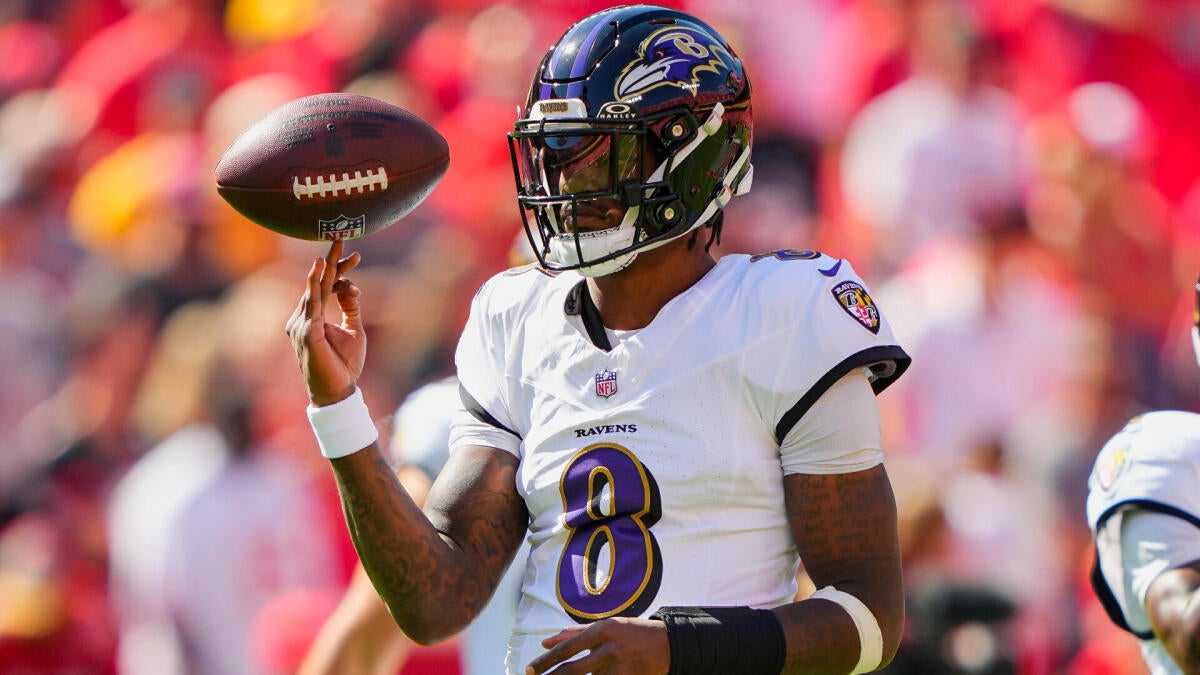
Patrick Mahomes just reset the quarterback market two weeks ago, and the ripple effect is already reshaping how the Baltimore Ravens approach Lamar Jackson's next contract. The Chiefs added two years and $239.05 million to Mahomes' existing deal, lifting his total package to $504.75 million over eight years—an average of $63.09 million annually and a new NFL high. The structure is intricate: $150 million fully guaranteed at signing, $237 million in conventional guarantees through 2029, and another $267.75 million in uncured years that harden via roster bonuses and base salary protections from 2030 onward. For Jackson, the timing is instructive. The Ravens attempted to extend him before March 11, the league year start, but negotiations stalled. Instead, Baltimore executed a cap restructure mirroring Kansas City's playbook: converting $49.95 million of Jackson's $51.25 million 2026 base salary into signing bonus, carving out $39.96 million of cap space. The move leaves Jackson's 2027 cap number at an unsustainable $84.34 million—the final year of his five-year, $260 million deal from 2023, when he averaged $52 million per year. That structure is the real tell.
Jackson represents himself and has never employed an agent, an unusual position that has historically given him leverage in negotiation because he answers to no one's timeline but his own. In late May, he reinforced that position by declining to re-engage with extension talks, saying he no longer seeks a fully guaranteed contract and expressing deep loyalty to Baltimore. The emotional framing matters less than the contractual mathematics: he can play through 2026 with no new money hitting the cap, then force a reckoning in the 2027 offseason when the Ravens face an $84.34 million dead weight on salary cap. That deadline is not negotiable. The Ravens will extend him or face a catastrophic cap hit, and by then—roughly seven months from now at the 2027 free agency window—the market will have reset again.
Mahomes' deal already establishes a new floor. At $63.09 million average value, any extension Jackson signs must clear that number or face public comparison to a QB who just lost a playoff game in January. But the mechanism is more specific: Jackson's willingness to delay and his self-representation mean the Ravens can't use time pressure or leverage-banking to discount his ask. The team's front office interest in extending him "this year" (meaning the 2026 offseason, which is now past) has yielded nothing. By autumn 2026, when training camp and regular-season film will have added fresh performance data, and with the cap cliff looming, Jackson will be negotiating from a position of structural inevitability rather than preference. The Ravens will have to move, and moving late always costs more.
For bettors tracking Ravens offensive volatility and QB workload, this matters immediately. A QB in contract limbo—especially one who has already made his organizational preference clear and faces a team desperate to avoid a July emergency—often sees increased offensive deployment in the current season to generate leverage data ("Look what he did on the 2026 tape"). Jackson's receiving and rushing volumes may tick upward if the Ravens want to show investors next year that he can sustain both arms of the offense at an elite level. His passing yards and touchdown rates become more potent if offensive coordinator Declan Doyle is asked to showcase Jackson's arm talent under heavy usage. Conversely, if the Ravens want to minimize injury risk heading into a contract year, they may cap his rushing attempts—a direct brake on his dual-threat ceiling props. The restructure locks in his 2026 salary, meaning the team has no financial incentive to rest him, but it also means no new incentive to break him in. Watch Jackson's snap distribution and red-zone role weight starting in September; coaches typically manage this visibility game through the first month of the season.