AFC South Win Totals: Where the Market Misprice Offensive Regression and Defensive Upside
By Ty Whitney ·
Houston's defense is Super Bowl-caliber, but C.J. Stroud's stalled development creates a ceiling that the 9.5-win line hasn't fully priced; Jacksonville's free-agent losses mask a coaching advantage that survived 2025 without star talent.
The AFC South's 2026 win totals reveal a market still clinging to narrative momentum rather than adjusting for the mechanics that will actually determine wins. Houston sits at 9.5—slight favorites in a wide-open division—yet the Texans face a peculiar constraint: DeMeco Ryans has constructed a defense that compares favorably to the Seahawks unit that just won the Super Bowl, but C.J. Stroud's passing metrics have flatlined. His 7.1 yards per attempt over the last two seasons trails Geno Smith; his 89.6 passer rating sits below Kyler Murray's. A historic rookie campaign in 2023 followed by stagnation is not a temporary dip—it's a pattern that suggests the ceiling of Houston's offense is fundamentally limited by the quarterback's inability to sustain early-career excellence.
That cap matters in close division races. While Stroud has delivered double-digit wins in each season under center, the pathway to 10 wins hinges entirely on the defense manufacturing a historic season and the pass game avoiding negative regression. The schedule is soft—one of the seven easiest in football—but soft schedules inflate win totals for mediocre passing teams, not suppress them. The over at 9.5 prices in schedule ease and defensive ceiling but ignores the offset: a quarterback whose trajectory suggests he's hit his baseline performance, not headed upward.
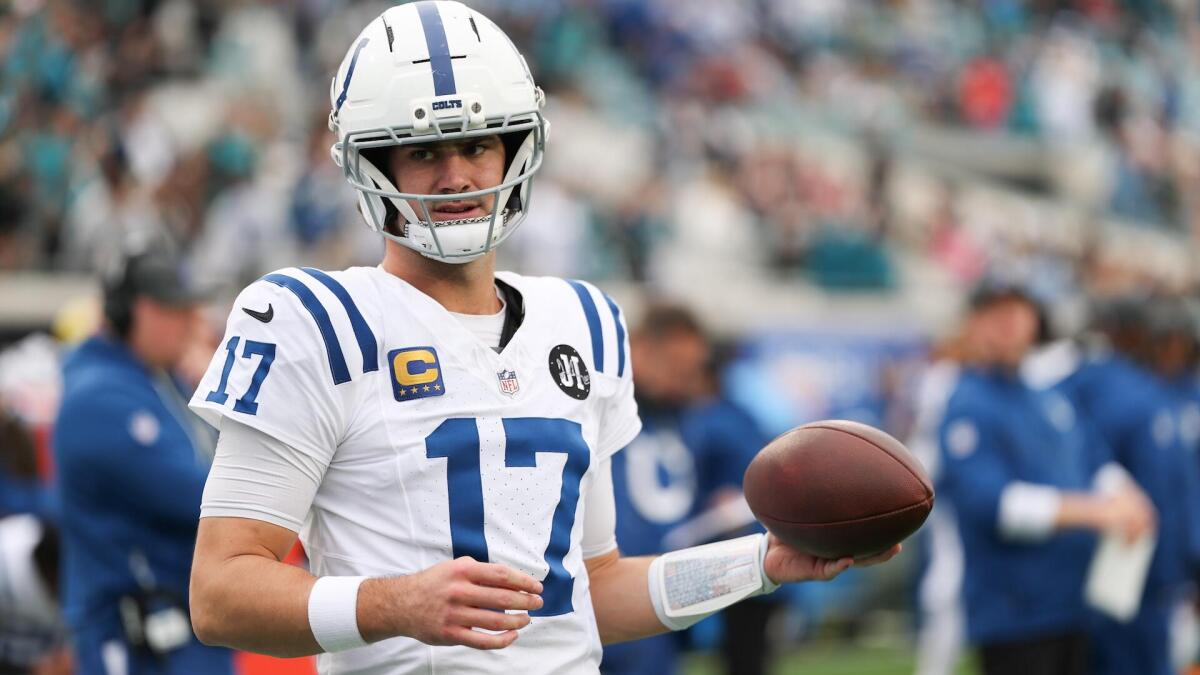
Indianapolis presents a mirror image. The Colts hit the over on 7.5 last season despite losing their final seven games straight—a statistical anomaly driven by early-season performance when the roster was healthier. The re-signing of Daniel Jones and the addition of defensive pieces (CJ Allen, A.J. Haulcy) represent incremental upgrades, not foundational changes. A top-five easiest schedule carries weight, but it also means the market is already pricing in schedule advantage. The Colts' over at 7.5 requires faith that the defense can anchor a contention-level roster, which is precisely what last season's late-season collapse suggested it cannot.
Jacksonville's 8.5 line underprices the coaching continuity and play-caller advantage that Liam Coen, Grant Udinski, and Anthony Campanile established in 2025. Yes, the Jaguars lost Devin Lloyd, Travis Etienne, and Greg Newsome II in free agency—legitimate personnel losses. Yes, the draft class raised eyebrows (a 25-year-old tight end at No. 1 overall). But the 13-win season was engineered without Travis Hunter contributing meaningfully and with Brian Thomas Jr. disappointing in his second season. Both players have room for positive regression. The market is pricing Jacksonville as a regression candidate simply because they won 13 games, yet it's ignoring that last year's roster was not fully actualized. A five-win swing from 13 to 8 assumes all new players underperform and no internal players improve—a pessimistic scenario that doesn't account for coaching stability or the statistical likelihood of better contributions from core talent. The over at 8.5 carries edge because the narrative of "they won too many games last year" masks the coaching and talent-development mechanisms that actually produced those wins.
Tennessee's 6.5 is the true wild card. Two consecutive 3-14 seasons and a twelve-year drought without a winning record is real. But Robert Saleh's defensive pedigree and Cam Ward's quarterback upside create a floor the market hasn't fully absorbed. The Titans are one injury or one developmental leap away from flipping the trajectory. The under at 6.5 looks safe on paper; betting it requires conviction that organizational inertia persists despite front-office overhaul. The over is a volatility play—high variance, but priced as if the Titans will remain static. In a division where Stroud's ceiling is capped by stalled development and Indianapolis is patched together, Nashville's asymmetric upside deserves consideration.