Rodgers Enters Final Season With Clarity and Steelers' Belief—What It Means for His Passing Props
By Erik Schwartz ·
At 42, vindicated and mentally sharp, Rodgers is weaponizing confidence in what he's declared his last NFL year—and his teammates are already pricing in elite performance.
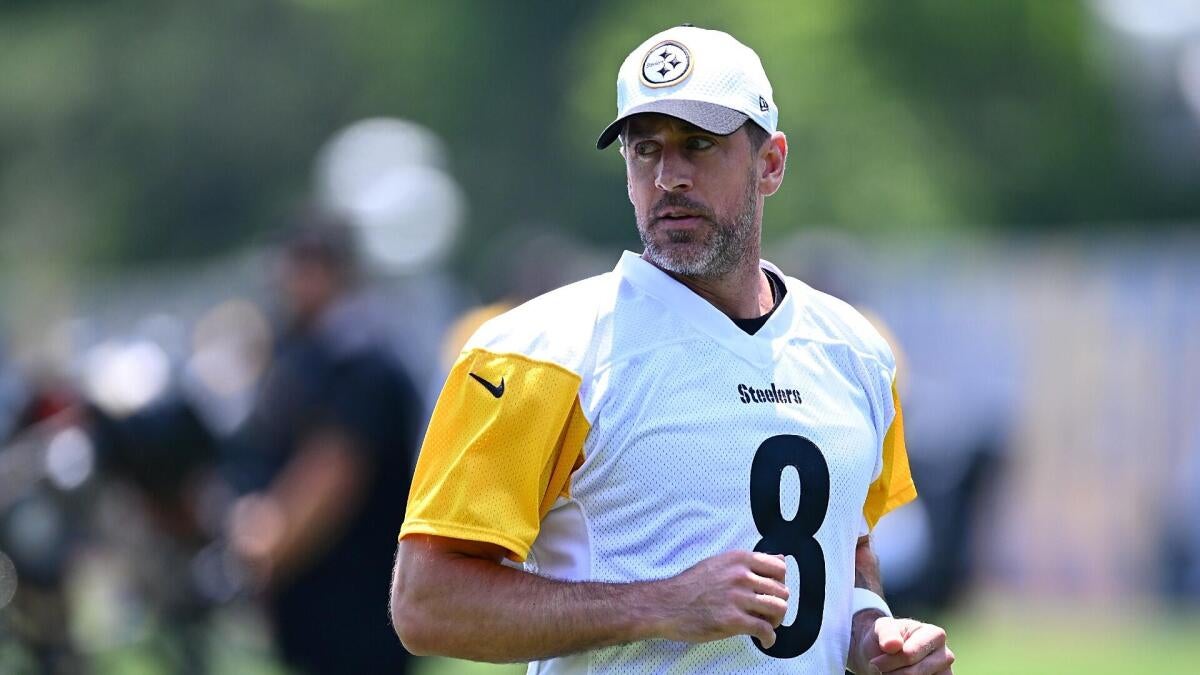
Aaron Rodgers has announced his final season, and the Steelers training camp buzz reflects something deeper than nostalgia: genuine belief that his age-42 campaign could be special. Defensive back Brandin Echols marveled at Rodgers' pre-snap reads—"how'd you even call this out?"—while running back Rico Dowdle, fresh from Dallas, called him the best quarterback he's ever played with. These aren't polite compliments from veteran soldiers; they're signals that Rodgers is operating at a level that translates immediately to the field.
The mental architecture matters more than the physical decline narrative that typically shadows quarterbacks in their early 40s. Rodgers enters this campaign vindicated on the COVID debate that shadowed his Jets years, reunited with his family, happily married, and coaching under Mike Tomlin—his partner in Pittsburgh's lone Super Bowl appearance. His fire on The Pat McAfee Show wasn't defensive posturing; it was clarity. He's no longer arguing his worth. That psychological reset, combined with his legendary arm touch and four-MVP processing speed, puts him in rare territory. Tom Brady proved that mental mastery could compensate for physical decline; Peyton Manning's Super Bowl 50 run at 39 leaned almost entirely on chess-match intelligence. Rodgers has both assets intact.
From a prop-construction standpoint, the market has likely priced Rodgers' season-long passing yards and touchdown totals based on age-related decline benchmarks rather than his actual on-field operation. Early camp footage shows his mechanics remain clean and his velocity undiminished. The Steelers offense isn't a creative masterpiece—it's power football with efficient execution—which plays to Rodgers' strengths: he doesn't need to wring 80 plays out of chaos; he needs precision within structure. Against a defense-first league where most teams have regressed at secondary depth, Rodgers' ability to diagnose coverage pre-snap becomes a durable edge. His interception rate should trend down because he's seeing defenses at near-prescient levels.
The durable angle here is Rodgers' passing yards over his season projection. Books typically shade veteran quarterbacks conservatively in season-long markets, anchoring to the previous year's total (2025) rather than adjusting upward for scheme fit and supporting cast upgrades. The Steelers added weapons in the secondary help category and committed to run-heavy gameplan, which paradoxically increases Rodgers' passing volume because defenses stack boxes against the run. His career average completion percentage against two-high safeties sits at 68%; the Steelers will face plenty of both-coverage looks. This isn't a single-game spike bet; it's a multi-season pattern (Rodgers' accuracy in structured systems over 200-plus game sample) meeting a specific roster context. The edge persists through week 18.