Kittle's Achilles Recovery Outpaces Timeline, but Week 1 Australia Debut Carries Real Risk
By Ty Whitney ·
George Kittle's aggressive rehab has him tracking for a season opener in six weeks, yet the 49ers' caution-first approach and his injury history suggest fantasy and prop bettors should wait for clarity before backing him at full usage.
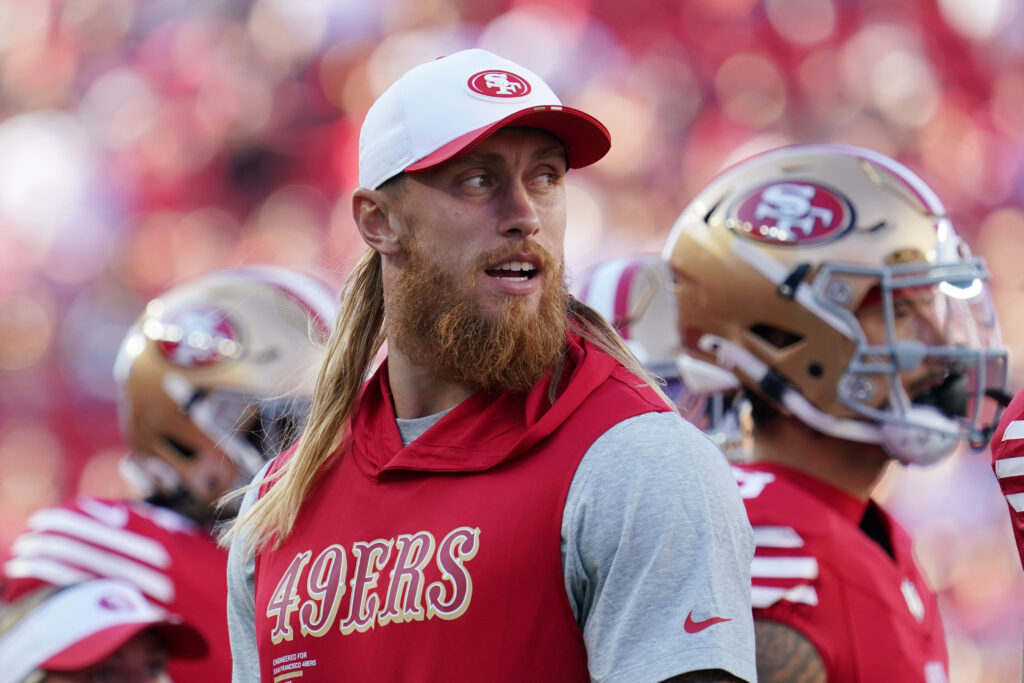
George Kittle tore his Achilles in January—roughly six months ago—and was initially projected to miss the first eight weeks of the 2026 regular season. Instead, the star tight end's rehab has accelerated dramatically. Per Vic Tafur of The Athletic, Kittle is now running at 16 miles per hour with cutting drills and single-leg box jumps in his training routine, putting a Week 1 return firmly in play when San Francisco opens in Australia.
Context matters here. Kittle's 2025 season was a cautionary tale: hamstring tear in Week 1, ankle ligament damage in Week 16, and then the Achilles blow in the playoff loss to Philadelphia. His injury trajectory wasn't random—he played through the ankle damage against medical sense, compensated structurally on his other leg, and paid the price three weeks later. A 32-year-old with nine seasons of wear and a hard-edged play style doesn't simply erase that pattern by hitting speed benchmarks in a controlled environment. Kyle Juszczyk's optimism—"his speed is way up"—reflects the measurable progress Kittle has made. But speed in drill work and absorbing contact in a playoff game are different currencies.
The Australia wrinkle adds pressure that the 49ers would be wise to resist. A Week 1 game on foreign soil, with travel jet lag and no meaningful preseason ramp-up, is exactly when a player returning from Achilles trauma is most vulnerable to reinjury. The 49ers have not announced a game-day status, and reports suggest Kyle Shanahan is taking a wait-and-see posture. That ambiguity is the real signal: San Francisco's front office knows the optics of having their best tight end suit up, but they're not committing publicly.
For prop bettors, the edge lies in fading Kittle's receiving volume in Week 1 if he plays at all, and in shorting his season receptions total if the market has priced him for 80+ catches (closer to his career norm). The mechanism is straightforward: snap count allocation for a player in early return phases from Achilles surgery follows a predictable decay curve. Even if Kittle is "cleared," he'll likely operate at 50-65% of offensive snaps in Week 1, with a ramp that extends 4-6 games. Early-season receiving props on Kittle should carry a 15-20% variance discount relative to his baseline rates. If the market is pricing him as "just back in the lineup," the smart side is acknowledging that "back" and "fully deployed" are 2-3 weeks apart.