49ers Move Forward Without Aiyuk; Camp Composition Reshapes WR Equity
By PropBetEdge Editorial Team ·
San Francisco is opening training camp with Brandon Aiyuk on left squad designation, forcing a recalibration of receiver touches and receptions value across the roster.
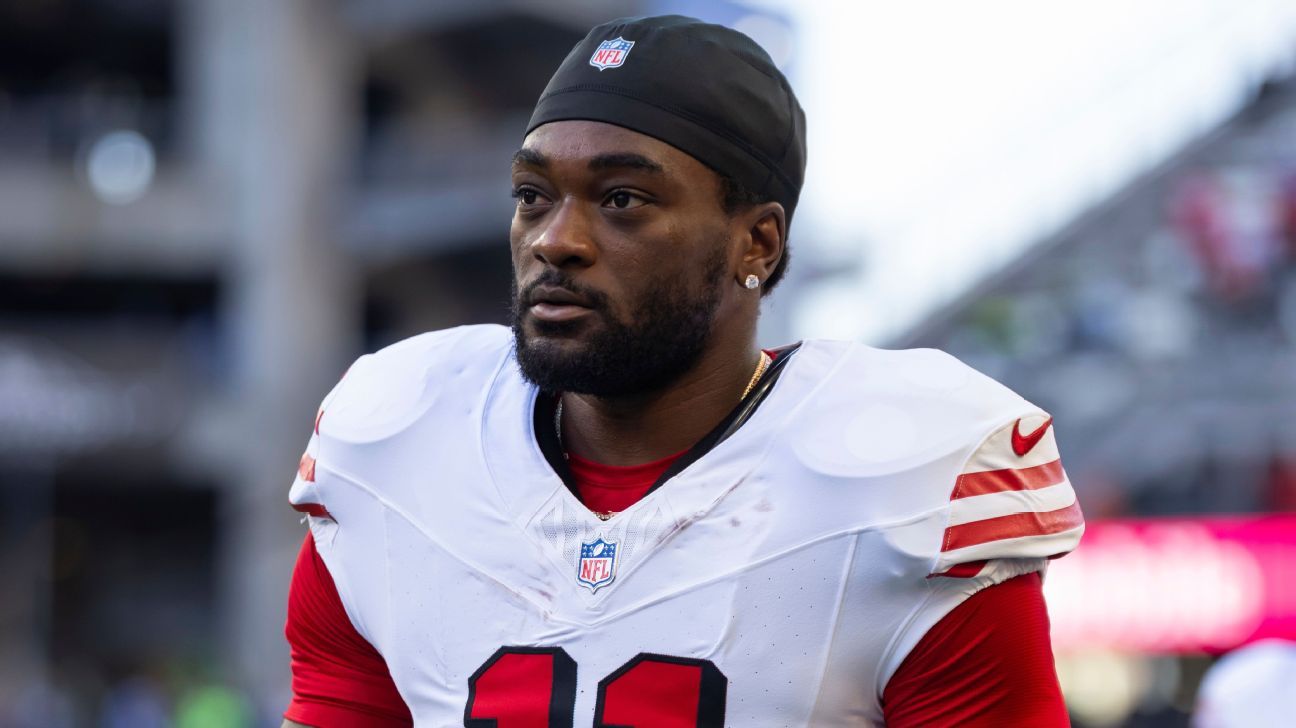
The San Francisco 49ers opened training camp Saturday with Brandon Aiyuk conspicuously absent from their 90-man roster, placed on left squad designation after he stopped attending team facilities in December and severed communication with the organization. GM John Lynch made the organizational posture clear: the team is moving forward without him, regardless of his contractual status. Aiyuk has signaled no intention of seeking reinstatement to the league, instead posting on social media that he will not "step in that building" unless it's on October 19—when the 49ers host Washington. The standoff has effectively removed one of San Francisco's most talented receivers from the 2026 planning equation.
This is a structural problem, not a contract dispute that resolves cleanly. Aiyuk's left squad designation keeps him in legal limbo: he cannot be traded without first petitioning for league reinstatement, which he has declined to do. The 49ers held onto him through the offseason hoping for trade compensation that never materialized. Now, with camp underway and no movement imminent, the receiver depth chart is being written without him. Kyle Shanahan's offense has historically distributed targets across a rotating cast of receivers and tight ends, but Aiyuk was slotted as a consistent perimeter threat. His absence forces the team to lean more heavily on whoever emerges as the No. 2 option behind the starter—likely Brandon Aiyuk's replacement in the slot or on the outside.
For bettors, the prop implication is immediate and durable. With Aiyuk out of the equation, targets and reception totals for other 49ers receivers will shift upward relative to preseason projection models that included him on the active roster. A receiver projected for 5.2 receptions per game with Aiyuk in the mix might reasonably carry 5.8–6.1 receptions now that he's off the board. This isn't a temporary variance; it's a roster composition change that persists through the entire regular season unless Aiyuk petitions for reinstatement mid-season—a low-probability scenario given his stated position. The market may not have fully digested this yet, especially if early prop lines were set before Lynch's Saturday statement clarified that the organization has functionally moved on.
Shanahan's system is also predicated on efficiency and decision-making, not volume bloat. The targets that Aiyuk would have received don't simply vanish; they are redistributed. A backup slot receiver or outside option will see increased snap counts and route assignments. Identifying which bench receiver emerges as the primary beneficiary during camp—and securing their receptions prop before the market reprices—offers an edge with clear causal logic: fewer total receivers in the system means higher workload concentration for the ones who survive coaching evaluations. The mechanism is straightforward: subtract a 60-70 target producer from the roster, and the remaining receivers absorb that volume. It's not speculation; it's arithmetic.
Lynch's willingness to let Aiyuk sit rather than release him also signals organizational stubbornness about salvaging trade value. That means Aiyuk stays in procedural limbo through at least the first few weeks of camp, keeping the receiver market in flux and the workload adjustments visible in practice tape. Early bettors who track camp performance and lock in receiving props on the emerging depth-chart winners before public perception catches up will have a material edge over those who wait for Week 1 official practice injuries to reset lines.