Bosa's ACL Recovery Puts 49ers' Pass Rush on Track for Camp—and Week 1
By Erik Schwartz ·
The defensive end's clean tear and early-season timeline means San Francisco's elite edge presence could return at or near full strength by September, reshaping the NFC West's defensive balance.
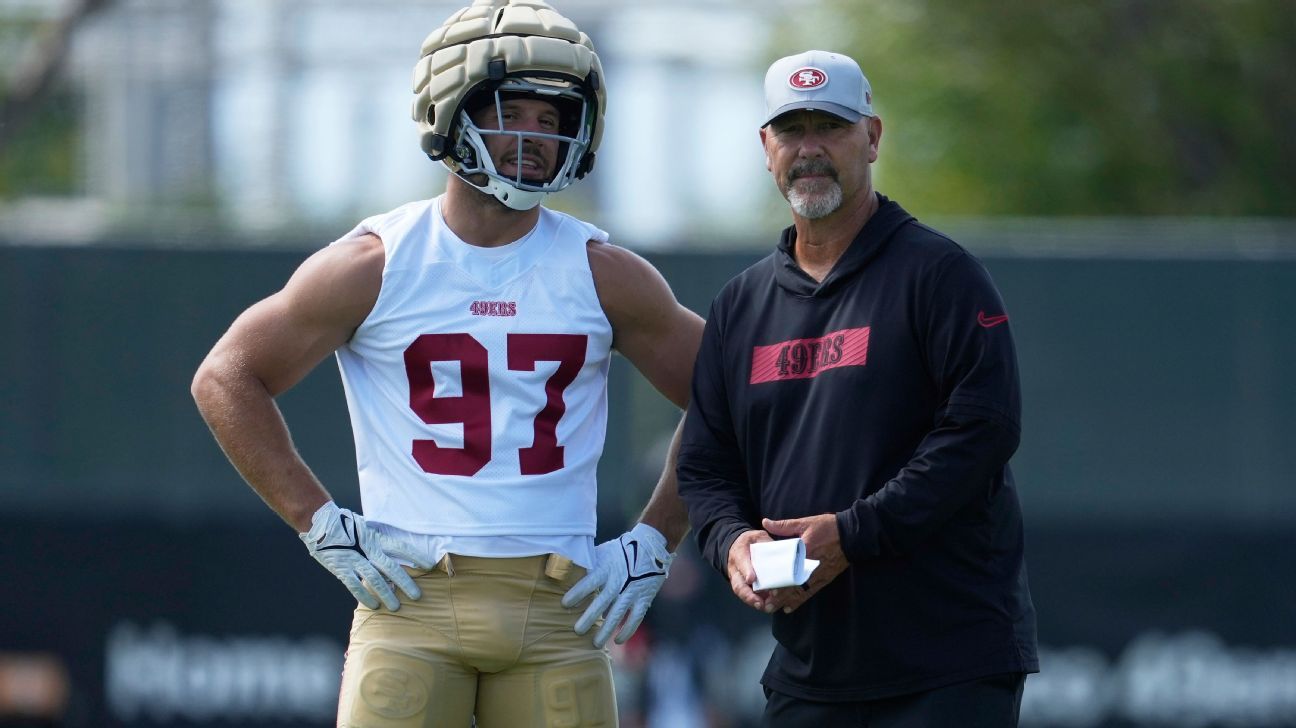
Nick Bosa is progressing faster than the typical ACL recovery timeline, and the 49ers are comfortable signaling a realistic return for training camp or shortly after. Speaking to reporters Thursday for the first time since tearing his ACL on September 21 against Arizona, Bosa said he's "pretty far along" in rehabilitation—already on the field doing significant work, though he's holding back from full contact drills during organized team activities. The injury itself carried a silver lining: no meniscus or ligament damage accompanied the tear, which Kyle Shanahan termed "as clean as it gets," meaning Bosa avoided the compounding structural damage that typically extends recovery timelines.
The timing of Bosa's injury—week two of last season—has given him a nine-month runway to prepare. That's a luxury most torn ACLs don't get; most players face the pressure to return in six to seven months or risk missing the tail end of their season. Bosa's injury, by contrast, gives him the full offseason plus training camp to rebuild leg strength, coordination, and confidence. Shanahan's public messaging and Bosa's own restraint (he acknowledged his tendency to "push things quicker") suggest the team is operating from a position of strength, not desperation. If he clears camp without setback, Bosa will enter Week 1 with game reps under his belt.
For the 49ers' defense, this matters enormously. Bosa is a tier-one pass rusher—he was on pace for 13+ sacks before the injury. His absence left a crater on the edge, forcing the team to lean more heavily on other schemes and rotational guys. When Bosa returns, he reclaims leverage in the NFC West, particularly against teams like the Seahawks and Rams that rely on quick passing games. The 49ers' sack rate and pressure rate should improve the moment he re-enters rotation, and the effect compounds if he reaches full participation by mid-season.
From a prop perspective, the recovery trajectory matters in two ways. First, for team-level defensive bets: the 49ers' sack total and team total (their defense carries weight in spreads) were priced all season without Bosa at full capacity. If he returns healthy and integrated by Week 3 or 4, the defensive output baseline shifts upward. Books will adjust, but the adjustment lags his actual return; early-week prop overs on 49ers team totals in September could capture the benefit of uncertainty still priced into the market. Second, for Bosa himself: if he plays significant snaps in camp and games, sack props become more viable. A healthy Bosa at 12+ sacks over a 17-game season is a durable baseline. The market will likely price him conservatively early (anchored to his injured season or a partial-year projection), and if he hits camp at the fitness level he's projecting, that undervaluation persists into early September.
The absence of major structural damage and the clean nine-month timeline mean this isn't a recurrence risk story—it's a return-to-form story. Bosa sounds like a guy who has already made peace with the process and is tracking toward his historical performance level. The 49ers' signal is consistent: no panic, no hints of complications, just methodical progression. That messaging, paired with his own track record, suggests books may overly discount his full-season snaps and sack volume for 2024.